
My mom did not believe in chicken noodle soup from scratch. For her, the whole point was opening a can, dumping it in a pot, and having something hot on the table in under ten minutes. That was comfort. That was efficient. And honestly, I grew up thinking that was just fine. But then I caught a fall cold that knocked me flat for a week, and my neighbor showed up with a container of homemade broth that smelled like she had been simmering it since breakfast. One spoonful and I realized I had been missing out on something fundamental my whole life.
That first bowl of real, slow-simmered chicken noodle soup changed how I thought about cold-weather cooking. The broth had this deep, golden quality the canned stuff never gets. The chicken shredded into tender ribbons instead of those weirdly uniform cubes. And the noodles? They had absorbed just enough of that savory liquid to taste like they belonged there. I remember sitting on my couch, wrapped in a blanket, thinking this is what fall evenings are supposed to taste like. It wasn’t just soup. It was a reset button for a tired day.
This cozy classic chicken noodle soup for fall evenings is the recipe I built from that moment. It takes a little time, but none of it is hard. You brown the chicken first for flavor, let the vegetables soften in the same pot, and let everything simmer until the broth turns that beautiful amber color. The noodles cook right in there, soaking up all that goodness. It’s the kind of meal that makes you slow down whether you planned to or not.
I’ve made this soup on rainy Sundays, on chilly weeknights when the wind rattled the windows, and even on a random Tuesday in October just because the air felt right. Every time, it delivers that same quiet feeling. Like everything is going to be okay. A bowl of this with some crusty bread on the side is honestly as good as it gets.
Why You’ll Love This Recipe
This isn’t just another chicken soup recipe. I’ve tested this version more times than I can count, tweaking the herb balance and the simmering time until it hit exactly the right note. Here is why this one stands out from the rest.
- Deep, Real Broth: Browning the chicken thighs before simmering creates a rich, golden base that canned broth simply cannot match. The flavor develops naturally without any bouillon cubes or shortcuts.
- Simple Pantry Ingredients: You probably have most of this already. Carrots, celery, onion, garlic, egg noodles, and chicken. No fancy grocery trips required for a satisfying meal.
- Perfect for Fall Evenings: There is something about a steaming bowl of homemade soup when the temperature drops. It warms you from the inside out and fills the house with that incredible simmering aroma.
- Crowd-Pleasing Comfort: Kids love the noodles, adults appreciate the depth of flavor, and everyone goes back for seconds. This is the soup that disappears fast at family dinners.
- Better Than Store-Bought: Once you taste homemade broth with fresh herbs and perfectly cooked chicken, going back to canned feels impossible. The texture and flavor are on a completely different level.
What makes this recipe different is the technique. Instead of boiling the chicken in water, you sear it first to build a fond on the bottom of the pot. That browned bit is pure flavor. Then you sweat the vegetables in the rendered fat before adding the liquid. It takes an extra ten minutes, but it transforms the entire soup. This is comfort food done right.
What Ingredients You Will Need
This recipe relies on simple, wholesome ingredients that work together to create something greater than the sum of their parts. Most of these are everyday staples, which makes this soup perfect for those evenings when you just need something warm and nourishing without a trip to the specialty store.
- Chicken Thighs: 1.5 pounds (680g) boneless, skinless chicken thighs. Thighs stay juicier than breasts during simmering and shred beautifully. I prefer them for the richer flavor they bring to the broth. If you only have breasts, they work too, just reduce the simmering time slightly.
- Olive Oil: 2 tablespoons (30ml) for browning the chicken. A good quality extra virgin olive oil adds a subtle fruitiness, but regular olive oil works perfectly fine.
- Yellow Onion: 1 large onion, diced. Onion forms the aromatic backbone of the soup. Sweet onions or white onions work as substitutes if that is what you have on hand.
- Carrots: 3 medium carrots, peeled and sliced into rounds. Carrots add natural sweetness and that classic orange color. I cut them into uniform slices so they cook evenly.
- Celery: 3 ribs of celery, sliced. Celery brings a mild savory note and that essential crunch before cooking. Look for firm, crisp stalks without blemishes.
- Garlic: 4 cloves of garlic, minced. Fresh garlic is non-negotiable here. The jarred stuff just does not deliver the same punch. I add it after the vegetables have softened to avoid burning.
- Chicken Broth: 8 cups (1.9 liters) of low-sodium chicken broth. Homemade broth is wonderful if you have it, but a good quality store-bought brand like Kitchen Basics or Swanson works great. Low-sodium lets you control the salt level.
- Dried Thyme: 1 teaspoon. Thyme adds an earthy, slightly floral note that pairs perfectly with chicken. If you have fresh thyme, use 1 tablespoon of leaves.
- Dried Rosemary: 1 teaspoon, crushed between your fingers to release the oils. Rosemary brings a piney, aromatic quality that makes the broth taste slow-cooked.
- Bay Leaves: 2 bay leaves. Bay leaves add a subtle depth that you do not notice until it is missing. Remove them before serving.
- Egg Noodles: 8 ounces (225g) of wide egg noodles. The wide ribbons hold onto the broth beautifully. I recommend Reames or Mueller’s for consistent texture, but any brand works.
- Fresh Parsley: ¼ cup (15g) chopped fresh parsley for finishing. Parsley brightens the whole soup and adds a fresh contrast to the rich broth.
- Salt and Black Pepper: To taste. I start with 1 teaspoon of salt and ½ teaspoon of pepper and adjust at the end.
Ingredient Selection Tips: For the best texture, look for chicken thighs that are uniform in size so they cook evenly. When choosing carrots, pick ones that are firm and bright orange without any soft spots. If you are using fresh herbs instead of dried, remember that fresh herbs are less concentrated, so you will need about three times the amount. For a gluten-free version, swap the egg noodles for gluten-free pasta or rice noodles, though the texture will be slightly different.
Equipment Needed
You do not need a professional kitchen to make this soup. Most of these tools are already in your cabinets. Here is what you will need.
- Large Dutch Oven or Heavy-Bottomed Pot: A 6 to 8-quart pot is ideal. The heavy bottom helps distribute heat evenly and prevents scorching. I use my trusty Le Creuset, but any sturdy pot works. A stockpot will do in a pinch, just watch the heat level more carefully.
- Chef’s Knife: A sharp 8-inch chef’s knife makes dicing the onion and slicing the carrots and celery quick and painless. A dull knife is more dangerous than a sharp one, so keep it honed.
- Cutting Board: A large wooden or plastic cutting board gives you room to prep all the vegetables at once.
- Wooden Spoon: A wooden spoon is perfect for stirring and scraping up the browned bits from the bottom of the pot. Metal spoons can scratch enameled cookware.
- Measuring Cups and Spoons: Accurate measurements matter, especially for the broth and seasonings. A liquid measuring cup with a spout makes pouring the broth easier.
- Tongs: Tongs help you flip the chicken thighs during browning and remove them from the pot without splashing hot oil.
- Two Forks: For shredding the cooked chicken. You can also use a hand mixer on low speed if you want very fine shreds, but I prefer the texture from hand-shredding.
- Ladle: A deep ladle makes serving the soup neat and easy without spilling.
If you do not have a Dutch oven, a large soup pot with a thick bottom works just fine. The key is even heat distribution. I have made this soup in a cheap aluminum stockpot before, and it worked, I just had to stir more frequently to prevent sticking. Budget-friendly options are perfectly fine as long as you adjust your heat accordingly.
Preparation Method
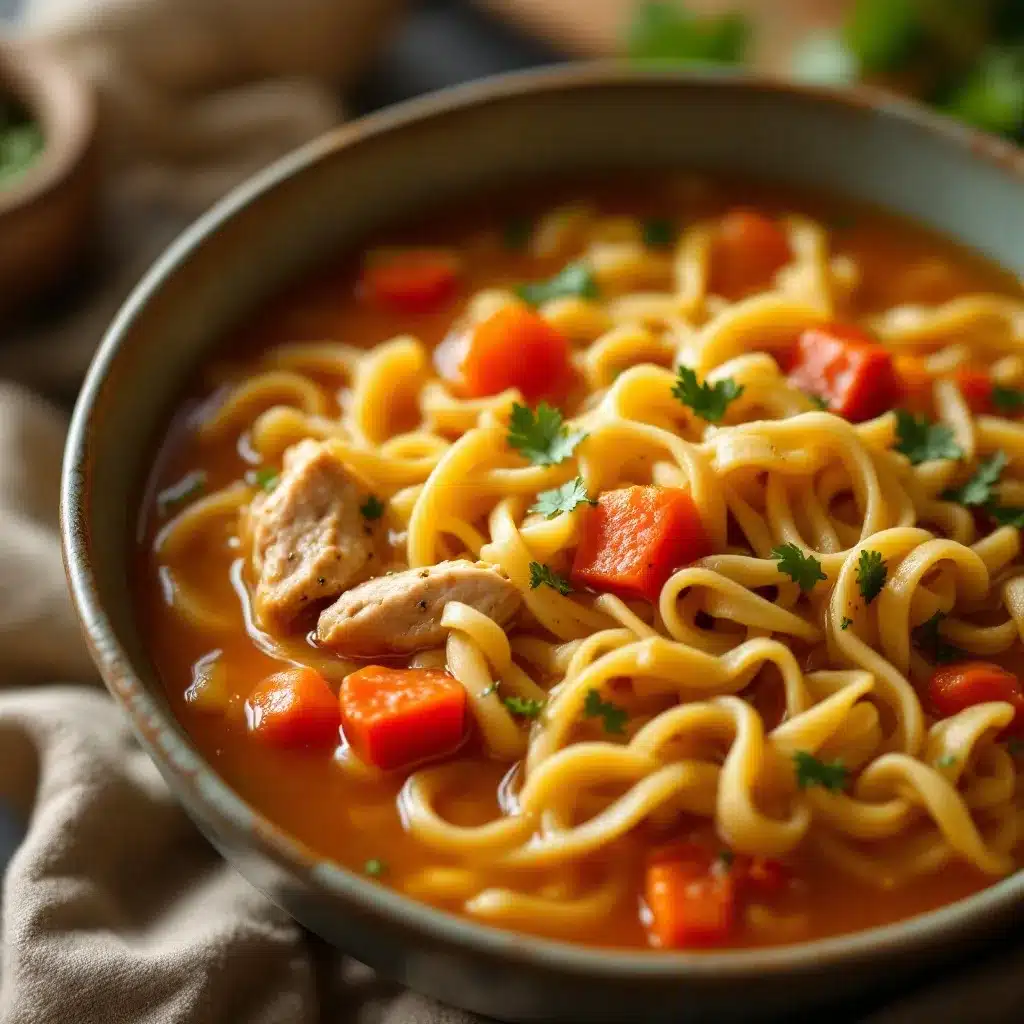
Let us walk through this step by step. The process takes about an hour total, with most of that being hands-off simmering time. It is a relaxing kind of cooking, perfect for a lazy Sunday afternoon or a quiet weeknight when you need to decompress.
- Prep Your Vegetables: Dice the onion into small, even pieces. Slice the carrots into rounds about ¼-inch thick. Slice the celery into similar-sized pieces. Mince the garlic cloves. Having everything ready before you start cooking makes the process smooth and prevents burning.
- Season and Brown the Chicken: Pat the chicken thighs dry with paper towels. Season generously on both sides with salt and black pepper. Heat 2 tablespoons of olive oil in your Dutch oven over medium-high heat until it shimmers. Place the chicken thighs in the pot in a single layer, being careful not to overcrowd. Cook for 4-5 minutes per side until deeply golden brown. The chicken will not be cooked through yet, and that is fine. Transfer the browned thighs to a plate and set aside.
- Sauté the Aromatics: Reduce the heat to medium. Add the diced onion to the pot and cook for 3-4 minutes, stirring occasionally, until it turns translucent and soft. Scrape up any browned bits from the bottom of the pot as the onion releases moisture. Add the sliced carrots and celery and cook for another 3 minutes, stirring often. The vegetables should start to soften but still hold their shape.
- Add Garlic and Herbs: Stir in the minced garlic, dried thyme, and crushed rosemary. Cook for 30 seconds until fragrant. Garlic burns quickly, so keep stirring and do not walk away. Your kitchen will smell incredible at this point.
- Add Broth and Bay Leaves: Pour in the 8 cups of low-sodium chicken broth. Add the 2 bay leaves. Use your wooden spoon to scrape up any remaining browned bits from the bottom of the pot. Those bits are pure flavor and you want them dissolved into the broth.
- Simmer the Chicken: Return the browned chicken thighs to the pot, along with any juices that accumulated on the plate. Bring the broth to a gentle boil, then reduce the heat to low. Cover the pot with the lid slightly ajar and let it simmer for 25 minutes. The broth should be at a gentle bubble, not a rolling boil. Boiling can make the chicken tough.
- Remove and Shred the Chicken: After 25 minutes, use tongs to transfer the chicken thighs to a clean cutting board. They should be tender and cooked through. Let them rest for 2-3 minutes, then use two forks to shred the meat into bite-sized pieces. Discard any excess fat or gristle.
- Cook the Noodles: While the chicken rests, bring the broth back to a gentle boil. Stir in the egg noodles and cook according to package directions, usually 6-8 minutes for wide egg noodles. Stir occasionally to prevent the noodles from sticking to the bottom of the pot.
- Return the Chicken: Once the noodles are tender, return the shredded chicken to the pot. Stir everything together and let it cook for another 2 minutes so the flavors meld. Taste the broth and adjust the seasoning with salt and pepper as needed.
- Finish with Parsley: Remove the bay leaves and discard them. Stir in the fresh chopped parsley. The parsley adds brightness and a pop of green color that makes the soup look as good as it tastes.
- Serve Immediately: Ladle the soup into deep bowls and serve hot. The noodles will continue to absorb broth as the soup sits, so if you are making this ahead, consider cooking the noodles separately and adding them just before serving.
Cooking Tips & Techniques
Over the years, I have made this soup dozens of times, and I have learned a few things the hard way. Here are the tips that make a real difference.
Do Not Skip the Browning: I know it is tempting to just throw everything in the pot and save time. But browning the chicken first creates a layer of browned bits on the bottom of the pot called fond. That fond is where the deep, savory flavor comes from. Without it, the broth tastes flat. I learned this lesson after making a batch that was perfectly fine but completely forgettable. The browning step is non-negotiable.
Watch Your Heat: When you add the broth, bring it to a gentle simmer, not a full boil. A rolling boil can make the chicken tough and cause the noodles to break apart. I keep my burner at medium-low once the soup comes to temperature. The surface should show small bubbles, not a violent churn.
Season in Layers: Add salt at each stage. Season the chicken before browning, add a pinch with the vegetables, and adjust at the end. Layering the seasoning builds complexity. I once added all the salt at the end, and the soup tasted salty but not seasoned. There is a difference.
Noodle Timing Matters: Cook the noodles until just tender, not mushy. They will continue to soften slightly in the hot broth after you turn off the heat. If you are making soup for leftovers, undercook the noodles by a minute so they do not turn to mush when reheated.
Let It Rest: Like many soups, this one tastes even better the next day. The flavors have time to meld and deepen. If you can, make it a day ahead and reheat gently. I have been known to make a double batch just so I have leftovers for lunch.
Variations & Adaptations
This cozy classic chicken noodle soup for fall evenings is wonderfully adaptable. Here are some variations I have tried and loved.
Herb and Lemon Variation: Add the zest of one lemon and 2 tablespoons of fresh lemon juice along with the parsley. The acidity brightens the whole soup and cuts through the richness. I tried this on a whim one night when I had a lemon about to go bad, and it was such a happy accident that it is now my preferred version.
Spicy Kick Variation: Add ½ teaspoon of red pepper flakes along with the garlic. For even more heat, stir in a diced jalapeño (seeds removed unless you want serious spice) with the onions. The warmth of the chili plays beautifully against the savory broth.
Creamy Chicken Noodle Soup: Stir in ½ cup of heavy cream or half-and-half at the very end, after removing the pot from the heat. This turns the soup into a rich, velvety version that feels extra indulgent on cold nights. I do this when I want something that feels like a hug in a bowl.
Gluten-Free Adaptation: Swap the egg noodles for gluten-free pasta or rice noodles. Cook them separately according to package directions and add them to individual bowls before ladling the soup over. This prevents the gluten-free pasta from getting mushy in the broth.
Herb Swap: If you do not have thyme and rosemary, use 1 teaspoon of dried oregano and 1 teaspoon of dried basil instead. The flavor profile shifts slightly but remains deliciously aromatic. I have made this version when my herb drawer was looking bare, and it still delivered.
Add Greens: Stir in a handful of fresh spinach or chopped kale during the last 2 minutes of cooking. The greens wilt into the broth and add color and nutrients without overpowering the flavor.
Serving & Storage Suggestions
This soup is best served piping hot in deep bowls. I like to pair it with crusty bread or fluffy buttermilk biscuits for sopping up every last drop of broth. A simple side salad with a tangy vinaigrette also works well to balance the richness.
For toppings, a sprinkle of fresh parsley is classic, but I also love a grind of black pepper and a pinch of red pepper flakes for a little warmth. Some people add a squeeze of lemon juice right before eating to brighten the flavors.
Storage Instructions: Let the soup cool completely before transferring to airtight containers. Store in the refrigerator for up to 4 days. The flavors actually deepen overnight, so leftovers are a treat. If you made the noodles directly in the broth, they will continue to absorb liquid and soften. To avoid mushy noodles, store the soup and noodles separately if you plan to keep it for more than a day.
Freezer Instructions: This soup freezes beautifully for up to 3 months. Again, consider freezing the broth and chicken without the noodles, then cooking fresh noodles when you reheat. If you freeze the soup with noodles, they will be quite soft after thawing. To freeze, let the soup cool, transfer to freezer-safe bags or containers, leaving an inch of headspace for expansion, and lay flat in the freezer.
Reheating Methods: Thaw frozen soup overnight in the refrigerator. Reheat gently on the stovetop over medium-low heat, stirring occasionally. Add a splash of broth or water if the soup has thickened too much. You can also reheat individual portions in the microwave for 2-3 minutes, stirring halfway through.
Nutritional Information & Benefits
This cozy classic chicken noodle soup for fall evenings is not just comforting, it is also nourishing. Here is an estimated breakdown per serving (based on 6 servings).
| Nutrient | Amount Per Serving |
|---|---|
| Calories | 320 |
| Protein | 28g |
| Fat | 12g |
| Saturated Fat | 3g |
| Carbohydrates | 28g |
| Fiber | 3g |
| Sugar | 5g |
| Sodium | 680mg |
Chicken provides high-quality protein that supports muscle health and keeps you feeling full. Carrots are packed with beta-carotene, which your body converts to vitamin A for immune function and eye health. Celery is low in calories but high in antioxidants and anti-inflammatory compounds. The broth itself is hydrating and soothing, especially helpful when you are feeling under the weather.
This recipe is naturally dairy-free and can be made gluten-free with a simple noodle swap. It is also relatively low in added sugars and uses healthy fats from olive oil. For a lower-sodium version, use homemade broth or a no-salt-added store-bought option and reduce the added salt.
Conclusion
This cozy classic chicken noodle soup for fall evenings is the kind of recipe that becomes a tradition. It is simple enough for a weeknight but special enough to serve when you want to impress someone with a homemade meal. The deep, savory broth, tender chicken, and perfectly cooked noodles come together in a way that feels both nostalgic and fresh.
I love this recipe because it reminds me that good food does not have to be complicated. It just needs time, attention, and a little love. Every time I make it, I think about that first bowl my neighbor brought over and how it changed my perspective on what comfort food can be. You can customize this soup to your taste, add more herbs, make it spicy, or keep it classic. It will be delicious either way.
I would love to hear how this soup turns out for you. Did you add any twists? Serve it with something special? Share your experience in the comments below, and do not forget to tag a friend who needs a warm bowl of comfort this fall. Happy cooking, and stay warm out there.
Frequently Asked Questions
Can I use chicken breasts instead of thighs?
Yes, you can substitute boneless, skinless chicken breasts for the thighs. Keep in mind that breasts are leaner and can dry out more easily. Reduce the simmering time to about 15-20 minutes before checking for doneness. Shred the breasts carefully, as they can become stringy if overcooked.
How do I prevent the noodles from getting mushy?
Cook the noodles until just al dente, about 1 minute less than the package directions suggest. They will continue to soften in the hot broth. For the best leftovers, cook the noodles separately and add them to individual bowls when serving, storing the broth and noodles apart in the refrigerator.
Can I make this soup in a slow cooker?
Absolutely. Brown the chicken and sauté the vegetables on the stovetop first, then transfer everything except the noodles to a slow cooker. Cook on low for 6-8 hours or high for 3-4 hours. Shred the chicken, then stir in the noodles during the last 20 minutes of cooking. This method works wonderfully for busy days.
What is the best way to thicken the soup?
If you prefer a thicker broth, mash some of the cooked carrots and celery against the side of the pot with a wooden spoon before adding the noodles. Alternatively, mix 1 tablespoon of cornstarch with 2 tablespoons of cold water to create a slurry, then stir it into the simmering soup and cook for 2 minutes until thickened.
Can I add other vegetables to this soup?
Definitely. This soup is very forgiving with vegetable additions. Try adding sliced mushrooms with the onions, frozen peas during the last 5 minutes of cooking, or diced potatoes along with the carrots. Chopped zucchini or bell peppers also work well. Just keep the total vegetable volume similar to the original recipe to maintain the broth balance.
Pin This Recipe!
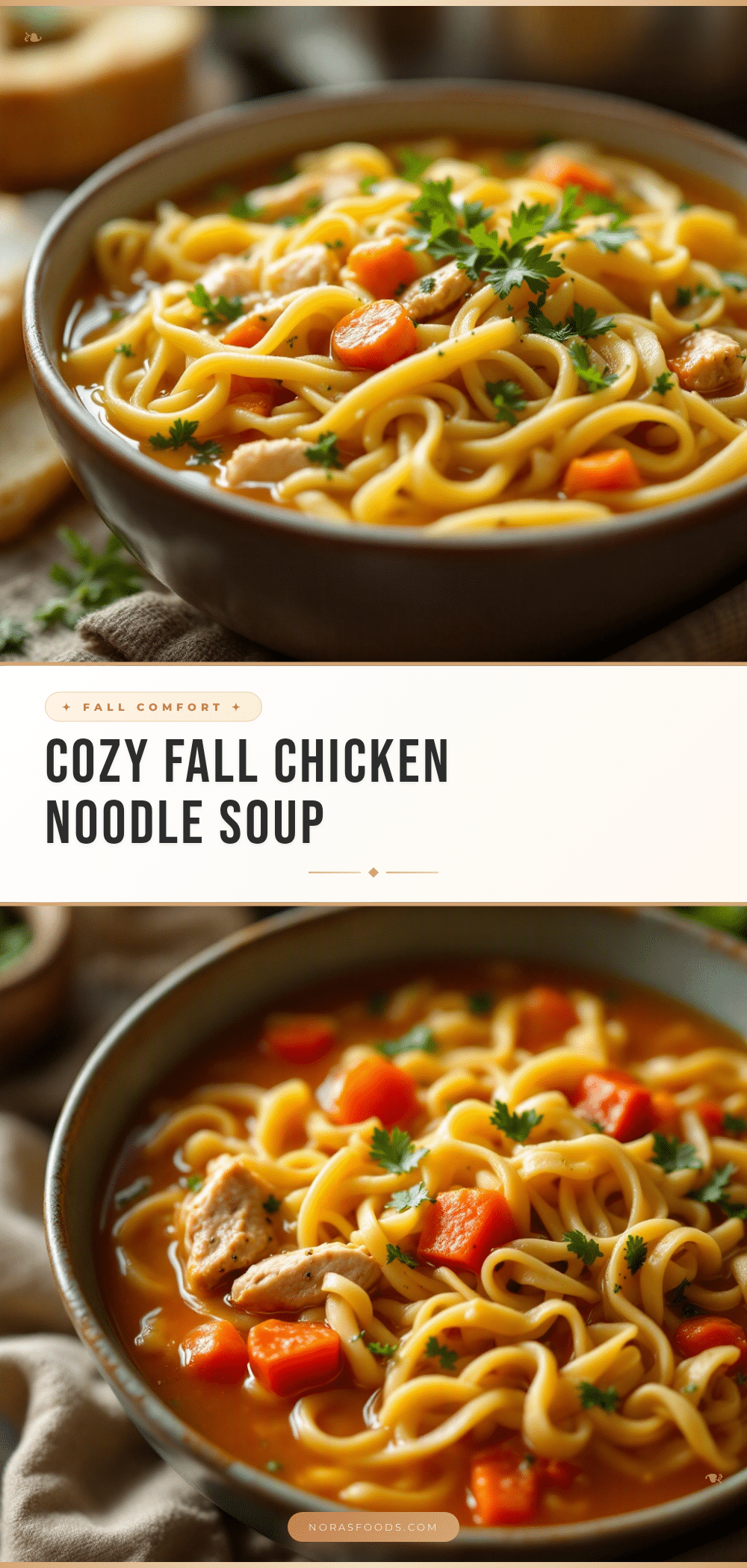
Cozy Classic Chicken Noodle Soup for Fall Evenings

A deeply flavorful, homemade chicken noodle soup with a rich golden broth, tender shredded chicken, and perfectly cooked egg noodles. This comforting recipe is perfect for chilly fall evenings and is made with simple pantry ingredients.
- Prep Time: 15 minutes
- Cook Time: 45 minutes
- Total Time: 1 hour
- Yield: 6 servings 1x
- Category: Main Course
- Cuisine: American
Ingredients
- 1.5 pounds (680g) boneless, skinless chicken thighs
- 2 tablespoons (30ml) olive oil
- 1 large yellow onion, diced
- 3 medium carrots, peeled and sliced into rounds
- 3 ribs celery, sliced
- 4 cloves garlic, minced
- 8 cups (1.9 liters) low-sodium chicken broth
- 1 teaspoon dried thyme
- 1 teaspoon dried rosemary, crushed
- 2 bay leaves
- 8 ounces (225g) wide egg noodles
- ¼ cup (15g) fresh parsley, chopped
- Salt and black pepper to taste
Instructions
- Prep your vegetables: dice the onion, slice the carrots and celery, and mince the garlic.
- Pat the chicken thighs dry and season generously with salt and pepper. Heat olive oil in a large Dutch oven over medium-high heat. Brown the chicken for 4-5 minutes per side until deeply golden. Transfer to a plate.
- Reduce heat to medium. Add the onion and cook for 3-4 minutes until translucent, scraping up browned bits. Add carrots and celery, cook for 3 more minutes.
- Stir in garlic, thyme, and rosemary; cook for 30 seconds until fragrant.
- Pour in chicken broth and add bay leaves. Scrape up any remaining browned bits. Return the chicken to the pot.
- Bring to a gentle boil, then reduce heat to low. Cover with lid slightly ajar and simmer for 25 minutes.
- Remove chicken and shred with two forks. Discard any fat or gristle.
- Bring broth back to a gentle boil. Add egg noodles and cook according to package directions (6-8 minutes), stirring occasionally.
- Return shredded chicken to the pot. Stir and cook for 2 more minutes. Adjust seasoning with salt and pepper.
- Remove bay leaves. Stir in fresh parsley. Serve hot.
Notes
For best results, do not skip browning the chicken as it creates a flavorful fond. Cook noodles until just al dente to prevent mushiness. The soup tastes even better the next day. For gluten-free, use gluten-free pasta or rice noodles. For a creamy version, stir in ½ cup heavy cream at the end.
Nutrition
- Serving Size: 1 bowl (about 1.5 cu
- Calories: 320
- Sugar: 5
- Sodium: 680
- Fat: 12
- Saturated Fat: 3
- Carbohydrates: 28
- Fiber: 3
- Protein: 28
Keywords: chicken noodle soup, fall soup, comfort food, homemade soup, chicken soup, fall evenings, cozy soup