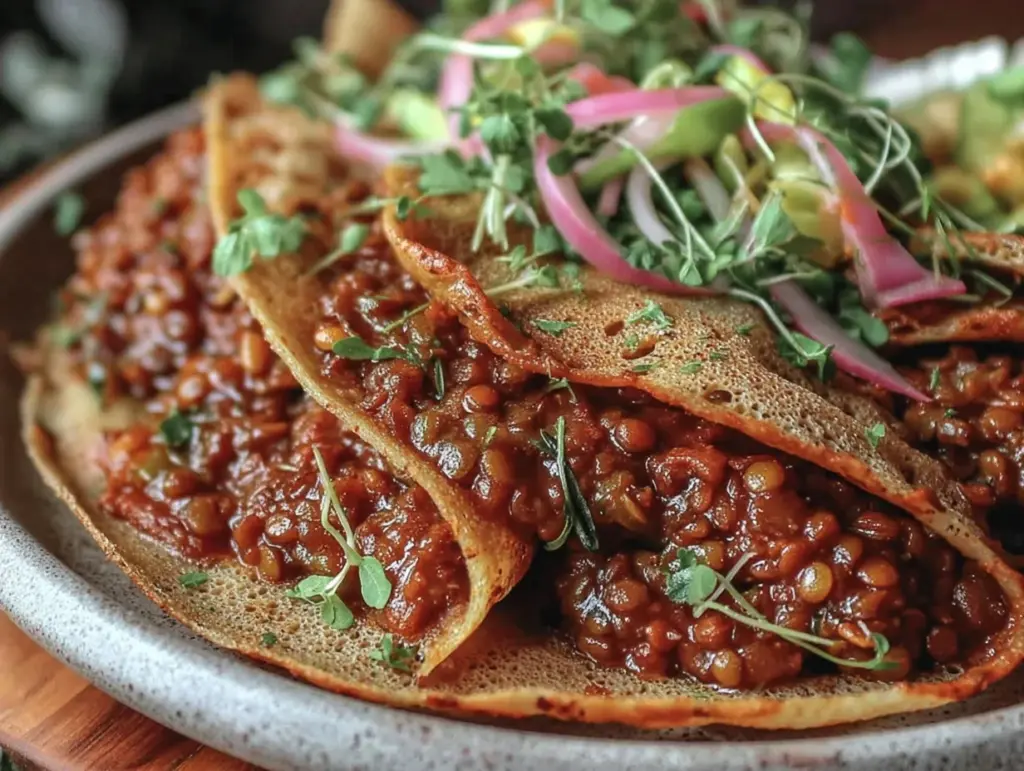
“You’ve got to try this,” my coworker said one afternoon, sliding a small plate across the break room table. It was packed with what looked like tiny folded pancakes filled with a vibrant lentil stew. Honestly, I was skeptical—Ethiopian cuisine wasn’t exactly my go-to, and “injera tacos” sounded like some kind of fusion experiment that might miss the mark. But the moment I bit into that tangy, spongy injera wrapped around the rich, spicy lentil wat, something just clicked.
The sourness of the injera, made from fermented teff flour, paired with the warm, fragrant lentil stew was unlike anything I’d expected. It was earthy, tangy, and comforting all at once—a kind of food hug after a hectic week. I found myself craving those savory Ethiopian injera tacos with lentil wat filling so much that I made them multiple times that week. It was a little adventure that felt both exotic and homey, perfect for nights when I wanted something different but not complicated.
Since that day, this recipe stuck with me—not just because it’s delicious but because it’s approachable. You don’t need to be a kitchen pro or have a pantry full of rare spices. The ingredients are honest and straightforward, yet the flavors feel layered and rich. Plus, the whole dish comes together in a way that invites sharing, laughter, and maybe a little bit of sauce on your fingers (which is honestly the best part). If you’re curious to try something new that’s both comforting and packed with personality, this recipe might just become your next favorite.
Why You’ll Love This Recipe
After testing this recipe over several weeks (and tweaking the spice balance to perfection), I can say this version of savory Ethiopian injera tacos with lentil wat filling is a keeper. Here’s what makes it stand out:
- Quick & Easy: The lentil wat takes about 30 minutes to simmer, and the injera can be store-bought or homemade if you’re feeling adventurous—meaning dinner can be on the table in under an hour.
- Simple Ingredients: Featuring staples like red lentils, onions, garlic, and a few Ethiopian spices (berbere is key!), most of the items are easy to find or swap without losing flavor.
- Perfect for Casual Gatherings: These injera tacos are great for a laid-back dinner with friends or family. They encourage sharing and hands-on eating, making mealtimes more social and fun.
- Crowd-Pleaser: The blend of spicy, tangy, and savory flavors wins over both spice lovers and those new to Ethiopian cuisine, making it a versatile dish for diverse palates.
- Unbelievably Delicious: The combination of the airy, fermented injera with the hearty lentil filling creates a texture and flavor duo that’s truly comforting and satisfying.
This isn’t just another lentil stew or taco recipe. The magic lies in the balance of fermentation, spices, and textures. The berbere spice mix adds warmth without overpowering, and the slow, gentle simmering of the lentils builds a deep, soulful flavor. Plus, the injera’s slight tang acts as a perfect foil to the spicy lentils, making each bite complex and rewarding.
For me, these savory Ethiopian injera tacos with lentil wat filling became a way to share a piece of culture and flavor without fuss. I love how they bring something different to the dinner table while feeling cozy and familiar, kind of like a warm blanket on a cool evening.
What Ingredients You Will Need
This recipe uses simple, wholesome ingredients to deliver bold flavor and satisfying texture without the fuss. I usually keep these items stocked, so whipping up these injera tacos feels effortless.
- For the Injera:
- Teff flour (1 cup / 120g) – traditional and gives that signature tang; look for whole grain teff for best results
- Water (1 ¼ cups / 300ml) – for batter consistency
- Salt (1/2 tsp) – to balance flavor
- Optional: a pinch of baking soda or yeast (if you want to speed up fermentation)
- For the Lentil Wat Filling:
- Red lentils (1 cup / 200g), rinsed – cooks quickly and softens perfectly
- Yellow onion (1 medium), finely chopped – adds sweetness and depth
- Garlic cloves (3), minced – essential for aroma
- Fresh ginger (1 tbsp), grated – for warmth and zing
- Berbere spice blend (2 tbsp) – the star of the dish, rich with chili, fenugreek, and warm spices; I like Traditional Ethiopian Berbere brand for consistency
- Tomato paste (2 tbsp) – adds body and a subtle tang
- Vegetable oil (2 tbsp) – to sauté and develop flavors; neutral oils like canola work well
- Water or vegetable broth (2 cups / 475ml) – to simmer the lentils
- Salt and black pepper to taste
- Optional: a splash of lemon juice or apple cider vinegar (1 tsp) – to brighten the final stew
- For Garnishes (Optional):
- Chopped fresh cilantro or parsley – freshness to contrast the spice
- Plain yogurt or coconut yogurt – cool creaminess
- Sliced avocado – richness and balance
If you can’t find teff flour easily, some health food stores carry it, or you can experiment by mixing whole wheat and gluten-free flours for a different texture. For a quicker option, store-bought flatbreads can stand in, but nothing quite hits the spot like homemade injera.
Equipment Needed
- Large nonstick skillet or cast-iron pan – perfect for cooking injera evenly; I prefer cast iron for its heat retention
- Medium saucepan – for simmering the lentil wat filling
- Mixing bowls – for batter prep and soaking lentils
- Whisk or spoon – to mix batter smoothly
- Fine mesh strainer – handy for rinsing lentils thoroughly
- Measuring cups and spoons – for precise ingredient amounts
- Spatula or wooden spoon – for stirring lentils and flipping injera
If you don’t have a cast-iron skillet, a heavy-bottomed nonstick pan works fine, but you might lose a bit of the traditional texture. For making injera, it helps to have a flat surface with some weight to get those signature bubbles and soft texture. I’ve seen people use electric griddles with success, too.
For budget-friendly cooking, a simple nonstick pan and a sturdy saucepan will carry you through just fine. Just remember to season your cast iron regularly if you go that route—it really makes a difference in the flavor and ease of cooking!
Preparation Method
- Prepare the Injera Batter: In a large mixing bowl, combine 1 cup (120g) of teff flour with 1 ¼ cups (300ml) water and ½ teaspoon salt. Whisk until smooth. Cover with a cloth and leave at room temperature for 24-48 hours to ferment. You’ll notice bubbles forming and a slight sour aroma developing. If you’re short on time, add a pinch of baking soda or a teaspoon of yeast to speed things up, but the flavor will be less tangy.
- Cook the Lentil Wat Filling: Rinse 1 cup (200g) red lentils under cold water until clear. In a medium saucepan, heat 2 tablespoons vegetable oil over medium heat. Add the chopped onion and sauté until soft and translucent, about 5-7 minutes.
- Add minced garlic (3 cloves) and grated ginger (1 tablespoon) to the onions, stirring for another 1-2 minutes until fragrant.
- Stir in 2 tablespoons of berbere spice blend and 2 tablespoons tomato paste, cooking for 1-2 minutes to release the spices’ aroma.
- Add the rinsed lentils and 2 cups (475ml) water or vegetable broth. Bring to a boil, then reduce heat and simmer gently, uncovered, for 25-30 minutes, stirring occasionally. The lentils should be soft and the sauce thickened but not dry. Add salt and black pepper to taste.
- Optional: Stir in 1 teaspoon lemon juice or apple cider vinegar at the end for a bright finish.
- Cook the Injera: Once the batter is fermented, stir it gently. Heat a nonstick skillet or cast-iron pan over medium heat. Pour about ¼ cup (60ml) of batter into the pan and swirl it around to cover the surface thinly. Cover the pan with a lid and cook for 2-3 minutes. You’ll see bubbles form on top, and the injera will set but not brown. Remove the injera carefully and place it on a plate to cool. Repeat with the remaining batter.
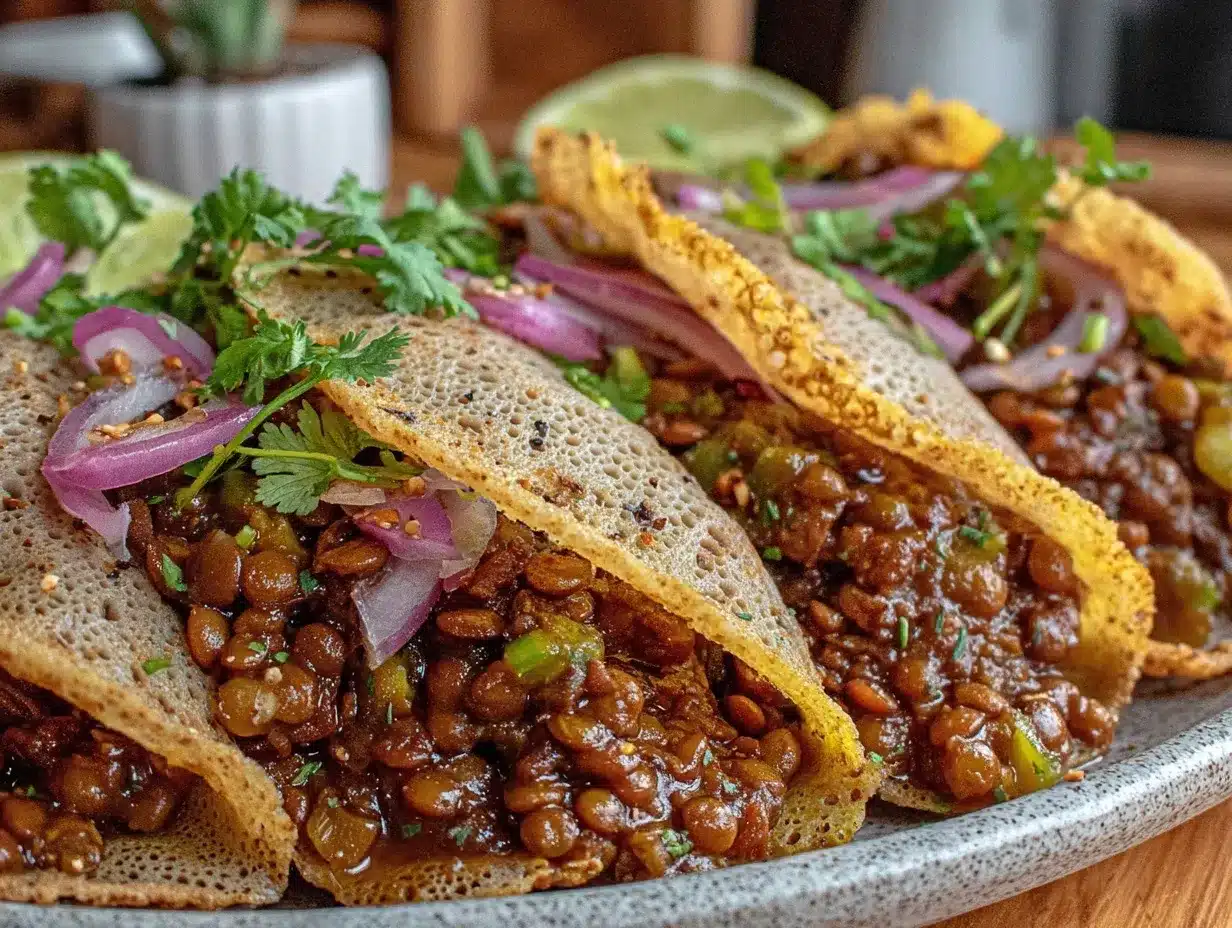
- Assemble the Tacos: Place a warm injera on a plate, spoon a generous amount of lentil wat filling in the center, and fold or roll it up like a taco. Add optional garnishes like fresh cilantro, sliced avocado, or a dollop of yogurt for contrast.
One tip: don’t rush the fermentation of the injera batter. That slight tang is what gives it character, and skipping or shortening this step changes the whole experience. When cooking the lentils, keep an eye on the consistency—too watery and it won’t hold in the taco; too dry and it loses that comforting stew feel.
Cooking Tips & Techniques
One thing I learned the hard way is that the berbere spice blend can vary wildly in heat and flavor. It’s worth trying a small amount first and adjusting to your taste. Freshness matters—if your berbere smells stale, the stew won’t have that vibrant kick.
When making injera, the batter’s thickness is crucial. It should be pourable but not watery—think pancake batter consistency. Too thin, and the injera tears; too thick, and it won’t spread properly.
Covering the pan while cooking injera traps steam, which helps create the spongy texture and those characteristic holes on the surface. Resist the urge to flip it—traditional injera cooks on one side only.
If you want to make this recipe even quicker, try cooking the lentils in a pressure cooker or Instant Pot. It speeds up the process and deepens flavors, but keep an eye on seasoning afterward.
Multitasking tip: prep your lentils first, then start the injera batter fermentation earlier in the day or even the day before. This way, you can cook everything fresh but without last-minute rush. Pairing this dish with a fresh salad or some fresh watermelon salad with feta and mint makes a wonderfully balanced meal.
Variations & Adaptations
This recipe is a great base for creativity. Here are some ideas I’ve tried or would recommend:
- Vegan Variation: This recipe is naturally vegan, but for an even heartier filling, try adding sautéed mushrooms or diced sweet potatoes along with the lentils.
- Gluten-Free Option: Injera is traditionally gluten-free since teff is naturally so. Just be sure your berbere and other ingredients don’t contain any gluten additives.
- Spice Level Adjustments: If you prefer milder flavors, reduce the berbere by half and add smoked paprika for warmth without heat. For more heat, add a pinch of cayenne or fresh chili peppers.
- Alternative Fillings: For a different take, swap the lentil wat with a spicy chickpea stew or even shredded spiced chicken if you eat meat. These also pair beautifully with injera.
- Different Cooking Methods: You can bake the lentil filling in a casserole dish topped with vegan cheese for a fusion twist, then spoon it onto injera for a cheesy taco vibe.
One personal favorite is mixing in a handful of kale or spinach near the end of cooking the lentils for an added nutrient punch and color pop. It’s a subtle shift but adds freshness and texture.
Serving & Storage Suggestions
These injera tacos are best served warm, fresh off the pan. I like to fold them gently, so the lentil wat filling stays snug inside without spilling everywhere (though a little mess is part of the fun!).
For sides, crisp salads or lightly steamed greens work beautifully to balance the richness. A cooling yogurt sauce or a squeeze of lemon over the top cuts through the spices and adds brightness.
If you have leftovers, store the lentil wat filling in an airtight container in the fridge for up to 4 days. Reheat gently on the stove or microwave, adding a splash of water if it thickened too much.
Injera is best eaten fresh but can be wrapped tightly in plastic wrap and refrigerated for 1-2 days. To revive, warm it gently in a dry skillet or microwave with a damp paper towel to avoid drying out.
Flavors in the lentil wat deepen after resting overnight, so if you have the patience, make the filling a day ahead. It’s a great way to prep for a casual dinner or small gathering.
Nutritional Information & Benefits
This dish is a nutrient powerhouse thanks to its simple, wholesome ingredients. One serving of savory Ethiopian injera tacos with lentil wat filling offers approximately:
| Nutrient | Amount per Serving |
|---|---|
| Calories | 350-400 kcal |
| Protein | 18-20 g |
| Fiber | 10 g |
| Carbohydrates | 55 g |
| Fat | 6-8 g |
Teff flour is gluten-free and rich in iron and calcium, while lentils provide plant-based protein and fiber to keep you full and satisfied. The spices, especially berbere, contain antioxidants and anti-inflammatory compounds.
This makes the recipe not only delicious but also balanced and wholesome, fitting well into vegetarian, vegan, and gluten-free diets. Just watch out if you’re sensitive to chilies or spices, as berbere can be quite potent.
Conclusion
These savory Ethiopian injera tacos with lentil wat filling bring a unique, flavorful twist to weeknight dinners that’s both comforting and exciting. The combination of tangy, spongy injera with savory, spiced lentils is a little culinary trip you can take from your own kitchen.
Whether you’re new to Ethiopian cuisine or a longtime fan, this recipe offers an approachable way to enjoy rich, bold flavors without fuss. Feel free to adapt the spice level and garnishes to suit your taste—the recipe really invites personalization.
I keep coming back to this dish because it’s satisfying, simple, and shares a story on the plate. If you try it, I’d love to hear how you make it your own or what sides you pair it with. There’s something special about food that brings people together, and these injera tacos do just that.
Happy cooking!
FAQs
What is injera, and can I buy it ready-made?
Injera is a sourdough flatbread made from fermented teff flour, traditional in Ethiopian cuisine. You can often find it in specialty or international markets. If unavailable, you can try making it at home with teff flour or substitute with other flatbreads, though the flavor and texture will differ.
Can I make the lentil wat filling ahead of time?
Yes! The lentil wat tastes even better the next day as the flavors meld. Store it in an airtight container in the fridge for up to 4 days and reheat gently before serving.
What is berbere spice, and can I substitute it?
Berbere is a spicy Ethiopian spice blend featuring chili peppers, garlic, ginger, fenugreek, and other warm spices. If you can’t find it, try mixing smoked paprika, cayenne, cinnamon, and ground coriander as a rough substitute, but the authentic flavor is unique.
Is this recipe gluten-free?
Yes, when using pure teff flour for injera, this recipe is naturally gluten-free. Just double-check your spice blends and other ingredients to ensure they don’t contain gluten additives.
How do I store leftover injera?
Wrap injera tightly in plastic wrap or foil and refrigerate for 1-2 days. Reheat gently in a dry skillet or microwave with a damp paper towel to keep it soft and pliable.
Pin This Recipe!
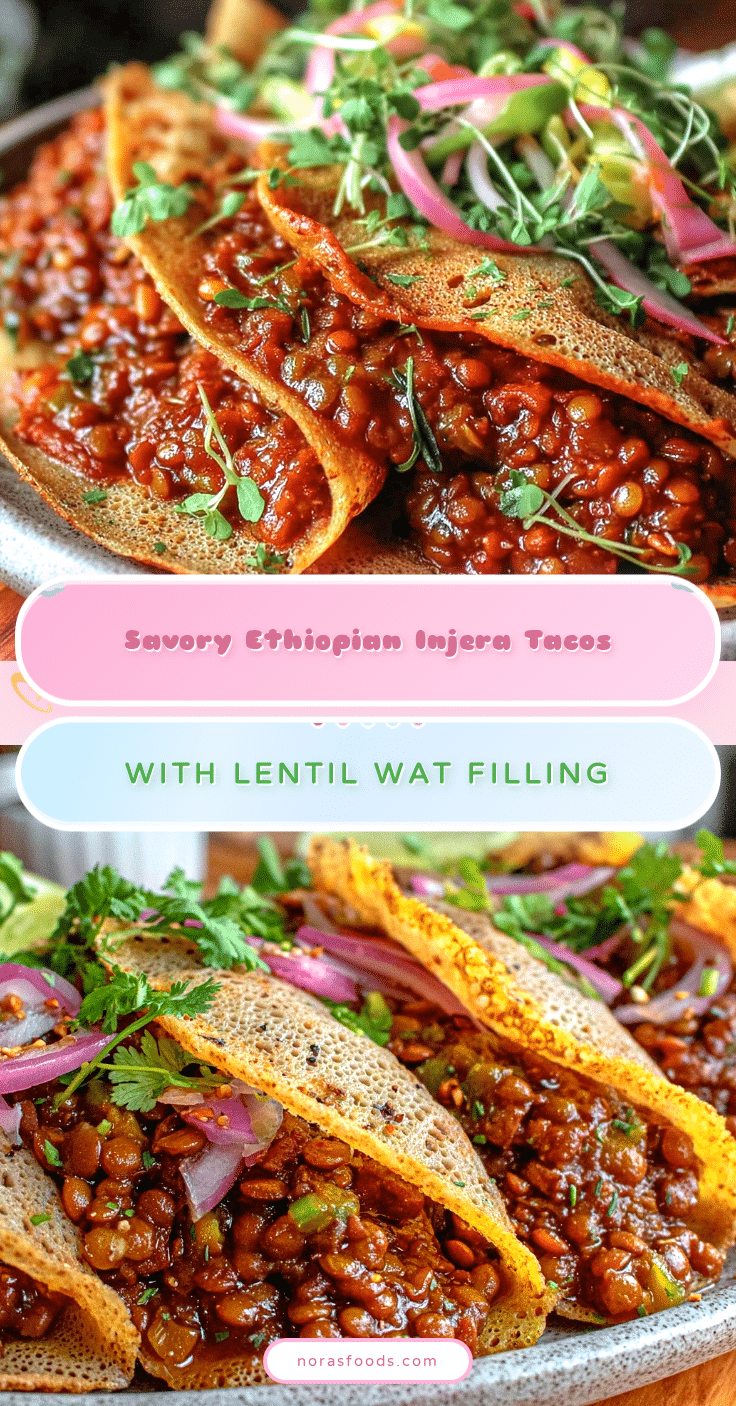
Savory Ethiopian Injera Tacos with Lentil Wat Filling

A flavorful and comforting Ethiopian-inspired dish featuring tangy, spongy injera flatbread wrapped around a rich, spicy lentil wat stew. Perfect for casual gatherings and easy to prepare with simple ingredients.
- Prep Time: 10 minutes (plus 24-48 hours fermentation)
- Cook Time: 35 minutes
- Total Time: 25-48 hours fermentation plus 45 minutes active cooking
- Yield: 4 servings 1x
- Category: Main Course
- Cuisine: Ethiopian
Ingredients
- For the Injera:
- 1 cup (120g) teff flour
- 1 1/4 cups (300ml) water
- 1/2 teaspoon salt
- Optional: pinch of baking soda or yeast to speed fermentation
- For the Lentil Wat Filling:
- 1 cup (200g) red lentils, rinsed
- 1 medium yellow onion, finely chopped
- 3 garlic cloves, minced
- 1 tablespoon fresh ginger, grated
- 2 tablespoons berbere spice blend
- 2 tablespoons tomato paste
- 2 tablespoons vegetable oil (canola or neutral oil)
- 2 cups (475ml) water or vegetable broth
- Salt and black pepper to taste
- Optional: 1 teaspoon lemon juice or apple cider vinegar
- For Garnishes (Optional):
- Chopped fresh cilantro or parsley
- Plain yogurt or coconut yogurt
- Sliced avocado
Instructions
- Prepare the Injera Batter: In a large mixing bowl, combine 1 cup (120g) teff flour, 1 1/4 cups (300ml) water, and 1/2 teaspoon salt. Whisk until smooth. Cover with a cloth and ferment at room temperature for 24-48 hours until bubbles form and a slight sour aroma develops. Optionally add a pinch of baking soda or yeast to speed fermentation.
- Cook the Lentil Wat Filling: Rinse 1 cup (200g) red lentils under cold water until clear. Heat 2 tablespoons vegetable oil in a medium saucepan over medium heat. Add chopped onion and sauté until soft and translucent, about 5-7 minutes.
- Add minced garlic and grated ginger to the onions and stir for 1-2 minutes until fragrant.
- Stir in 2 tablespoons berbere spice blend and 2 tablespoons tomato paste, cooking for 1-2 minutes to release aromas.
- Add rinsed lentils and 2 cups (475ml) water or vegetable broth. Bring to a boil, then reduce heat and simmer uncovered for 25-30 minutes, stirring occasionally, until lentils are soft and sauce thickened. Season with salt and black pepper to taste.
- Optional: Stir in 1 teaspoon lemon juice or apple cider vinegar at the end.
- Cook the Injera: Once batter is fermented, stir gently. Heat a nonstick skillet or cast-iron pan over medium heat. Pour about 1/4 cup (60ml) batter into the pan and swirl to cover surface thinly. Cover with lid and cook 2-3 minutes until bubbles form and injera sets but does not brown. Remove and cool. Repeat with remaining batter.
- Assemble the Tacos: Place warm injera on a plate, spoon a generous amount of lentil wat filling in the center, and fold or roll like a taco. Add optional garnishes such as cilantro, avocado slices, or yogurt.
Notes
Do not rush injera batter fermentation; the tangy flavor is key. Keep lentil wat consistency thick but not dry. Cover pan while cooking injera to trap steam and create characteristic holes. Berbere spice heat varies; adjust to taste. Injera cooks on one side only, do not flip. Lentil wat can be made ahead and flavors improve after resting overnight.
Nutrition
- Serving Size: 1 injera taco with l
- Calories: 375
- Sugar: 4
- Sodium: 350
- Fat: 7
- Saturated Fat: 1
- Carbohydrates: 55
- Fiber: 10
- Protein: 19
Keywords: Ethiopian, injera, lentil wat, lentil stew, berbere, vegan, gluten-free, spicy, flatbread, tacos