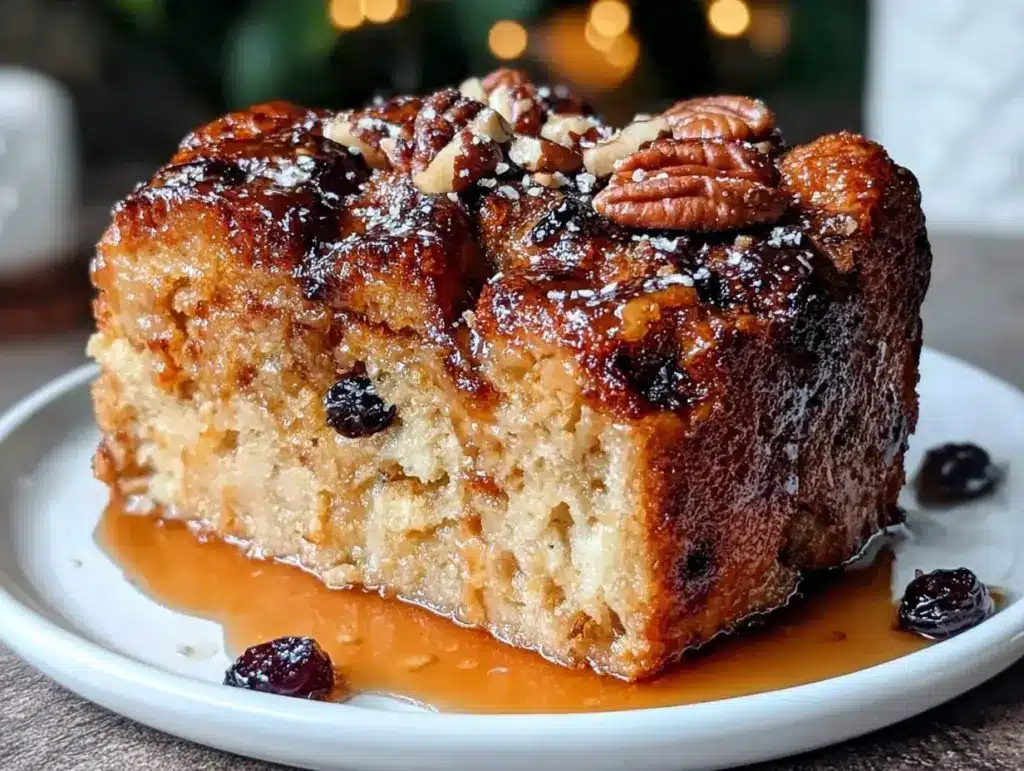
“You have to try this,” my aunt said, sliding a warm, syrupy plate across the table. I eyed the sticky layers suspiciously—bread pudding? Mexican style? With piloncillo and raisins? Honestly, I’d never been a huge fan of bread pudding, mostly because it tended to be soggy or bland in my experience. But that afternoon, between the sweet scent of cinnamon and the caramel notes from piloncillo simmering on the stove, I found myself hooked. This wasn’t just any bread pudding; it was something that felt like a festive hug wrapped in a dessert.
It all started on a rainy Sunday when the power flickered, and my aunt, without much to do, decided to make capirotada. She said it was a traditional dish her grandma made during Lent, with simple pantry ingredients that magically turn into something comforting and complex. The raisins plumped up in the syrup, the bread crisped in all the right places, and the piloncillo added a deep, molasses-like sweetness that I hadn’t expected. What surprised me most was how this humble dish became the star of the meal, sparking stories and laughter around the table.
That day, I realized capirotada is more than a dessert; it’s a memory, a ritual, a bite of culture that sticks with you. I’ve made this Mexican capirotada bread pudding with piloncillo and raisins more times than I can count since then—sometimes for quiet nights when I need a little comfort, sometimes for unexpected guests who swear it’s the best thing they’ve ever tasted. It’s simple, honest food that makes you slow down and savor every bite.
So, if you’re curious about this sweet, sticky treat with layers of flavor and history, you’re in the right place. This recipe might just become the one you reach for when you want something soulful, satisfying, and truly irresistible.
Why You’ll Love This Recipe
This Mexican capirotada bread pudding with piloncillo and raisins isn’t your average dessert. From my many kitchen trials and family gatherings, here’s why it’s become a favorite that I keep coming back to:
- Quick & Easy: You can have this ready in about an hour, perfect for those cozy evenings when you want a homemade treat but don’t have hours to spend.
- Simple Ingredients: No need for exotic shopping trips—piloncillo, bread, raisins, and a few pantry staples bring this dish to life. If you don’t have piloncillo, I’ll share a trustworthy substitution below.
- Perfect for Special Occasions: Whether it’s a holiday meal, a Sunday family gathering, or a Lenten tradition, capirotada feels festive yet approachable.
- Crowd-Pleaser: It’s sweet but not overpowering, with textures that kids and adults both love. I’ve served this after family dinners alongside lighter mains like the one-pan Greek chicken with vegetables, and it’s always a hit.
- Unbelievably Delicious: The piloncillo syrup infuses the bread with rich caramel and molasses notes, while the raisins add bursts of fruity sweetness—this combo creates a comforting texture your spoon will dive into again and again.
What sets this recipe apart is the way the piloncillo syrup is made slowly, letting the flavors thicken and deepen before soaking into the toasted bread layers. Unlike other bread puddings that can be mushy, this has a delightful balance of crispy edges and soft centers. Plus, the hint of cinnamon and cloves brings that warm spice aroma that makes you close your eyes and savor the moment.
Honestly, it’s the kind of dessert that makes you pause, forget your busy day, and feel connected to something a little sweeter and simpler. And if you’re looking for more easy, comforting recipes that fit into real life, you might enjoy my sticky teriyaki chicken stir-fry with brown rice for quick dinners.
What Ingredients You Will Need
This recipe uses simple, wholesome ingredients to deliver bold flavor and satisfying texture without the fuss. Most are pantry staples, and a few special touches give this capirotada its signature taste.
- Stale bread: Typically bolillo or French bread, cut into 1-inch cubes and lightly toasted. (Day-old bread works best because it soaks up the syrup without falling apart.)
- Piloncillo: This is unrefined whole cane sugar, sold in cones or blocks. It has a deep, molasses-like flavor that’s key to authentic capirotada. I recommend brands like C&H or Mexican piloncillo cones from your local Latin market. (If you can’t find piloncillo, dark brown sugar is a decent substitute.)
- Raisins: Golden or regular raisins add bursts of sweet juiciness. You can soak them briefly in warm water or rum to plump them up.
- Cinnamon sticks: For that warm, fragrant spice note.
- Cloves: Whole cloves add depth to the syrup’s flavor.
- Butter: Unsalted, used for toasting the bread cubes to add richness and a slight crispness.
- Water: To make the syrup base with piloncillo and spices.
- Optional nuts: Toasted pecans or walnuts can be stirred in or sprinkled on top for crunch.
- Grated cheese: Some versions use a mild cheese like queso fresco or Monterey Jack scattered between layers for a sweet-savory contrast. (I often skip this, but it’s a neat twist.)
All these ingredients come together in a way that’s easy to manage but yields complex flavors. If you want to try a gluten-free version, swapping out the bread for gluten-free baguette or brioche works well, though the texture changes slightly.
Equipment Needed
- Baking dish: An 8×8-inch (20×20 cm) glass or ceramic baking dish is ideal for layering the bread pudding evenly.
- Medium saucepan: For simmering the piloncillo syrup with spices.
- Mixing bowls: One for soaking the bread and another for mixing raisins and nuts if using.
- Knife and cutting board: To cube the bread evenly.
- Measuring cups and spoons: For precise ingredient amounts—piloncillo can vary in sweetness, so measuring makes a difference.
- Spatula or wooden spoon: For stirring the syrup gently.
- Optional: A fine-mesh sieve to strain the syrup if you want a smoother texture, though it’s not essential.
I’ve tried this recipe using metal, glass, and ceramic dishes, and I prefer glass because it heats evenly and lets you peek at the bubbling syrup soaking in. If you don’t have piloncillo on hand or want a budget-friendly option, substituting with dark brown sugar works fine, just simmer it a bit longer to thicken the syrup.
Preparation Method
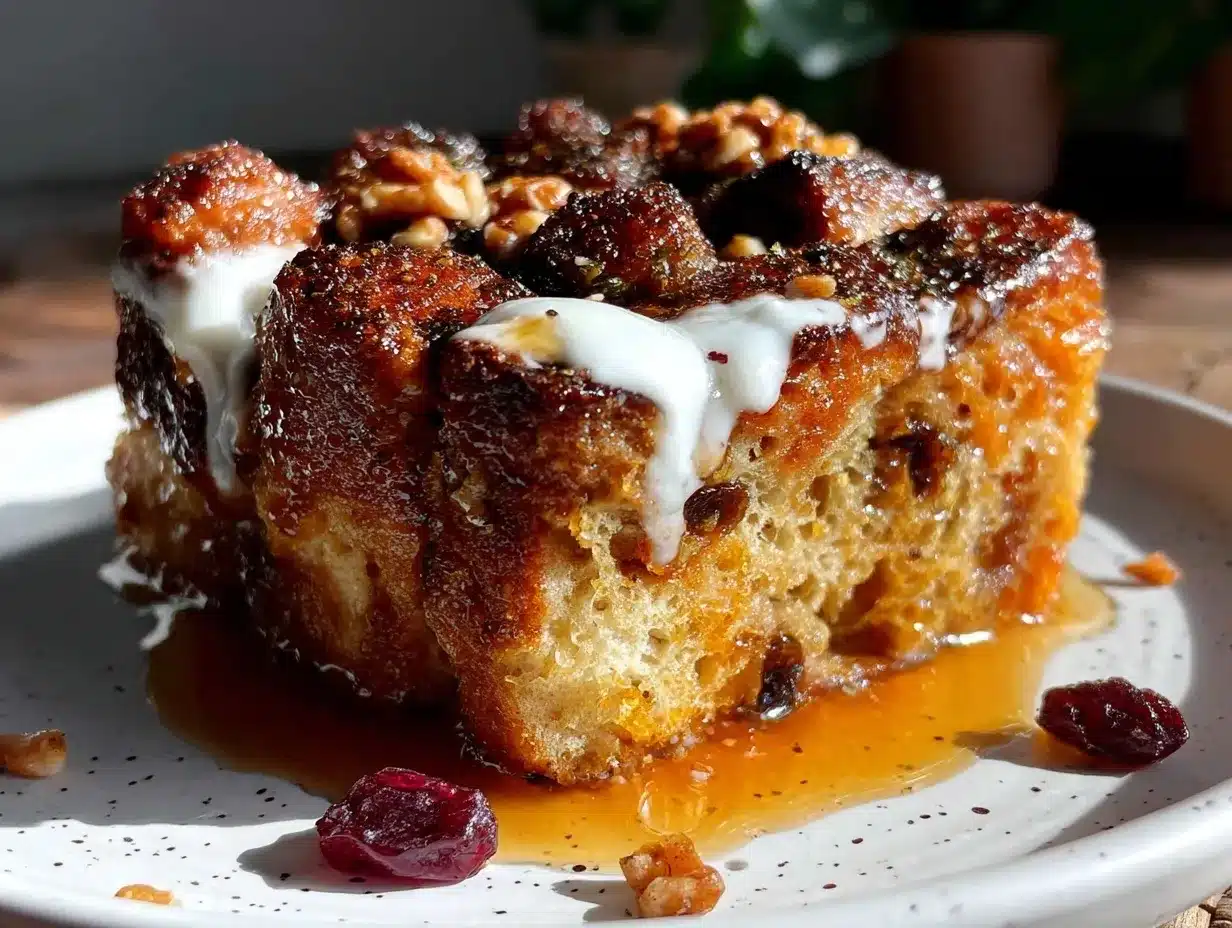
- Prepare the bread: Cut about 6 cups (about 300g) of stale bolillo or French bread into 1-inch (2.5 cm) cubes. Lightly toast them in a skillet with 2 tablespoons (28g) of unsalted butter over medium heat until golden brown and slightly crisp, about 5–7 minutes. Set aside to cool.
- Make the piloncillo syrup: In a medium saucepan, combine 1 cup (200g) of piloncillo (or dark brown sugar), 2 cups (475 ml) water, 2 cinnamon sticks, and 4 whole cloves. Bring to a gentle boil over medium heat, stirring occasionally to dissolve the sugar. Reduce heat and simmer for 15–20 minutes until the syrup thickens slightly and deepens in color. Remove the cinnamon sticks and cloves, then keep the syrup warm.
- Prepare the raisins: While the syrup simmers, soak 1/2 cup (75g) of raisins in warm water or rum for 10 minutes to plump them up, then drain.
- Assemble the layers: Lightly butter your 8×8-inch (20×20 cm) baking dish. Add a layer of toasted bread cubes, then sprinkle half the raisins evenly over the bread. Pour about one-third of the warm syrup over the layer to soak the bread.
- Repeat layers: Add another layer of bread and the remaining raisins, then pour another third of the syrup. For a twist, sprinkle 1/3 cup (30g) toasted pecans or walnuts between layers. Finish with a final bread layer, then pour the remaining syrup evenly on top.
- Bake: Preheat your oven to 350°F (175°C). Cover the baking dish with foil and bake for 25 minutes. Remove the foil and bake another 10–15 minutes until the top is golden and slightly crisp, and the syrup bubbles around the edges.
- Cool and serve: Let the capirotada cool slightly before serving. It’s delicious warm or at room temperature.
If the syrup seems too thin, you can simmer it a bit longer before pouring. Also, keep an eye on the bread while toasting so it doesn’t burn—golden edges give the best texture. Personally, I like toasting the bread in butter because it adds a rich, nutty flavor that plain bread can’t match.
Cooking Tips & Techniques
Making capirotada is about balancing textures and flavors, so a few tricks help get it just right:
- Don’t skip toasting the bread: It’s tempting to toss in soft bread and call it a day, but toasting adds structure so the bread holds up against the syrup without turning to mush.
- Simmer the syrup slowly: Rushing this step can leave the syrup too thin and less flavorful. Let it bubble gently until it thickens and the aromas fully develop.
- Layer with care: Press the bread gently when assembling so it soaks evenly but doesn’t get smashed. This layering keeps a nice contrast between soft and crisp.
- Watch your baking time: Too long and the pudding dries out; too short and it’s soggy. The syrup should be bubbling but the bread still hold its shape.
- Customizing texture: For more chew, add chopped nuts or even shredded coconut between layers. I once added a handful of chopped dried apricots for a tangy surprise, which was a nice twist.
- Use fresh spices: Ground cinnamon won’t give the same depth as whole sticks simmered in syrup. Fresh cloves are subtle but essential.
- Multitasking tip: While the syrup simmers, prep your bread and raisins to keep things moving efficiently—this helps the whole process feel faster.
Honestly, the first few times I made capirotada, I overbaked it and ended up with a dry pudding. Now, I trust the bubbling syrup as my cue and keep a close eye during those final minutes in the oven.
Variations & Adaptations
This Mexican capirotada bread pudding with piloncillo and raisins is wonderfully adaptable. Here are some ways to make it your own:
- Seasonal fruit swap: In summer, try adding chopped fresh peaches or pineapple chunks between layers instead of raisins for a fruity, fresh twist.
- Cheese layer: For a more traditional touch, add thin slices of queso fresco or Monterey Jack between bread layers. The mild saltiness contrasts beautifully with the sweet syrup.
- Gluten-free option: Use gluten-free bread or brioche. The texture will be softer but still delicious.
- Nut-free adaptation: Omit nuts or substitute with seeds like pumpkin or sunflower if allergies are a concern.
- Spice variations: Add a pinch of nutmeg or star anise to the syrup for a different aromatic profile.
One time, I experimented with adding a splash of orange blossom water to the syrup, which gave the capirotada a subtle floral note that surprised everyone at the table. It’s fun to tweak this recipe based on what you love or what you have on hand.
Serving & Storage Suggestions
Capirotada is best served warm or at room temperature, spooned onto small plates to enjoy the layers of syrup-soaked bread and raisins. It pairs beautifully with a simple cup of coffee or a spiced Mexican hot chocolate for a cozy treat.
If you want to serve it as part of a larger meal, try lighter mains like the cheesy breakfast burrito foil packets or a fresh salad to balance the richness.
For storage, cover any leftovers tightly and refrigerate for up to 3 days. The flavors actually deepen over time, though the bread softens further. To reheat, warm individual portions in the microwave or oven until just heated through—watch closely to avoid drying out.
You can also freeze capirotada in airtight containers for up to 2 months. Thaw overnight in the fridge and reheat gently before serving. Sometimes I make a double batch and freeze half for busy days when a comforting dessert is needed without the effort.
Nutritional Information & Benefits
This capirotada recipe offers a comforting treat with some nutritional perks. Here’s an estimate per serving (based on 8 servings):
| Calories | 220 kcal |
|---|---|
| Carbohydrates | 45g |
| Fat | 4g |
| Protein | 3g |
| Fiber | 2g |
| Sugar | 25g |
Piloncillo provides iron and minerals absent in refined sugars, and raisins contribute antioxidants, fiber, and natural sweetness. Using whole-grain bread boosts fiber further if you prefer. This dessert is gluten-containing unless you substitute gluten-free bread.
From a wellness perspective, I appreciate that this recipe doesn’t rely on artificial sweeteners or overly processed ingredients—just real food doing its thing. It’s a treat that feels honest and nourishing, especially when shared with others.
Conclusion
This Mexican capirotada bread pudding with piloncillo and raisins has become one of those recipes I turn to when I want a dessert that feels like a hug—warm, comforting, and a little nostalgic. Its simple ingredients and straightforward method make it approachable, yet the flavors are anything but ordinary.
I encourage you to make it your own, experimenting with nuts, cheese, or seasonal fruits to suit your taste. For me, it’s the syrupy sweetness and the nostalgic tradition behind it that keeps me coming back.
Give it a try, and if you do, I’d love to hear how you put your spin on it or what memories it brings up. Sharing recipes like this is what makes cooking feel alive and connected, don’t you think?
Frequently Asked Questions
What can I use if I don’t have piloncillo?
You can substitute dark brown sugar in equal amounts. It won’t have the exact molasses depth but will still create a rich, sweet syrup.
Can I make capirotada ahead of time?
Yes! Prepare it up to the baking step, cover, and refrigerate for up to 24 hours before baking. Or bake fully and reheat gently when ready to serve.
Is capirotada gluten-free?
Traditional recipes use wheat bread, so it’s not gluten-free. You can swap gluten-free baguette or bread to make a gluten-free version.
Can I add nuts to the recipe?
Absolutely. Toasted pecans, walnuts, or almonds add wonderful crunch. Just sprinkle them between bread layers or on top before baking.
How should I store leftover capirotada?
Store leftovers in an airtight container in the fridge for up to 3 days. Reheat gently in the microwave or oven before serving.
Pin This Recipe!
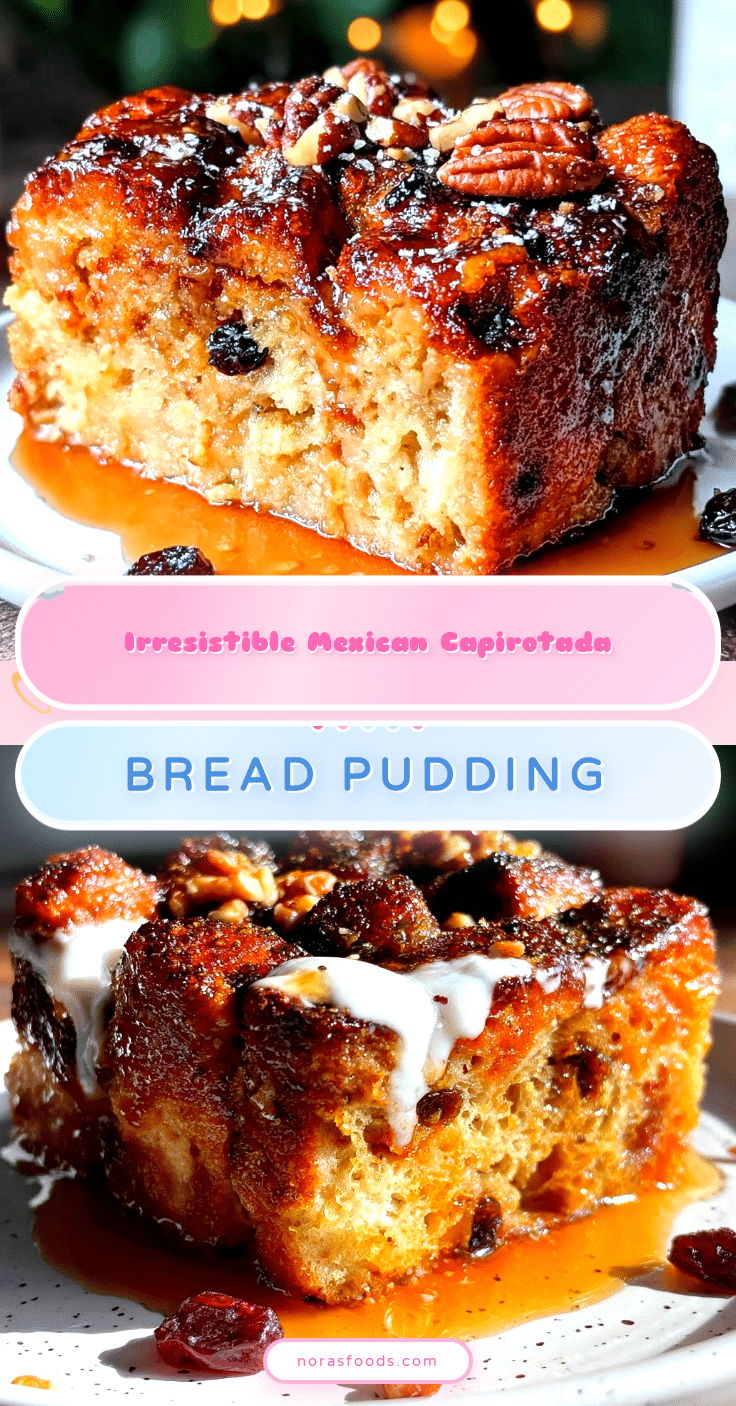
Irresistible Mexican Capirotada Bread Pudding Recipe with Piloncillo and Raisins Made Easy
A traditional Mexican bread pudding featuring layers of toasted bread soaked in a rich piloncillo syrup with raisins and warm spices, delivering a comforting and festive dessert.
- Prep Time: 15 minutes
- Cook Time: 40 minutes
- Total Time: 55 minutes
- Yield: 8 servings 1x
- Category: Dessert
- Cuisine: Mexican
Ingredients
- 6 cups stale bolillo or French bread, cut into 1-inch cubes
- 2 tablespoons unsalted butter
- 1 cup piloncillo (or dark brown sugar as substitute)
- 2 cups water
- 2 cinnamon sticks
- 4 whole cloves
- 1/2 cup raisins (golden or regular), soaked in warm water or rum for 10 minutes and drained
- 1/3 cup toasted pecans or walnuts (optional)
- Grated queso fresco or Monterey Jack cheese (optional)
Instructions
- Cut about 6 cups (about 300g) of stale bolillo or French bread into 1-inch (2.5 cm) cubes.
- Lightly toast the bread cubes in a skillet with 2 tablespoons (28g) of unsalted butter over medium heat until golden brown and slightly crisp, about 5–7 minutes. Set aside to cool.
- In a medium saucepan, combine 1 cup (200g) piloncillo (or dark brown sugar), 2 cups (475 ml) water, 2 cinnamon sticks, and 4 whole cloves.
- Bring to a gentle boil over medium heat, stirring occasionally to dissolve the sugar.
- Reduce heat and simmer for 15–20 minutes until the syrup thickens slightly and deepens in color.
- Remove the cinnamon sticks and cloves, then keep the syrup warm.
- Soak 1/2 cup (75g) raisins in warm water or rum for 10 minutes to plump them up, then drain.
- Lightly butter an 8×8-inch (20×20 cm) baking dish.
- Add a layer of toasted bread cubes, then sprinkle half the raisins evenly over the bread.
- Pour about one-third of the warm syrup over the layer to soak the bread.
- Add another layer of bread and the remaining raisins, then pour another third of the syrup.
- For a twist, sprinkle 1/3 cup (30g) toasted pecans or walnuts between layers (optional).
- Finish with a final bread layer, then pour the remaining syrup evenly on top.
- Preheat oven to 350°F (175°C). Cover the baking dish with foil and bake for 25 minutes.
- Remove the foil and bake another 10–15 minutes until the top is golden and slightly crisp, and the syrup bubbles around the edges.
- Let the capirotada cool slightly before serving. Serve warm or at room temperature.
Notes
Use stale bread for best texture; toasting bread adds structure and prevents sogginess. Simmer syrup slowly to develop deep flavors. You can substitute dark brown sugar for piloncillo if unavailable. Optional additions include nuts and grated cheese for texture and flavor contrast. For gluten-free, use gluten-free bread or brioche. Store leftovers in airtight container refrigerated up to 3 days or freeze up to 2 months.
Nutrition
- Serving Size: 1/8 of the recipe
- Calories: 220
- Sugar: 25
- Fat: 4
- Carbohydrates: 45
- Fiber: 2
- Protein: 3
Keywords: Mexican capirotada, bread pudding, piloncillo, raisins, traditional Mexican dessert, Lenten dessert, piloncillo syrup, cinnamon, cloves, festive dessert