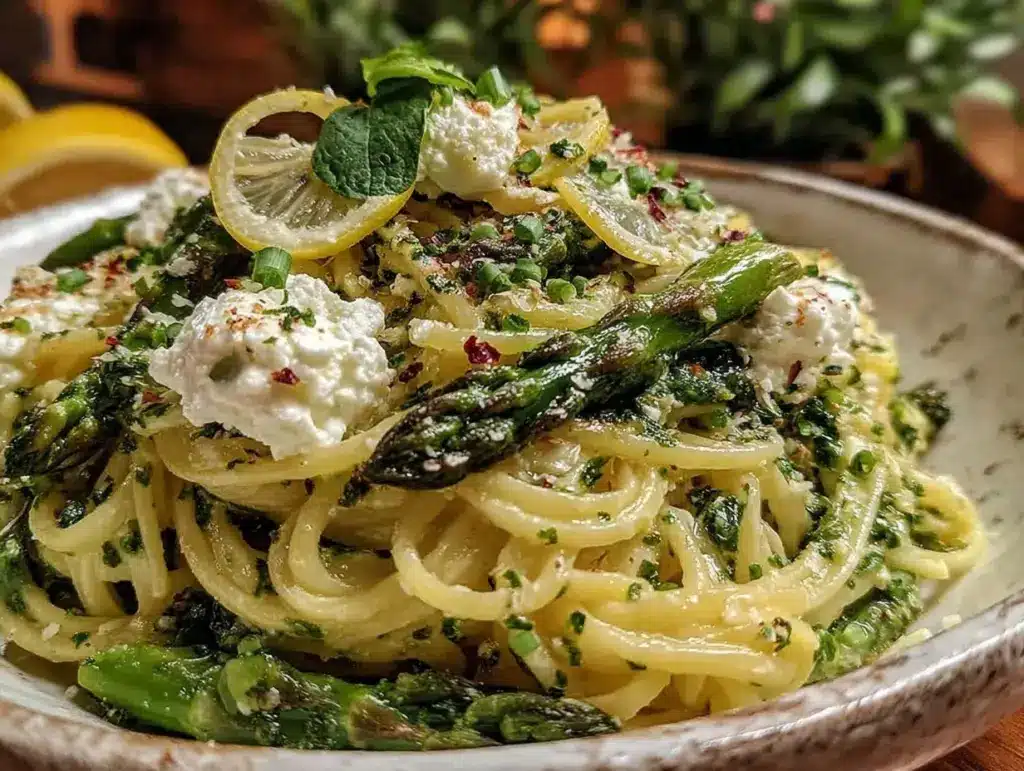
“You really should try this lemon pasta—it’s surprisingly fresh and creamy all at once,” my neighbor said last spring as she passed me a plate during an impromptu backyard chat. Honestly, I was skeptical at first; lemon and creamy ricotta? It sounded like an odd couple on a plate. But, you know how sometimes the simplest things catch you off guard? That night, I finally gave it a shot, and the zing of fresh lemon paired with tender asparagus and a smooth ricotta sauce completely flipped my expectations.
It wasn’t some fancy dinner or planned event—just a quick, breezy spring dinner after a long day of errands. The pasta came together effortlessly, with the herbs brightening every bite and the ricotta lending that luxurious creaminess without feeling heavy. I found myself making this fresh lemon herb pasta with creamy ricotta and asparagus multiple times that week (and yes, it’s now a go-to whenever I want something light but satisfying).
What stuck with me wasn’t just the flavor but this quiet ease—the kind of meal that feels like a little reset for the soul on hectic days. It’s a reminder that cooking doesn’t have to be complicated to be memorable. So here’s the story behind this recipe, and why it might just become your spring dinner staple too.
Why You’ll Love This Recipe
From my experience testing fresh lemon herb pasta with creamy ricotta and asparagus, it’s a dish that’s as reliable as it is tasty. The balance of flavors and textures makes it a standout in any weeknight lineup.
- Quick & Easy: Ready in under 30 minutes—ideal for busy evenings when you want something wholesome without fuss.
- Simple Ingredients: Uses pantry staples plus fresh herbs and asparagus, no need to hunt down anything exotic.
- Perfect for Spring Dinners: Light, bright, and seasonal—this pasta celebrates spring’s fresh produce beautifully.
- Crowd-Pleaser: Even picky eaters are drawn to the creamy yet vibrant mix; it’s surprisingly versatile for casual or slightly dressed-up meals.
- Unbelievably Delicious: The fresh lemon zest and juice cut through the ricotta’s creaminess, with herbs and asparagus adding that garden-fresh note.
This isn’t just any lemon pasta. The little secret? I blend the ricotta with a splash of pasta water and a touch of olive oil to create an ultra-smooth sauce that clings perfectly to every strand. Plus, tossing in tender asparagus spears at just the right moment keeps them crisp-tender, adding a welcome bite. Compared to other lemon pasta dishes, this one feels lighter but more indulgent at once—comfort food that doesn’t weigh you down.
It’s also flexible enough to impress last-minute guests or serve as a solo indulgence after a long day. And hey, if you’re curious about pairing it with some protein, you might want to try it alongside the one-pan Greek chicken with vegetables for a full meal that feels thought-out but not overdone.
What Ingredients You Will Need
This recipe uses simple, wholesome ingredients to deliver bold flavor and satisfying texture without the fuss. Most are pantry staples, with asparagus and fresh herbs giving it that springtime freshness. Feel free to swap in seasonal veggies if asparagus isn’t available.
- Pasta: 12 oz (340 g) of spaghetti or linguine (I recommend Barilla for consistent texture)
- Asparagus: 1 bunch (about 1 lb/450 g), trimmed and cut into 2-inch pieces (choose firm, bright-green spears)
- Ricotta cheese: 1 cup (240 g), whole milk ricotta for creaminess (look for small-curd ricotta for best texture)
- Fresh lemon: Zest and juice of 1 large lemon (adds bright acidity)
- Fresh herbs: 2 tbsp chopped parsley and 1 tbsp chopped fresh basil (you can sub with thyme or chives if preferred)
- Garlic: 2 cloves, minced (for that gentle garlic punch)
- Olive oil: 3 tbsp extra virgin (use a good quality one like California Olive Ranch)
- Parmesan cheese: ¼ cup (25 g), freshly grated (optional, but it adds a nice salty finish)
- Salt and pepper: To taste (don’t be shy here—seasoning makes all the difference)
- Red pepper flakes: A pinch (optional, for a subtle heat)
If you want a gluten-free option, try swapping the pasta for your favorite gluten-free noodles. Also, if you prefer a dairy-free version, blend silken tofu or use a vegan ricotta alternative—it won’t be exactly the same, but still delicious and creamy.
Equipment Needed
- Large pot for boiling pasta
- Colander or strainer to drain pasta and asparagus
- Large skillet or sauté pan for cooking asparagus and tossing pasta
- Zester or fine grater for lemon zest
- Measuring cups and spoons
- Mixing bowl for combining ricotta sauce (optional but handy)
- Tongs or pasta fork for mixing and serving
If you don’t have a zester, a fine grater or even a vegetable peeler can work to get lemon zest. For budget-friendly cookware, a good non-stick skillet will make tossing easier and cleanup quicker. I’ve found that a wide pan helps the pasta and sauce combine better without overcrowding.
Preparation Method
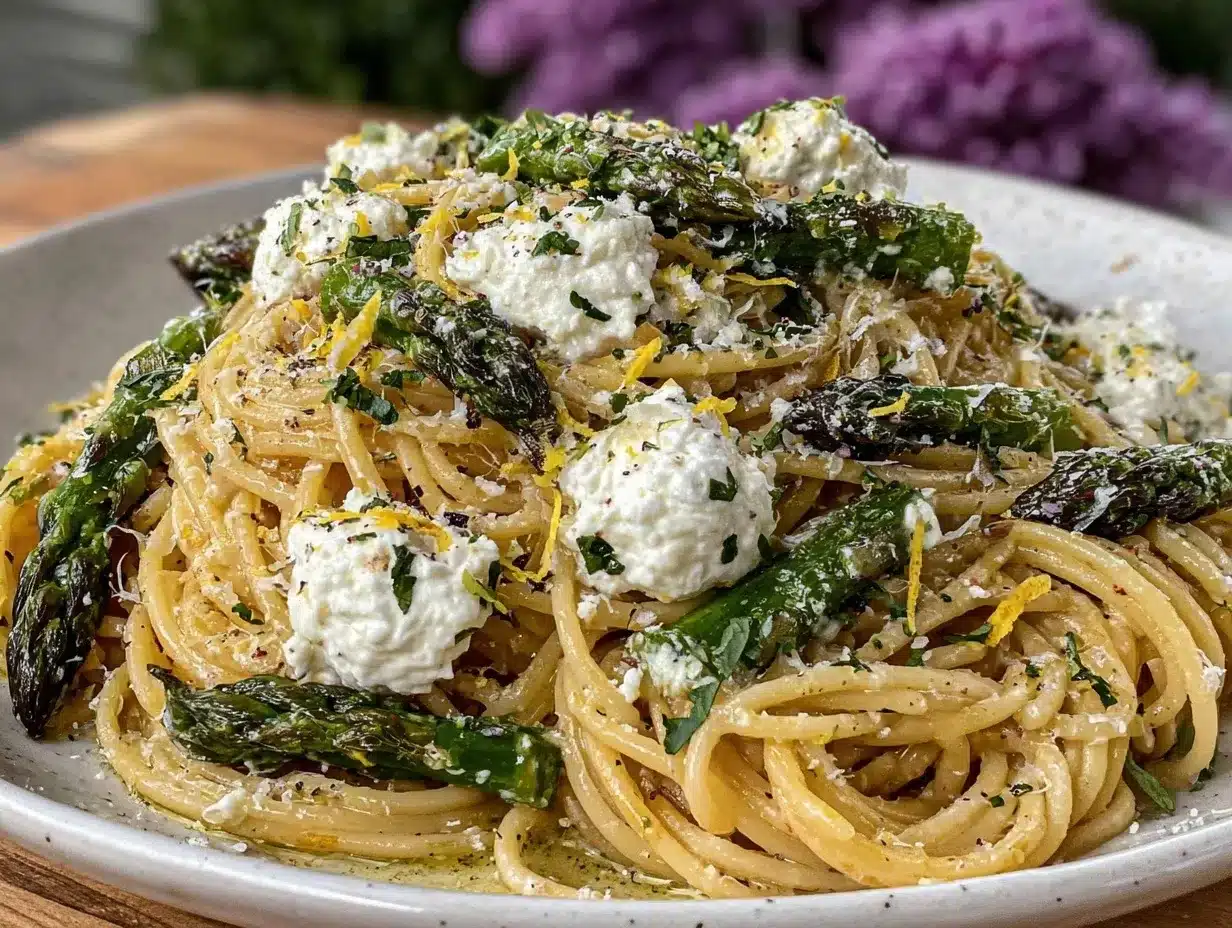
- Cook the pasta: Bring a large pot of salted water to a boil. Add 12 oz (340 g) of pasta and cook according to package instructions until al dente, usually 8-10 minutes. Reserve 1 cup (240 ml) of pasta water before draining.
- Prepare the asparagus: In the last 3 minutes of pasta cooking, add the asparagus pieces to the boiling water with the pasta. This keeps them crisp-tender. Drain pasta and asparagus together.
- Make the ricotta sauce: While pasta cooks, in a mixing bowl combine 1 cup (240 g) ricotta, zest and juice of 1 lemon, 3 tbsp olive oil, and minced garlic. Whisk until smooth. Add about ¼ cup (60 ml) reserved pasta water to loosen the sauce—it should be creamy but not runny.
- Sauté asparagus and garlic: Heat a large skillet over medium heat. Add a drizzle of olive oil and sauté the drained asparagus with garlic for 2-3 minutes to deepen flavor. Season with salt, pepper, and a pinch of red pepper flakes if using.
- Toss pasta with sauce: Add cooked pasta to the skillet with asparagus. Pour ricotta sauce over and toss gently, adding more reserved pasta water as needed to coat everything evenly.
- Add herbs and finish: Stir in chopped parsley and basil. Taste and adjust seasoning with salt, pepper, and an extra squeeze of lemon juice if desired.
- Serve: Plate the pasta and sprinkle with freshly grated Parmesan cheese. Serve immediately for the best texture and flavor.
Pro tip: Keep some pasta water handy during tossing—it’s magic for adjusting sauce thickness and helping everything cling perfectly. If the sauce feels too thick, a splash or two will smooth it out without watering down flavor.
Cooking Tips & Techniques
One thing I learned quickly is that timing the asparagus cooking right is key. Overcooked asparagus gets mushy, and no one wants that. Adding them to the pasta water for just the last few minutes keeps them bright and crisp.
Also, blending the ricotta with lemon juice and pasta water before tossing ensures it’s not clumpy or dry. I remember the first few times I tried just dolloping ricotta on top—it didn’t coat well and left uneven pockets of flavor. Whisking it smooth makes a huge difference.
When tossing pasta and sauce, do it gently but thoroughly. You want each strand lightly coated, not drowning in sauce. Using tongs or a pasta fork helps lift and mix without breaking the noodles.
Salt your pasta water like the sea—it’s your first chance to flavor the pasta itself. And be patient with seasoning at the end; lemon juice and fresh herbs brighten the dish, but salt and pepper bring it all together.
For multitasking, start the sauce while the pasta boils, so everything comes together without waiting. If you want to make it a more rounded meal, pairing this pasta with a light protein like the sticky teriyaki chicken stir fry can be a great choice for a balanced dinner.
Variations & Adaptations
- Seasonal twist: Swap asparagus with fresh peas or snap peas in spring, or zucchini ribbons in summer for a different texture and flavor.
- Protein add-in: Toss in grilled chicken strips, sautéed shrimp, or chickpeas for a heartier meal.
- Dairy-free option: Replace ricotta with blended silken tofu or a plant-based ricotta alternative; add nutritional yeast for a cheesy note.
- Herb switches: Use tarragon or dill instead of basil and parsley for a nuanced flavor profile—especially nice if you’re serving with seafood.
- Spicy kick: Add a pinch of cayenne or chopped fresh chili for heat lovers.
Personally, I like to stir in sun-dried tomatoes when I want a touch of umami and color. It’s a neat way to vary the flavor without adding extra steps. Also, if you’re curious about a similar creamy pasta with a fresh twist, the avocado caprese pasta salad offers a chilled alternative that’s just as vibrant.
Serving & Storage Suggestions
Serve this fresh lemon herb pasta warm, right after tossing for the best creaminess and bright herb flavor. A simple side salad or a crisp white wine pairs beautifully—think Sauvignon Blanc or Pinot Grigio.
If you have leftovers (which can happen, but often don’t last long), store them in an airtight container in the fridge for up to 2 days. The pasta will absorb some sauce and firm up, so reheat gently in a skillet with a splash of water or olive oil to loosen it back up.
Freezing isn’t ideal as ricotta-based sauces tend to separate, losing texture and flavor. Instead, plan to enjoy fresh or within a couple of days.
Interestingly, the flavors meld nicely after resting for a few hours, so if you’re prepping ahead for a gathering, you can toss everything together slightly early and reheat just before serving. Just add a bit of fresh lemon juice and herbs at the end to brighten it back up.
Nutritional Information & Benefits
This fresh lemon herb pasta with creamy ricotta and asparagus is a balanced dish offering a good mix of carbohydrates, protein, and healthy fats. A typical serving (about 1.5 cups) contains roughly:
| Calories | 360-400 kcal |
|---|---|
| Protein | 15-18 g (from ricotta and pasta) |
| Carbohydrates | 45-50 g |
| Fat | 10-12 g (mostly from olive oil and ricotta) |
| Fiber | 4-5 g (thanks to asparagus and whole-grain pasta options) |
Asparagus is packed with vitamins A, C, and K, and ricotta offers a good source of calcium and protein. Using olive oil provides heart-healthy monounsaturated fats. For gluten-free or lower-carb diets, swapping pasta for zucchini noodles or chickpea pasta works well.
Do note this recipe contains dairy and gluten unless substitutions are made. Personally, I find this dish hits a sweet spot between indulgence and nourishment—comfort food that doesn’t feel heavy or overdone.
Conclusion
Fresh lemon herb pasta with creamy ricotta and asparagus is one of those recipes that feels like a little celebration of spring in every bite. It’s light yet deeply satisfying, simple enough for weeknights but pretty enough to serve when guests drop by unexpectedly.
The creamy ricotta sauce paired with zesty lemon and crisp asparagus creates a flavor harmony that’s hard to forget. Plus, it’s flexible—you can add your favorite proteins or swap veggies based on what’s fresh.
It’s a recipe I keep coming back to, not just because it tastes great, but because it reminds me that good cooking doesn’t have to be complicated. If you try it, I’d love to hear how you make it your own or what twists you add. Sharing those little discoveries always makes the cooking journey more fun.
Happy cooking and enjoy your fresh, bright dinner tonight!
FAQs
Can I use frozen asparagus for this recipe?
Yes, but thaw and drain frozen asparagus well before cooking to avoid excess water. Cooking times may be shorter since frozen asparagus is often pre-blanched.
What if I don’t have fresh herbs on hand?
Dried herbs can work in a pinch, but use about one-third the amount of fresh herbs and add them earlier during cooking to release their flavors.
Is this recipe suitable for vegans?
Not as written, but you can substitute ricotta with a plant-based ricotta alternative or blended silken tofu and use vegan pasta to make it vegan-friendly.
How can I make this recipe ahead of time?
Prepare the sauce and chop herbs in advance. Cook pasta and asparagus shortly before serving for best texture. Reheat gently and add fresh lemon juice and herbs right before serving.
What type of pasta works best for this dish?
Long, thin pastas like spaghetti or linguine are ideal to coat evenly with the creamy sauce. However, feel free to use any pasta shape you prefer.
Pin This Recipe!
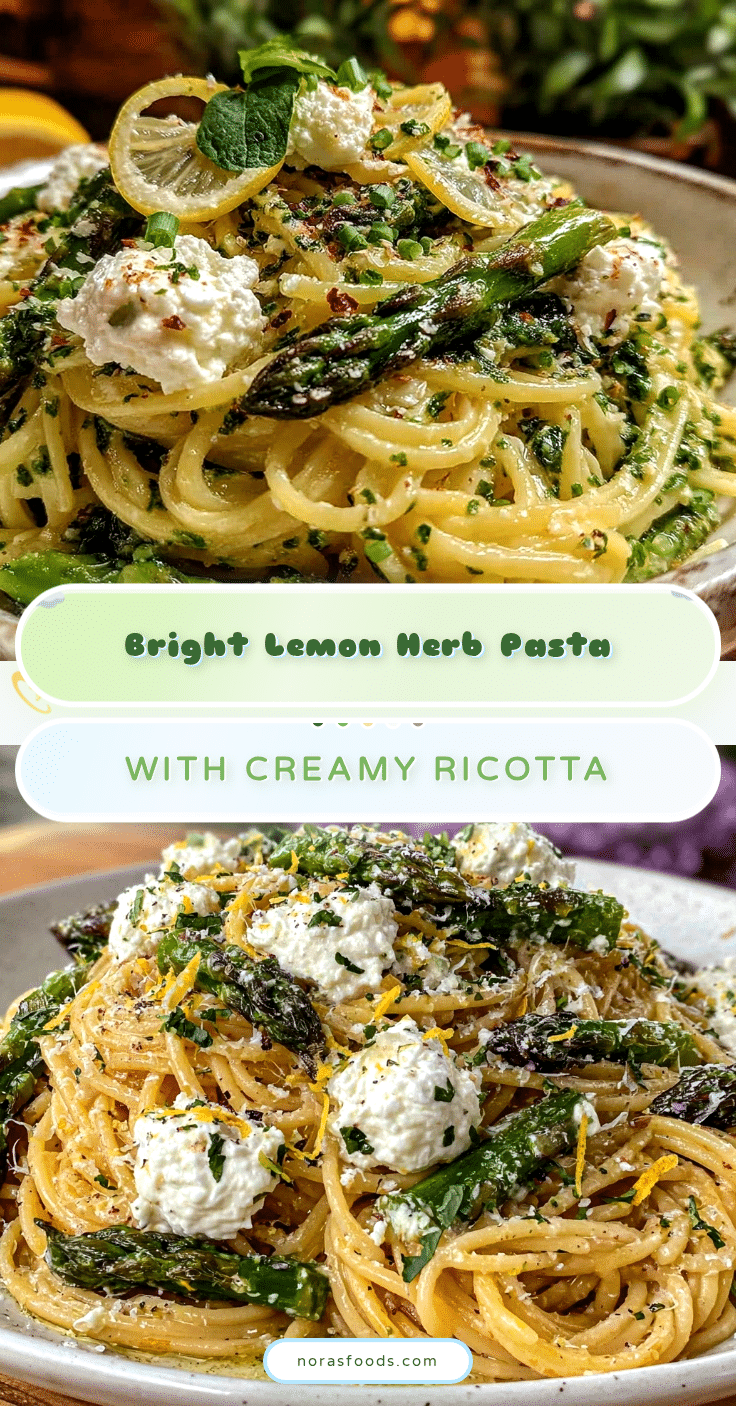
Fresh Lemon Herb Pasta with Creamy Ricotta and Asparagus
A light and creamy spring pasta dish featuring fresh lemon, tender asparagus, and a smooth ricotta sauce that comes together quickly for a satisfying weeknight dinner.
- Prep Time: 10 minutes
- Cook Time: 15 minutes
- Total Time: 25 minutes
- Yield: 4 servings 1x
- Category: Main Course
- Cuisine: Italian
Ingredients
- 12 oz spaghetti or linguine
- 1 bunch asparagus (about 1 lb), trimmed and cut into 2-inch pieces
- 1 cup whole milk ricotta cheese
- Zest and juice of 1 large lemon
- 2 tbsp chopped fresh parsley
- 1 tbsp chopped fresh basil
- 2 cloves garlic, minced
- 3 tbsp extra virgin olive oil
- 1/4 cup freshly grated Parmesan cheese (optional)
- Salt and pepper to taste
- Pinch of red pepper flakes (optional)
Instructions
- Bring a large pot of salted water to a boil. Add 12 oz of pasta and cook according to package instructions until al dente, usually 8-10 minutes. Reserve 1 cup of pasta water before draining.
- In the last 3 minutes of pasta cooking, add the asparagus pieces to the boiling water with the pasta. Drain pasta and asparagus together.
- While pasta cooks, in a mixing bowl combine 1 cup ricotta, lemon zest and juice, 3 tbsp olive oil, and minced garlic. Whisk until smooth. Add about 1/4 cup reserved pasta water to loosen the sauce—it should be creamy but not runny.
- Heat a large skillet over medium heat. Add a drizzle of olive oil and sauté the drained asparagus with garlic for 2-3 minutes to deepen flavor. Season with salt, pepper, and red pepper flakes if using.
- Add cooked pasta to the skillet with asparagus. Pour ricotta sauce over and toss gently, adding more reserved pasta water as needed to coat everything evenly.
- Stir in chopped parsley and basil. Taste and adjust seasoning with salt, pepper, and an extra squeeze of lemon juice if desired.
- Plate the pasta and sprinkle with freshly grated Parmesan cheese. Serve immediately for best texture and flavor.
Notes
Keep some pasta water handy during tossing to adjust sauce thickness. Avoid overcooking asparagus to keep it crisp-tender. Whisk ricotta with lemon juice and pasta water before tossing to ensure a smooth sauce. Salt pasta water generously for best flavor.
Nutrition
- Serving Size: About 1.5 cups per s
- Calories: 380
- Sugar: 3
- Sodium: 350
- Fat: 11
- Saturated Fat: 4
- Carbohydrates: 48
- Fiber: 4.5
- Protein: 16
Keywords: lemon pasta, ricotta pasta, asparagus pasta, spring dinner, creamy pasta, easy pasta recipe, fresh herbs, vegetarian pasta