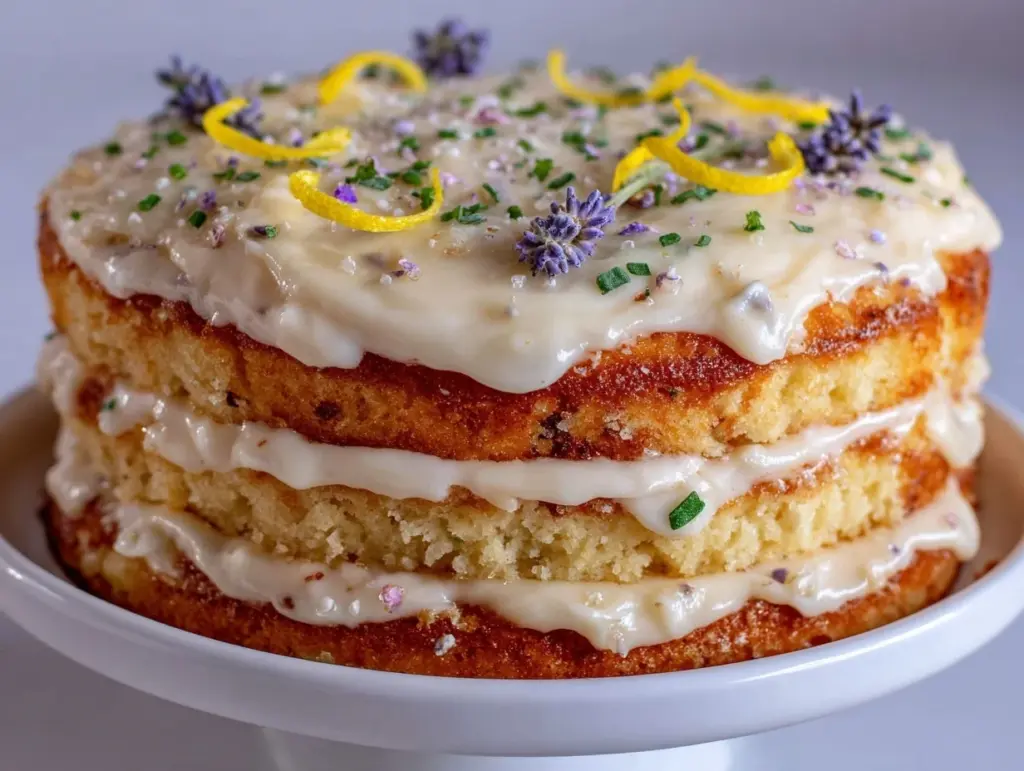
“Are you sure lavender belongs in a cake?” my friend texted me, skepticism practically oozing through the screen. I’d just whipped up this fluffy lemon lavender layer cake with cream cheese frosting on an unexpectedly drizzly afternoon, and honestly, I wasn’t sure myself. I’d been poking around my spice cabinet, trying to find a way to brighten a gloomy day, and a little jar of culinary lavender caught my eye. The idea seemed a bit wild, but hey, sometimes the best recipes start with a pinch of curiosity and a dash of “why not?”
The kitchen smelled faintly of lemon zest and floral hints that didn’t scream “grandma’s old recipe,” but rather whispered something fresh and modern. I remember pulling the layers from the oven, the cake’s golden crumb so soft it practically begged for that tangy cream cheese frosting. When I took the first bite, that balanced mix of citrus brightness and delicate lavender made me pause—was this really from my humble little kitchen?
Since then, I’ve made this cake more times than I can count—sometimes for quiet evenings, sometimes for friends who never stop asking for the recipe. It’s the kind of cake that feels just fancy enough without fuss, the perfect treat to lift spirits or impress at a casual gathering. You know, it’s not often a cake surprises you, but this one quietly won me over. And I think it might just do the same for you.
Why You’ll Love This Fluffy Lemon Lavender Layer Cake with Cream Cheese Frosting
This cake has been through plenty of kitchen tests, tweaks, and taste trials—so I’m confident you’ll find it as delightful as I do. Here’s why it stands out:
- Quick & Easy: It comes together in about an hour total, including baking and frosting, making it a great option even when you want something special but don’t have all day.
- Simple Ingredients: No need to hunt for obscure items—everything is straightforward, with pantry staples like flour, sugar, and eggs, plus that small jar of culinary lavender for a floral twist.
- Perfect for Special Occasions: Whether it’s a birthday, a spring brunch, or just a weekend treat, this cake fits the bill. It’s elegant without being intimidating.
- Crowd-Pleaser: The flavor combo of lemon and lavender is surprisingly accessible—kids and adults alike tend to enjoy the subtle floral notes paired with the familiar citrus.
- Unbelievably Delicious: The texture is incredibly light and fluffy, and the cream cheese frosting adds just the right amount of tang and creaminess to balance the cake’s sweetness.
What really sets this cake apart is the way the lavender is handled. Instead of overwhelming, it gently perfumes the cake, thanks to a careful balance and the bright lemon flavor that keeps everything lively. Plus, the cream cheese frosting isn’t just any frosting—I blend it until perfectly smooth and slightly whipped, making it easy to spread and impossible to resist. Honestly, it’s a cake that’s as much about the experience as the taste.
If you’re looking for something that feels a bit special but doesn’t require a pastry chef’s skills, this recipe is it. And if you like a lemony dessert, you might also appreciate the creamy lemon blueberry icebox cake I’ve shared before—both are great for when that citrus craving strikes.
What Ingredients You Will Need
This recipe uses simple, wholesome ingredients to deliver that bold lemon and subtle lavender flavor with a fluffy, tender crumb. Most are pantry staples, so you might already have them on hand. Here’s the breakdown:
- For the Cake Batter:
- 2 ½ cups (310 g) all-purpose flour (I recommend King Arthur for best texture)
- 2 ½ tsp baking powder
- ½ tsp baking soda
- ½ tsp salt
- 1 tbsp culinary lavender buds, finely ground (use a spice grinder or mortar and pestle; avoid cooking lavender)
- 1 cup (230 g) unsalted butter, softened (makes the cake rich and moist)
- 1 ¾ cups (350 g) granulated sugar
- 4 large eggs, room temperature
- 1 tbsp pure vanilla extract
- 1 tbsp lemon zest (about 1 large lemon, finely grated)
- 1 cup (240 ml) buttermilk, room temperature (or 1 cup milk + 1 tbsp lemon juice as a substitute)
- ¼ cup (60 ml) fresh lemon juice (for brightness)
- For the Cream Cheese Frosting:
- 8 oz (225 g) cream cheese, softened (Philadelphia brand works well)
- ½ cup (115 g) unsalted butter, softened
- 3–4 cups (360–480 g) powdered sugar, sifted (adjust for desired sweetness and consistency)
- 1 tsp vanilla extract
- 1 tbsp fresh lemon juice (adds a nice tang)
If you can’t find culinary lavender, dried lavender from a reliable source (like a specialty food store) works too, but be sure it’s intended for cooking. For a dairy-free twist, swap the butter and cream cheese with plant-based alternatives and use almond milk for the buttermilk substitute.
Equipment Needed
- Three 8-inch (20 cm) round cake pans – I personally like metal pans with a non-stick coating; glass pans work but may require longer baking time.
- Mixing bowls – at least two, one for dry ingredients and one for wet.
- Electric mixer or stand mixer – hand beaters work but take more elbow grease.
- Measuring cups and spoons – accurate measurements are key for baking success.
- Rubber spatula – for folding and scraping batter.
- Cooling racks – to cool the cakes evenly and prevent sogginess.
- Fine mesh sieve or spice grinder – to grind the lavender buds finely for even flavor distribution.
- Offset spatula or butter knife – for spreading the cream cheese frosting smoothly.
If you don’t have three pans, you can bake the layers one or two at a time, but watch the baking time closely as it may vary. I once tried silicone pans for this cake, and while the release was easy, the edges didn’t brown as nicely, so I stick with metal for the best crust. Also, keeping your cream cheese and butter softened but not melted makes the frosting process much smoother—you can leave them out for about an hour before mixing.
Preparation Method
- Preheat and Prep: Set your oven to 350°F (175°C). Grease and flour three 8-inch round pans, or line them with parchment paper. This step saves you from the heartbreak of sticking layers.
- Mix Dry Ingredients: In a large bowl, sift together the flour, baking powder, baking soda, salt, and your finely ground culinary lavender buds. This ensures the lavender flavor is evenly spread and not clumpy.
- Beat Butter and Sugar: In a separate bowl, use your mixer to cream the softened butter and sugar on medium-high speed until light and fluffy—about 3-5 minutes. This step is crucial for that airy crumb.
- Add Eggs and Flavorings: Beat in eggs one at a time, mixing well after each addition. Then add vanilla extract and lemon zest. The batter might look a little curdled here, but that’s normal.
- Combine Wet and Dry: Alternately add the dry ingredient mixture and buttermilk to the butter mixture, starting and ending with dry ingredients. Mix on low speed just until combined—overmixing can make the cake tough.
- Add Lemon Juice: Gently fold in the fresh lemon juice last. The acid brightens the flavor and keeps the crumb tender.
- Divide and Bake: Evenly pour batter into the prepared pans (about 2 cups or 475 ml per pan). Bake for 25-30 minutes, rotating pans halfway through for even baking. The cake is done when a toothpick inserted in the center comes out clean or with a few moist crumbs.
- Cool Completely: Let cakes cool in pans for 10 minutes, then turn out onto cooling racks to cool completely. Patience here pays off—frosting warm cakes will melt the cream cheese and get messy.
- Make Frosting: Beat softened cream cheese and butter together until smooth and creamy. Slowly add powdered sugar, 1 cup at a time, until you reach your desired sweetness and consistency. Mix in vanilla and lemon juice for that tangy finish.
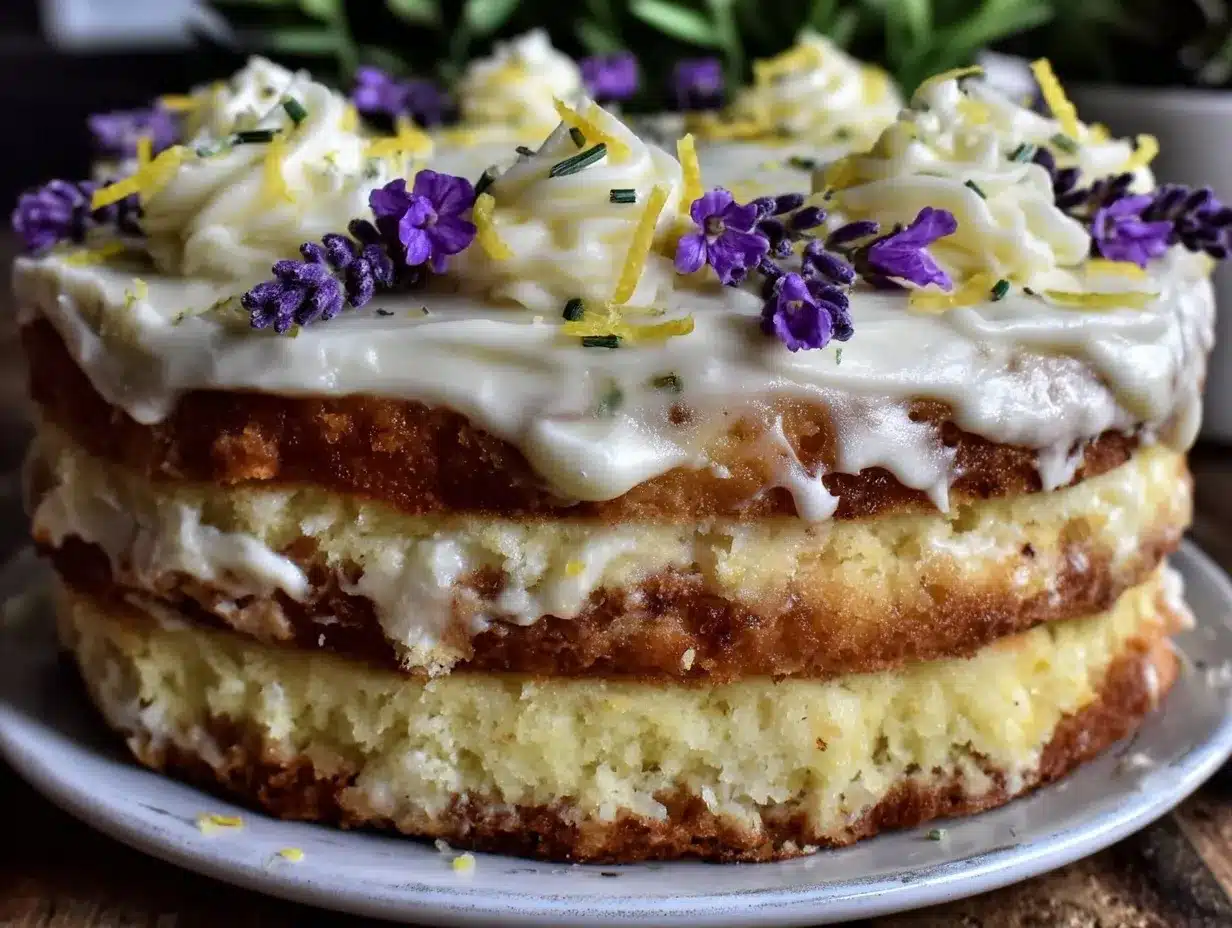
- Assemble the Cake: Place one cake layer on your serving plate. Spread about ⅓ of the frosting evenly on top. Repeat with remaining layers and frosting. For a neat finish, chill the cake for 15-20 minutes, then smooth the sides with an offset spatula.
If you notice any cracks in your cake layers, a gentle trim with a serrated knife before frosting makes the cake look polished. Also, if the frosting seems too soft, pop it in the fridge for 10 minutes before spreading. Trust me, that step makes a big difference!
Cooking Tips & Techniques for the Best Lemon Lavender Cake
Getting this cake just right took me a few tries, and here’s what I learned along the way:
- Grinding Lavender: Don’t just toss whole buds into the batter—they can be overpowering or uneven. Grind them finely to infuse flavor without bitterness.
- Creaming Butter and Sugar: This step is non-negotiable for a fluffy texture. Take your time and don’t rush it.
- Measuring Flour: Spoon and level your flour instead of scooping directly from the bag to avoid a dense cake.
- Room Temperature Ingredients: Ensuring eggs, butter, and buttermilk are at room temp helps everything come together smoothly.
- Don’t Overmix: Once you add the flour, mix only until just combined. Overworking the batter can make the cake tough.
- Baking Time: Oven temperatures vary, so start checking at 25 minutes. A toothpick test is your best friend here.
- Frosting Consistency: If your cream cheese frosting feels too thin, add a bit more powdered sugar. If too stiff, a teaspoon of milk helps loosen it up.
- Layer Assembly: For neat layers, trim any uneven tops before frosting. This makes a difference, especially if you plan to show off the layers.
Once, I forgot to sift the powdered sugar, and small lumps in the frosting made spreading a challenge—lesson learned! Also, multitasking by prepping this cake while simmering a quick dinner (like the easy one-pan Greek chicken with vegetables) really helped me manage time without stress.
Variations & Adaptations to Make This Cake Your Own
This recipe is a great base for creativity. Here are some ways you can switch things up:
- Herbal Twist: Swap lavender for dried rosemary or thyme for a unique savory-sweet combo.
- Berry Infusion: Fold fresh or frozen blueberries into the batter for a fruity surprise, similar in spirit to the lemon blueberry icebox cake.
- Gluten-Free Option: Use a 1:1 gluten-free flour blend instead of all-purpose flour; the texture will be slightly different but still delicious.
- Dairy-Free Version: Replace butter and cream cheese with plant-based substitutes, and use dairy-free milk for the buttermilk substitute.
- Flavor Enhancements: Add a teaspoon of almond or orange extract to the batter for a new dimension of flavor.
Personally, I once tried adding a thin layer of lemon curd between the cake layers for an extra zing, and it was fantastic. It’s a lovely way to amp up the citrus without changing the texture. Feel free to experiment and find your signature twist!
Serving & Storage Suggestions
This cake tastes best served at room temperature, which really lets the cream cheese frosting shine. I like to cut it into modest slices—this cake is rich, so a little goes a long way. For a party, pair it with a light herbal tea or a sparkling lemonade to complement the lemon-lavender flavors.
Store leftover cake covered tightly in the refrigerator for up to 4 days. Before serving, let slices sit at room temperature for 20-30 minutes so the frosting softens and the flavors open up. For longer storage, you can freeze the cake layers (unfrosted) wrapped well in plastic wrap and foil for up to 3 months. Thaw overnight in the fridge, then frost as usual.
Flavors actually deepen after a day, so if you can wait, prepare the cake a day ahead—it’s worth it. If you want a quick dessert alongside this cake, the creamy coffee tiramisu in mason jars offers a nice contrast.
Nutritional Information & Benefits
One slice (1/12 of the cake) contains approximately:
| Calories | 320 |
|---|---|
| Fat | 18g |
| Saturated Fat | 10g |
| Carbohydrates | 38g |
| Sugar | 28g |
| Protein | 4g |
Key ingredients like lemon provide vitamin C and antioxidants, while culinary lavender has calming properties (though in small amounts here). The cake is naturally gluten-containing but can be adapted for gluten-free diets as noted.
Though this cake is a treat, using real ingredients like fresh lemon and homemade frosting without preservatives offers a more wholesome dessert experience. It’s the kind of indulgence that feels thoughtful rather than just sugary.
Conclusion
This fluffy lemon lavender layer cake with cream cheese frosting isn’t just a recipe; it’s a little moment of joy baked into layers. It’s perfect when you want a dessert that’s both comforting and a little unexpected. I love how it balances floral notes with bright citrus and tangy frosting—there’s something about it that feels like a gentle surprise with every bite.
Feel free to play around with the lavender intensity or add your favorite flavors. What matters most is making it your own and enjoying the process—because that’s what good food is about, right?
If you try this cake, I’d love to hear how it turns out or what variations you come up with. Sharing your stories keeps the kitchen magic alive!
Frequently Asked Questions About Fluffy Lemon Lavender Layer Cake
Can I use fresh lavender instead of dried culinary lavender?
Fresh lavender can be more potent and watery, so it’s best to stick with dried culinary lavender buds ground finely. If using fresh, use sparingly and remove any woody stems.
How do I prevent the cake from drying out?
Don’t overbake and ensure you cool the cake layers on racks. Also, storing the cake covered helps retain moisture. Using buttermilk in the batter adds tenderness.
Can I make this cake in advance?
Absolutely! The cake can be baked a day ahead and frosted the next day. It actually tastes better after resting. Just keep it refrigerated after frosting.
Is it okay to omit the lavender if I don’t like floral flavors?
Yes, you can skip the lavender and still have a delicious lemon layer cake with cream cheese frosting. The cake will be more straightforward citrus but still delightful.
What’s the best way to store leftover cake?
Cover the cake tightly and refrigerate for up to 4 days. Before serving, let it come to room temperature for the best texture and flavor.
Pin This Recipe!
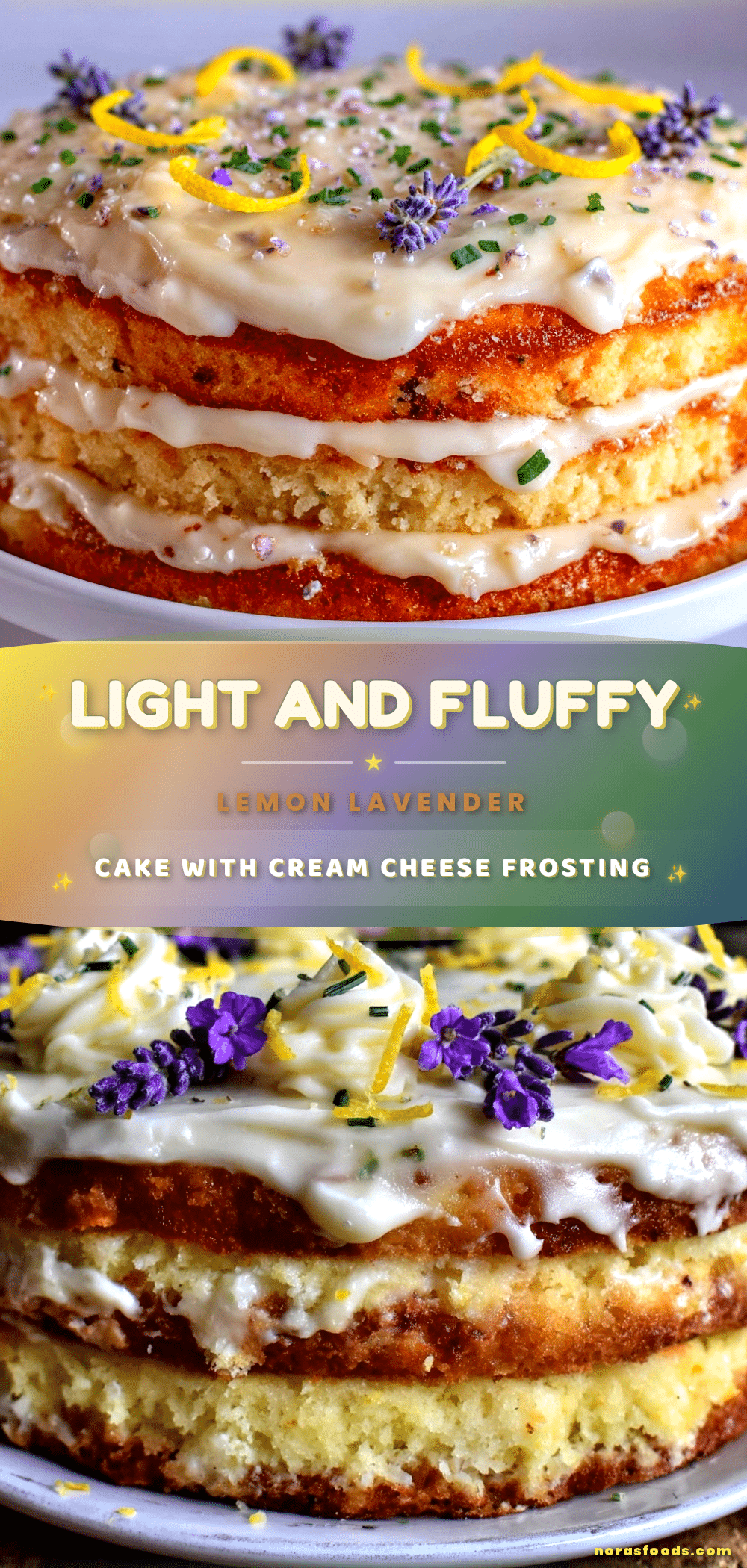
Fluffy Lemon Lavender Layer Cake with Cream Cheese Frosting
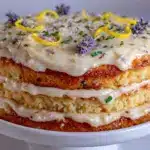
A light and fluffy lemon cake infused with culinary lavender and topped with tangy cream cheese frosting. Perfect for special occasions or a delightful treat to brighten any day.
- Prep Time: 20 minutes
- Cook Time: 25-30 minutes
- Total Time: 50 minutes
- Yield: 12 servings 1x
- Category: Dessert
- Cuisine: American
Ingredients
- 2 ½ cups (310 g) all-purpose flour
- 2 ½ tsp baking powder
- ½ tsp baking soda
- ½ tsp salt
- 1 tbsp culinary lavender buds, finely ground
- 1 cup (230 g) unsalted butter, softened
- 1 ¾ cups (350 g) granulated sugar
- 4 large eggs, room temperature
- 1 tbsp pure vanilla extract
- 1 tbsp lemon zest (about 1 large lemon)
- 1 cup (240 ml) buttermilk, room temperature (or 1 cup milk + 1 tbsp lemon juice as substitute)
- ¼ cup (60 ml) fresh lemon juice
- 8 oz (225 g) cream cheese, softened
- ½ cup (115 g) unsalted butter, softened
- 3–4 cups (360–480 g) powdered sugar, sifted
- 1 tsp vanilla extract
- 1 tbsp fresh lemon juice
Instructions
- Preheat oven to 350°F (175°C). Grease and flour three 8-inch round pans or line with parchment paper.
- In a large bowl, sift together flour, baking powder, baking soda, salt, and finely ground culinary lavender buds.
- In a separate bowl, cream softened butter and sugar on medium-high speed until light and fluffy, about 3-5 minutes.
- Beat in eggs one at a time, mixing well after each addition. Add vanilla extract and lemon zest.
- Alternately add dry ingredients and buttermilk to the butter mixture, starting and ending with dry ingredients. Mix on low speed just until combined.
- Gently fold in fresh lemon juice.
- Divide batter evenly into prepared pans (about 2 cups or 475 ml per pan). Bake for 25-30 minutes, rotating pans halfway through. Cake is done when a toothpick inserted in the center comes out clean or with a few moist crumbs.
- Cool cakes in pans for 10 minutes, then turn out onto cooling racks to cool completely.
- Beat softened cream cheese and butter together until smooth and creamy. Gradually add powdered sugar, 1 cup at a time, until desired sweetness and consistency is reached. Mix in vanilla extract and lemon juice.
- Place one cake layer on serving plate. Spread about one-third of the frosting evenly on top. Repeat with remaining layers and frosting.
- Chill cake for 15-20 minutes, then smooth sides with an offset spatula.
- Optional: Trim any cracks or uneven tops before frosting for a polished look. If frosting is too soft, refrigerate for 10 minutes before spreading.
Notes
Grind lavender buds finely to avoid bitterness. Use room temperature ingredients for best results. Do not overmix batter to keep cake tender. If frosting is too thin, add more powdered sugar; if too stiff, add a teaspoon of milk. Chill cake before smoothing frosting for a neat finish. Cake can be made a day ahead and tastes better after resting.
Nutrition
- Serving Size: 1 slice (1/12 of the
- Calories: 320
- Sugar: 28
- Fat: 18
- Saturated Fat: 10
- Carbohydrates: 38
- Protein: 4
Keywords: lemon cake, lavender cake, cream cheese frosting, layer cake, floral dessert, easy cake recipe, homemade frosting