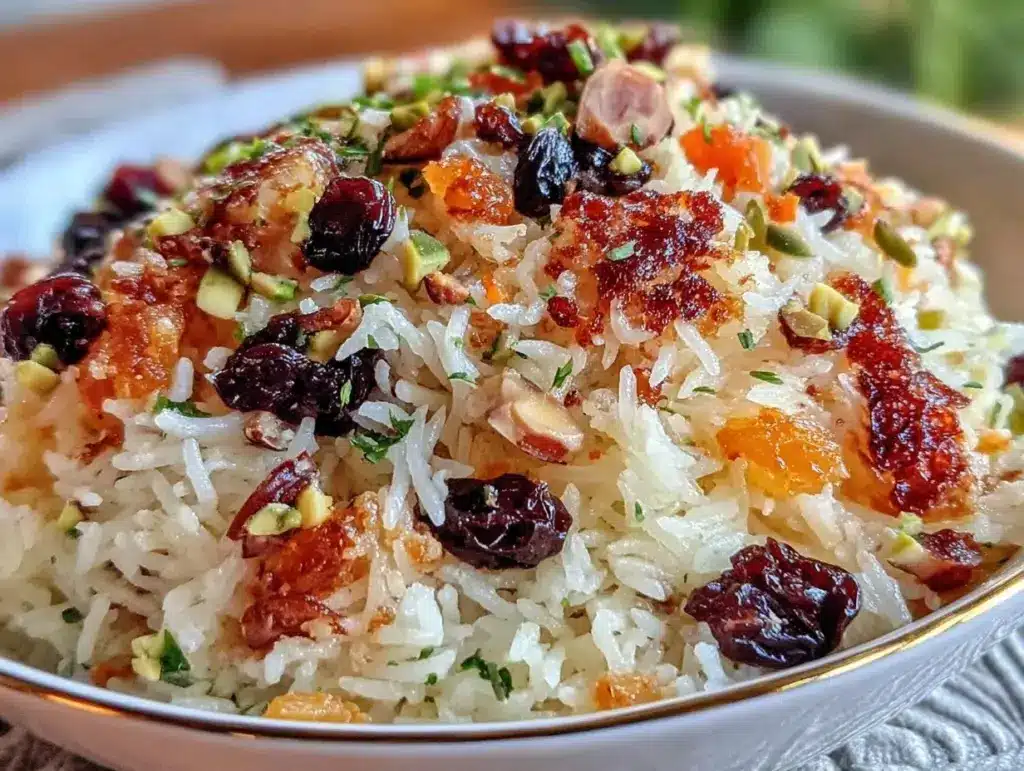
“Is that saffron I smell?” my friend asked while peeking into my kitchen on a busy Saturday afternoon. Honestly, I wasn’t expecting much from a quick attempt at Flavorful Persian Jeweled Rice (Morasa Polo) with Saffron & Barberries. I was racing the clock between errands and dinner plans, and this recipe came to life more out of convenience than ceremony. But as the fragrant steam curled from the pot, the room filled with a warm, almost hypnotic aroma that stopped us both in our tracks.
This dish didn’t start as a grand culinary project—it was a last-minute rescue for a gathering where I needed something special yet fuss-free. The jewel-toned barberries and pistachios scattered atop the rice looked like edible gems, and the subtle tang from the barberries perfectly balanced the rich saffron flavor. I was skeptical at first, but after a few bites, I realized this was no ordinary side dish. It’s the kind of recipe that sticks with you, inviting you to come back for more, no matter how many other options you’ve tried.
What keeps me making this Persian jeweled rice again and again isn’t just the stunning presentation or the comforting scent—it’s the quiet confidence that it brings to any table. Whether it’s a family dinner or an impromptu gathering, Morasa Polo feels like a culinary hug, simple yet impressive. And honestly, it’s become my go-to when I want to impress without the stress.
Why You’ll Love This Recipe
Over the years, I’ve tested many Persian rice recipes, but this version of Morasa Polo stands out for several reasons. It’s not just a pretty plate; it’s a celebration of balance, texture, and flavor that anyone can pull off at home.
- Quick & Easy: The recipe comes together in about 45 minutes, which is pretty smooth for a dish that looks this elegant.
- Simple Ingredients: Most elements like basmati rice, saffron, and barberries are pantry staples or easy to find in Middle Eastern markets.
- Perfect for Special Occasions: Whether it’s a holiday feast, a potluck, or a cozy dinner party, this jeweled rice adds a sophisticated touch.
- Crowd-Pleaser: The contrast between the tart barberries and the fragrant saffron rice is always a hit with kids and adults alike.
- Unbelievably Delicious: The texture is fluffy with just the right hint of crispiness on the bottom—thanks to a technique that’s a little secret of Persian cooks.
This isn’t just another saffron rice recipe. I’ve found that soaking saffron in warm water or a bit of stock really unlocks its aroma, giving the rice a golden hue and deep flavor. Adding barberries (zereshk) gives a tangy pop that wakes up the palate, while slivered pistachios and almonds add a satisfying crunch. If you want to try a meal that feels like a celebration without spending hours in the kitchen, this Morasa Polo is the one.
What Ingredients You Will Need
This recipe uses simple, wholesome ingredients to deliver bold flavor and satisfying texture without the fuss. Many of these are pantry-friendly, with a few special touches that bring the dish to life.
- Basmati rice (2 cups, about 370g) – Look for high-quality, aged basmati for the best fluffiness and aroma.
- Saffron threads (1 teaspoon) – Soaked in 2 tablespoons of warm water or stock to release their color and flavor.
- Barberries (Zereshk) (½ cup, about 65g) – These tart, ruby-red berries can often be found dried in Middle Eastern or specialty stores.
- Slivered almonds (¼ cup, about 30g) – Lightly toasted for crunch and nuttiness.
- Slivered pistachios (¼ cup, about 30g) – Adds a lovely green contrast and buttery flavor.
- Unsalted butter (3 tablespoons) – Melted, to sauté barberries and nuts and add richness.
- Onion (1 small, finely chopped) – Optional, for a light sauté base if you want extra depth.
- Sugar (1 teaspoon) – Balances the tartness of barberries.
- Salt (to taste)
- Water (about 3 cups for cooking rice)
Ingredient tips: I recommend using a trusted saffron brand like Mehr or Gohar for authentic color and aroma. If you can’t find barberries, dried cranberries can work in a pinch, but the tartness won’t be quite the same. For a gluten-free version, stick to pure basmati rice as it naturally fits the bill.
Equipment Needed
- Large pot with a tight-fitting lid: Essential for steaming the rice properly and creating that prized crispy layer at the bottom, known as “tahdig.”
- Small bowl or cup: For soaking saffron threads.
- Skillet or sauté pan: To toast nuts and gently cook barberries without burning.
- Fine mesh strainer: To rinse the basmati rice thoroughly before cooking.
- Wooden spoon or spatula: For gentle stirring without breaking the rice grains.
If you don’t have a non-stick pot, a heavy-bottomed stainless steel one also works well to prevent sticking. I’ve tried using a rice cooker for this recipe, but the tahdig crust is best achieved on the stovetop. For those on a budget, a simple medium-sized saucepan with a good lid will do just fine.
Preparation Method
- Rinse the rice: Place the basmati rice in a fine mesh strainer and rinse under cold water, swirling gently with your hand until the water runs clear. This removes excess starch and prevents clumping. Let the rice drain for about 10 minutes.
- Soak the saffron: Crush the saffron threads lightly with your fingers or a mortar and pestle, then add to a small bowl with 2 tablespoons of warm water or chicken stock. Let it steep for at least 10 minutes to deepen the color and flavor.
- Cook the rice partially: Bring 3 cups (720ml) of salted water to a boil in the large pot. Add the rinsed rice and cook for 6-7 minutes until grains are tender but still firm in the center (parboiled). Drain the rice in a sieve and set aside.
- Prepare the barberries and nuts: In a skillet, melt 2 tablespoons of butter over medium heat. Add the barberries and 1 teaspoon sugar; sauté gently for 2-3 minutes until plump but not burnt. Remove barberries and set aside. In the same pan, toast the slivered almonds and pistachios until fragrant and lightly golden. Remove and set aside.
- Layer and steam the rice: Return the pot to medium heat and add the remaining tablespoon of butter. Add a thin layer of rice to the bottom, then drizzle some of the saffron water over it for that beautiful golden base. Carefully pile the remaining rice on top in a mound, then cover the lid with a clean kitchen towel to trap steam and place it firmly on the pot.
- Steam the rice: Reduce heat to low and cook for 30-35 minutes. This gentle steaming allows the rice to finish cooking and develop a crispy tahdig crust on the bottom.
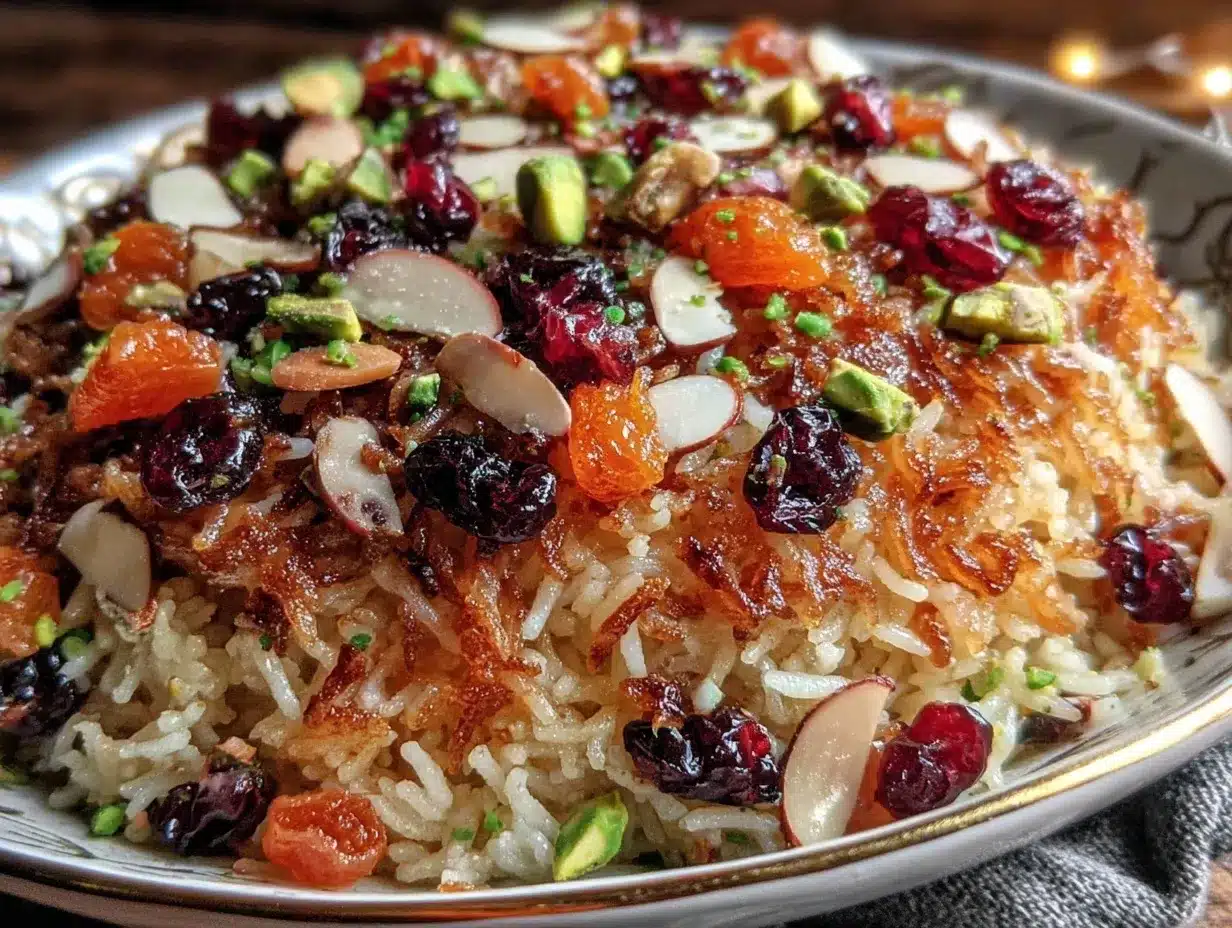
- Assemble the jeweled rice: When done, carefully transfer the rice to a serving platter. Scatter the sautéed barberries, toasted nuts, and if you like, a few thinly sliced fried onions over the top for added texture and color.
Tip: Avoid stirring the rice too much during cooking to keep the grains fluffy and intact. The saffron water drizzled at the bottom is the key to that signature golden hue and subtle fragrance everyone will notice.
Cooking Tips & Techniques
Morasa Polo looks fancy, but there’s a rhythm to the method that anyone can get right with a little practice. One of the trickiest parts is getting the tahdig to form without burning. I learned that using a non-stick pot and keeping the heat low during steaming really helps.
Another tip: don’t skip rinsing the rice. Rinsing gets rid of excess starch, which otherwise causes the grains to stick and clump. Also, soaking the saffron in warm water unlocks the color and aroma; sprinkling it over the rice instead of mixing it in makes a nice gradient effect.
When sautéing barberries, keep the heat gentle and add a pinch of sugar to balance their natural tartness. I made the mistake once of cooking them on too high heat, and they turned bitter. Toasting the nuts separately ensures they stay crisp and don’t burn.
Multitasking helps: while the rice cooks, you can prep other elements of your meal, like a fresh salad or roasted chicken. If you’re interested in a flavorful chicken pairing, the easy one-pan Greek chicken with vegetables is a great option that complements the rice beautifully.
Variations & Adaptations
Morasa Polo is versatile, and you can tweak it to suit your taste or dietary needs.
- Vegetarian version: Skip the chicken stock in the saffron soak and use vegetable broth or just warm water.
- Fruit variations: Some versions include chopped dried apricots or raisins for extra sweetness. I tried adding dried cherries once, and the tart-sweet contrast was delightful.
- Nut substitutions: Use walnuts or cashews instead of pistachios and almonds depending on what you have on hand or prefer.
- Cooking method: If stovetop isn’t your thing, you can use an oven-safe pot to bake the rice at 350°F (175°C) for about 30 minutes after layering with saffron water.
- Low-sodium option: Reduce added salt and rely on the natural flavors of saffron and barberries to shine through.
For a lighter take, pairing this jeweled rice with a fresh cucumber salad like the fresh star-shaped watermelon salad with feta and mint offers a refreshing contrast.
Serving & Storage Suggestions
Serve this Persian jeweled rice warm, ideally straight from the pot, so you can enjoy the crispy tahdig layer with every bite. Presentation matters here—the colorful jewels of barberries and nuts are like edible confetti, so spreading them generously on top is a must.
It pairs wonderfully with grilled or roasted meats, especially lamb or chicken, but can also shine as a vegetarian centerpiece. A dollop of plain yogurt or a sprinkle of fresh herbs like parsley or mint adds nice freshness.
Leftovers keep well covered in the fridge for up to 3 days. To reheat, sprinkle a little water over the rice and cover tightly to prevent drying out, then warm gently on the stovetop or microwave. The flavors meld even more the next day, making it a perfect make-ahead dish.
If you want to prep in advance, you can toast the nuts and sauté the barberries a day before to save time. Just keep them separate until serving.
Nutritional Information & Benefits
This Persian jeweled rice is not just beautiful but nourishing. A typical serving has around 250-300 calories, with moderate protein and healthy fats from nuts and butter. The basmati rice provides complex carbs for sustained energy.
Saffron, beyond its signature aroma, contains antioxidants and has been traditionally linked to mood-enhancing properties. Barberries add vitamin C and fiber, supporting digestion. The nuts contribute heart-healthy fats and protein, making this dish a balanced choice.
Gluten-free by nature, this recipe suits many dietary needs. For a lower-carb version, consider mixing in cauliflower rice, though the texture will differ.
Conclusion
Flavorful Persian Jeweled Rice (Morasa Polo) with Saffron & Barberries is one of those recipes that feels festive yet manageable. It’s a dish that turns an ordinary meal into something special without demanding hours in the kitchen. I love how it looks almost too pretty to eat—and yet, every bite invites you to keep going.
Feel free to adjust the nuts, fruits, or saffron intensity to make it your own. It’s a recipe that rewards personal tweaks and welcomes creativity. If you’re planning a dinner that calls for a little wow factor, this jeweled rice delivers in both flavor and presentation.
Since you appreciate dishes with balanced textures and bold flavors, you might enjoy my easy sticky teriyaki chicken stir fry with brown rice too—it’s perfect for busy nights when you want something satisfying and fast.
Give Morasa Polo a shot, and when you do, drop a note on how you made it your own—I’d love to hear your variations!
FAQs about Flavorful Persian Jeweled Rice (Morasa Polo)
- Can I use regular white rice instead of basmati?
Basmati is preferred for its fragrance and fluffiness, but you can use long-grain white rice. Just adjust cooking times, as regular rice tends to be stickier. - Where can I find barberries?
Look for dried barberries in Middle Eastern or specialty grocery stores, or online. If unavailable, dried cranberries can be a substitute, though the flavor is less tart. - How do I prevent the rice from sticking to the pot?
Use a non-stick or heavy-bottomed pot, keep heat low during steaming, and add a layer of melted butter at the bottom. Avoid stirring once steaming begins. - Can I make this recipe vegan?
Yes! Swap butter for olive oil or a vegan butter substitute and use water or vegetable broth for soaking saffron and cooking rice. - Is there a shortcut for the tahdig crispy layer?
Some people use thin potato slices at the bottom of the pot for an easy tahdig, but traditional Morasa Polo relies on saffron-soaked rice and butter for the crust.
Pin This Recipe!
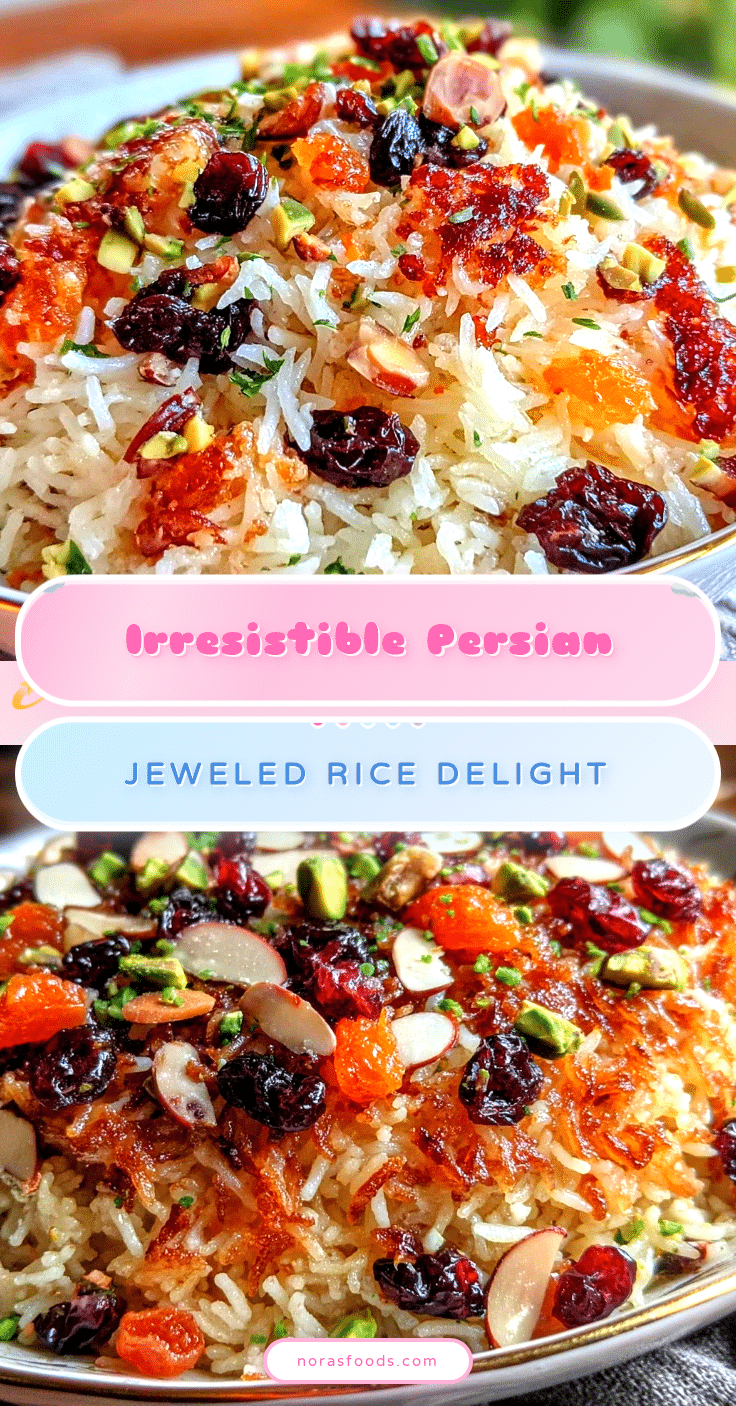
Flavorful Persian Jeweled Rice Recipe Easy Homemade Morasa Polo with Saffron and Barberries
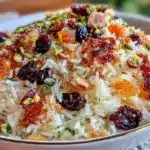
A quick and elegant Persian jeweled rice dish featuring saffron, barberries, and toasted nuts, perfect for special occasions or everyday meals.
- Prep Time: 20 minutes
- Cook Time: 30-35 minutes
- Total Time: 50-55 minutes
- Yield: 6 servings 1x
- Category: Main Course
- Cuisine: Persian
Ingredients
- 2 cups basmati rice (about 370g)
- 1 teaspoon saffron threads, soaked in 2 tablespoons warm water or stock
- ½ cup barberries (Zereshk) (about 65g)
- ¼ cup slivered almonds (about 30g), lightly toasted
- ¼ cup slivered pistachios (about 30g)
- 3 tablespoons unsalted butter, melted
- 1 small onion, finely chopped (optional)
- 1 teaspoon sugar
- Salt to taste
- About 3 cups water for cooking rice
Instructions
- Rinse the basmati rice under cold water in a fine mesh strainer until the water runs clear. Drain for about 10 minutes.
- Crush saffron threads lightly and soak in 2 tablespoons of warm water or chicken stock for at least 10 minutes.
- Bring 3 cups of salted water to a boil in a large pot. Add the rinsed rice and cook for 6-7 minutes until tender but firm in the center. Drain and set aside.
- In a skillet, melt 2 tablespoons of butter over medium heat. Add barberries and sugar; sauté gently for 2-3 minutes until plump. Remove and set aside.
- Toast slivered almonds and pistachios in the same pan until fragrant and lightly golden. Remove and set aside.
- Return the pot to medium heat and add remaining 1 tablespoon butter. Add a thin layer of rice to the bottom, drizzle saffron water over it for a golden base, then pile remaining rice on top.
- Cover the lid with a clean kitchen towel and place firmly on the pot. Reduce heat to low and steam for 30-35 minutes to finish cooking and develop a crispy tahdig crust.
- Carefully transfer rice to a serving platter. Scatter sautéed barberries, toasted nuts, and optional fried onions on top before serving.
Notes
Use a non-stick or heavy-bottomed pot to prevent sticking and achieve a crispy tahdig crust. Avoid stirring rice during steaming to keep grains fluffy. Soak saffron in warm water or stock to unlock aroma and color. Sauté barberries gently with sugar to balance tartness and prevent bitterness. Toast nuts separately for best texture. For vegan version, substitute butter with olive oil or vegan butter and use vegetable broth.
Nutrition
- Serving Size: About 1 cup cooked r
- Calories: 275
- Sugar: 4
- Sodium: 150
- Fat: 12
- Saturated Fat: 5
- Carbohydrates: 38
- Fiber: 3
- Protein: 6
Keywords: Persian rice, Morasa Polo, saffron rice, barberries, jeweled rice, Middle Eastern, basmati rice, tahdig, Persian cuisine