Introduction
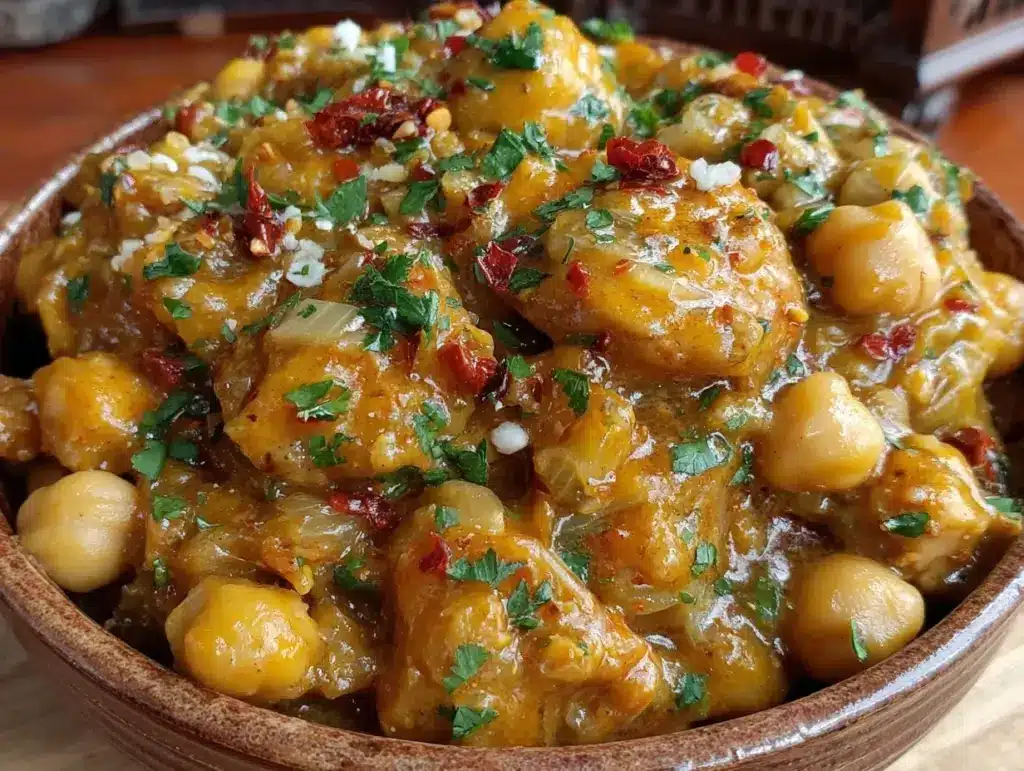
Let me tell you, the moment the rich aroma of spiced tomatoes, garlic, and creamy coconut milk fills the kitchen, you know something special is happening. The first time I made this creamy vegan butter chicken with chickpeas, I was honestly blown away by how comforting and satisfying it felt—without a hint of dairy or meat! It was the kind of moment where you pause, take a deep breath, and just smile because you know you’re onto something truly special.
Years ago, when I was knee-high to a grasshopper, butter chicken was a family favorite, a dish that brought everyone together around the table. Fast forward to today, and discovering a plant-based version that captures all those nostalgic flavors? Well, that was a happy accident during a rainy weekend experiment in my kitchen. I wish I’d found this recipe years ago—it’s dangerously easy and packed with pure, nostalgic comfort.
My family couldn’t stop sneaking spoonfuls off the stove (and honestly, I can’t blame them). Whether you’re looking to brighten up your weeknight dinners or impress friends at your next potluck, this creamy vegan butter chicken with chickpeas is a winner every time. Tested multiple times in the name of research, of course, it’s become a staple for family gatherings and cozy nights in—trust me, you’re going to want to bookmark this one.
Why You’ll Love This Recipe
After many trials and tweaks, this creamy vegan butter chicken with chickpeas stands out as a dish that’s as easy as it is delicious. Here’s why you’ll want to keep it in your recipe box:
- Quick & Easy: Comes together in under 40 minutes, perfect for busy weeknights or last-minute cravings.
- Simple Ingredients: No fancy grocery trips needed; you likely already have everything in your pantry and fridge.
- Perfect for Dinner: Hearty and satisfying, ideal for cozy dinners or weekend family meals.
- Crowd-Pleaser: Loved by vegans and meat-eaters alike—kids and adults keep asking for seconds!
- Unbelievably Delicious: The creamy, spiced sauce combined with protein-packed chickpeas hits that next-level comfort food spot.
This isn’t just another vegan curry. The secret here is blending chickpeas until partially smooth for an ultra-rich texture that mimics the silkiness of traditional butter chicken sauce. Plus, the seasoning is balanced perfectly—warm spices without overwhelming heat. Honestly, it’s the kind of meal that makes you close your eyes after the first bite and sigh with satisfaction. Whether you’re impressing guests or just treating yourself, this recipe is a delicious win every time.
What Ingredients You Will Need
This recipe uses simple, wholesome ingredients to deliver bold flavor and satisfying texture without the fuss. Most are pantry staples, and substitutions are easy if needed.
- For the Base:
- 1 tablespoon coconut oil (or any neutral oil)
- 1 medium onion, finely chopped
- 3 cloves garlic, minced
- 1 tablespoon fresh ginger, grated
- For the Sauce:
- 1 can (14 oz/400 g) crushed tomatoes (I prefer San Marzano for their natural sweetness)
- 1 can (14 oz/400 ml) full-fat coconut milk (adds creaminess and richness)
- 2 teaspoons garam masala (for that classic warming spice mix)
- 1 teaspoon smoked paprika (adds depth and subtle smokiness)
- 1/2 teaspoon turmeric powder (for color and earthiness)
- 1/2 teaspoon ground cumin
- Salt and black pepper to taste
- Protein:
- 2 cans (15 oz/425 g each) chickpeas, drained and rinsed (or 3 cups cooked chickpeas)
- For Garnish:
- Fresh cilantro leaves, chopped
- Lemon wedges (optional, for a fresh pop)
Substitutions: Use almond flour or gluten-free flour to thicken if you want a different texture. Swap coconut milk for oat milk, but the sauce won’t be as creamy. For a nut-free option, stick with coconut milk and avoid any nut garnishes.
Equipment Needed
- Large deep skillet or sauté pan with lid – A non-stick pan works great for easy cleanup.
- Cutting board and sharp chef’s knife – I’ve tried this with a dull knife once; lesson learned, it’s worth the effort.
- Wooden spoon or silicone spatula – For stirring without scratching your pans.
- Measuring spoons and cups – Accuracy matters, especially for spices.
- Blender or immersion blender (optional) – For blending some chickpeas into the sauce for creaminess. If you don’t have one, you can mash by hand but it takes more elbow grease.
Budget-friendly tip: You don’t need fancy gear here. A trusty skillet and a wooden spoon will do the trick. If you don’t own an immersion blender, a regular blender or even a potato masher works fine for the chickpeas.
Preparation Method
- Prep your ingredients: Chop the onion finely, mince the garlic, and grate the ginger. Drain and rinse the chickpeas well. This step should take about 10 minutes.
- Heat the oil: Warm 1 tablespoon of coconut oil in your skillet over medium heat until shimmering (about 2 minutes). This oil gives the dish a subtle tropical aroma that pairs well with the spices.
- Sauté aromatics: Add the chopped onion and cook until translucent and soft, about 5-7 minutes. Stir occasionally to avoid browning. Then add the garlic and ginger, cooking for another 1-2 minutes until fragrant. You’ll know it’s ready when the kitchen smells heavenly and the mixture is golden.
- Add the spices: Sprinkle in garam masala, paprika, turmeric, cumin, salt, and pepper. Stir well for about 1 minute to toast the spices gently—this helps release their full flavor. Be careful not to burn them.
- Pour in crushed tomatoes: Add the canned tomatoes along with their juices. Stir to combine and let it simmer on medium-low heat for 8-10 minutes. This allows the sauce to thicken and the flavors to meld beautifully.
- Prepare chickpeas: While the sauce simmers, transfer about half of the drained chickpeas to a blender or use an immersion blender to puree them until mostly smooth but still with some texture. This step gives the sauce that creamy body without dairy.
- Add chickpeas and coconut milk: Return the blended chickpeas to the pan along with the whole chickpeas and pour in the coconut milk. Stir gently to combine everything. Simmer for another 10-12 minutes on low heat, stirring occasionally. The sauce should be creamy, rich, and slightly thickened by now.
- Taste & adjust: Give it a taste and adjust seasoning with salt, pepper, or a pinch more garam masala if you like it bolder. If the sauce is too thick, add a splash of water or vegetable broth.
- Garnish and serve: Sprinkle with fresh chopped cilantro and add lemon wedges on the side for a zesty kick. Serve hot with basmati rice, naan, or your favorite flatbread.
Cooking Tips & Techniques
One thing I learned the hard way is not to rush the spice toasting step. Toasting the spices gently in the oil before adding liquids really unlocks their flavor and aroma—skip this, and the curry tastes flat. Also, blending only half the chickpeas gives you a creamy sauce with a nice texture; going fully smooth feels too mushy.
Keep your heat moderate—too high and the coconut milk can separate, which ruins that luscious texture. If you notice the sauce splitting, lower the heat and stir gently. Fresh ginger is a game-changer here; frozen or powdered versions just don’t provide the same zing.
Multitasking tip: While your sauce simmers, prep your rice or chop your garnishes to save time. And don’t forget to taste at the end—seasoning is key and can always be adjusted!
Variations & Adaptations
- Seasonal twist: Swap chickpeas for cubed cauliflower or tofu for different textures while keeping that creamy sauce intact.
- Spice level: Add finely chopped green chilies or a dash of cayenne if you prefer some heat, or tone it down by reducing paprika and skipping cayenne entirely.
- Cooking method: Try this recipe in a slow cooker by sautéing onions and spices beforehand, then combining everything and cooking on low for 4-6 hours.
- Allergen-friendly: Use oat or almond milk instead of coconut milk for nut-free or different dairy-free options.
- Personal favorite: I once added roasted red peppers blended into the sauce for a smoky-sweet depth—totally delicious and unexpected.
Serving & Storage Suggestions
This creamy vegan butter chicken with chickpeas is best served hot, straight from the pan, spooned over fluffy basmati rice or alongside warm naan. A side of sautéed greens or a fresh cucumber salad brightens the plate beautifully.
Store leftovers in an airtight container in the refrigerator for up to 4 days. The flavors actually deepen after resting overnight, making it perfect for meal prep. When reheating, warm gently on the stovetop or microwave, adding a splash of water or coconut milk if the sauce feels too thick.
If you want to freeze portions, do so in freezer-safe containers for up to 3 months. Thaw overnight in the fridge before reheating.
Nutritional Information & Benefits
This recipe packs a good punch of protein and fiber thanks to chickpeas, making it a filling plant-based meal. Coconut milk provides healthy fats that support brain and heart health, while the spices offer antioxidants and anti-inflammatory benefits. It’s naturally gluten-free and can be made nut-free with simple swaps.
Per serving, expect roughly 350-400 calories, with about 12-15 grams of protein and plenty of fiber to keep you full. For those mindful of sodium, adjusting salt is easy, and the nutrient-rich spices help boost overall wellness.
Conclusion
This creamy vegan butter chicken with chickpeas is a recipe I keep coming back to because it’s comforting, flavorful, and surprisingly easy. You can tweak it based on your spice tolerance or dietary needs, making it a versatile favorite for weeknights or special occasions. Honestly, it feels like a warm hug on a plate.
If you try it, I’d love to hear how you customize it or which variations became your go-tos. Don’t be shy—leave a comment or share your photos! Happy cooking and enjoy every creamy, dreamy bite.
FAQs
Can I make this recipe gluten-free?
Yes! This recipe is naturally gluten-free as long as you serve it with gluten-free sides like rice or gluten-free naan.
What can I use instead of coconut milk?
You can swap coconut milk for oat milk or almond milk, but the sauce won’t be quite as creamy or rich.
Is this recipe spicy?
It’s mildly spiced by default, but you can easily adjust heat by adding chili powder or fresh chilies if you like it hotter.
How long does this dish keep in the fridge?
Store in an airtight container for up to 4 days. Flavors develop nicely after a day or two.
Can I freeze leftover creamy vegan butter chicken with chickpeas?
Absolutely! Freeze in portions for up to 3 months and thaw overnight before reheating.
Pin This Recipe!
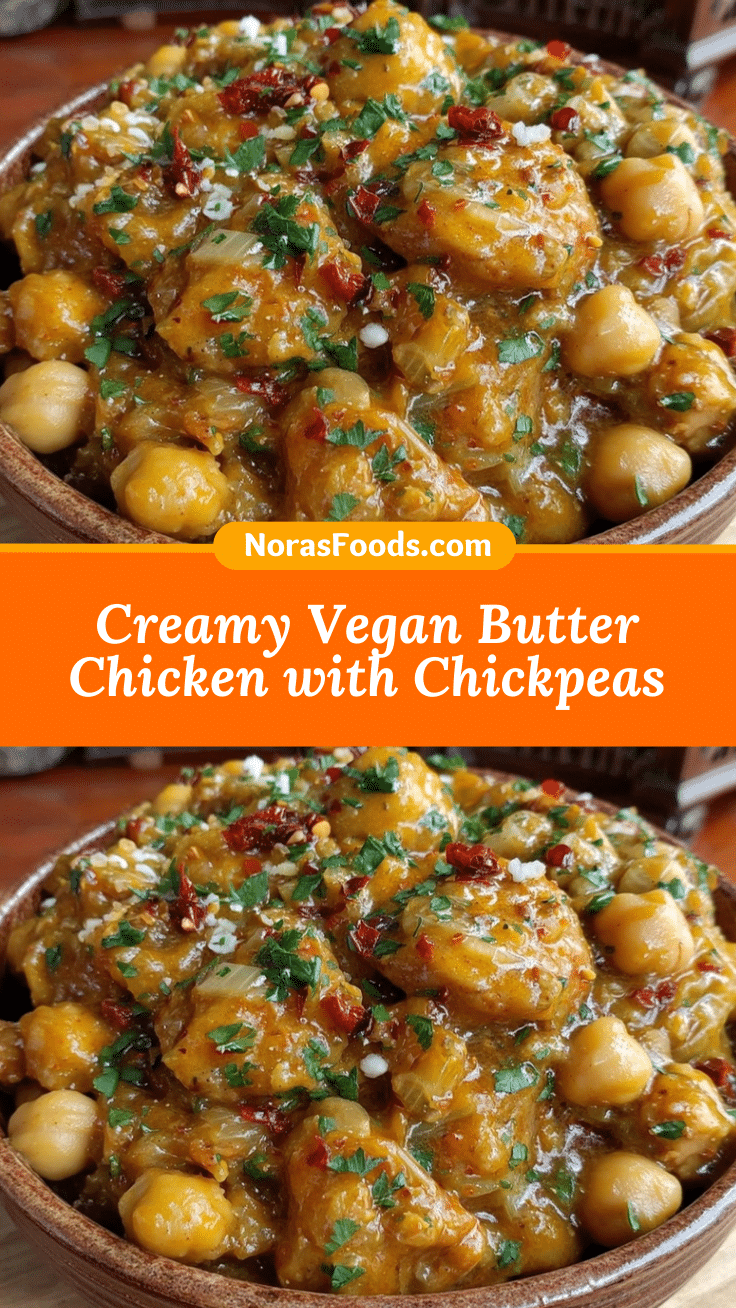
Creamy Vegan Butter Chicken with Chickpeas

A comforting and satisfying plant-based version of butter chicken made with chickpeas and a creamy spiced tomato and coconut milk sauce. Perfect for cozy dinners and family meals.
- Prep Time: 10 minutes
- Cook Time: 30 minutes
- Total Time: 40 minutes
- Yield: 4 servings 1x
- Category: Main Course
- Cuisine: Indian-inspired Vegan
Ingredients
- 1 tablespoon coconut oil (or any neutral oil)
- 1 medium onion, finely chopped
- 3 cloves garlic, minced
- 1 tablespoon fresh ginger, grated
- 1 can (14 oz/400 g) crushed tomatoes
- 1 can (14 oz/400 ml) full-fat coconut milk
- 2 teaspoons garam masala
- 1 teaspoon smoked paprika
- 1/2 teaspoon turmeric powder
- 1/2 teaspoon ground cumin
- Salt and black pepper to taste
- 2 cans (15 oz/425 g each) chickpeas, drained and rinsed (or 3 cups cooked chickpeas)
- Fresh cilantro leaves, chopped (for garnish)
- Lemon wedges (optional, for garnish)
Instructions
- Chop the onion finely, mince the garlic, and grate the ginger. Drain and rinse the chickpeas well.
- Heat 1 tablespoon of coconut oil in a large deep skillet over medium heat until shimmering, about 2 minutes.
- Add the chopped onion and cook until translucent and soft, about 5-7 minutes, stirring occasionally.
- Add the garlic and ginger, cooking for another 1-2 minutes until fragrant.
- Sprinkle in garam masala, smoked paprika, turmeric, cumin, salt, and black pepper. Stir well for about 1 minute to toast the spices gently.
- Pour in the crushed tomatoes with their juices. Stir to combine and simmer on medium-low heat for 8-10 minutes until the sauce thickens.
- Transfer about half of the drained chickpeas to a blender or use an immersion blender to puree until mostly smooth but still textured.
- Return the blended chickpeas to the pan along with the whole chickpeas and pour in the coconut milk. Stir gently to combine.
- Simmer for another 10-12 minutes on low heat, stirring occasionally, until the sauce is creamy and slightly thickened.
- Taste and adjust seasoning with salt, pepper, or more garam masala if desired. Add a splash of water or vegetable broth if the sauce is too thick.
- Garnish with fresh chopped cilantro and serve with lemon wedges on the side. Serve hot with basmati rice, naan, or your favorite flatbread.
Notes
Toast spices gently to unlock full flavor. Blend only half the chickpeas for creamy texture without mushiness. Keep heat moderate to prevent coconut milk from separating. Fresh ginger is recommended for best flavor. Adjust seasoning at the end. Can substitute almond or oat milk for coconut milk but sauce will be less creamy.
Nutrition
- Serving Size: 1 serving (about 1/4
- Calories: 375
- Sugar: 7
- Sodium: 350
- Fat: 22
- Saturated Fat: 18
- Carbohydrates: 35
- Fiber: 9
- Protein: 14
Keywords: vegan butter chicken, chickpeas, creamy curry, plant-based dinner, dairy-free, coconut milk, easy vegan recipe, weeknight dinner