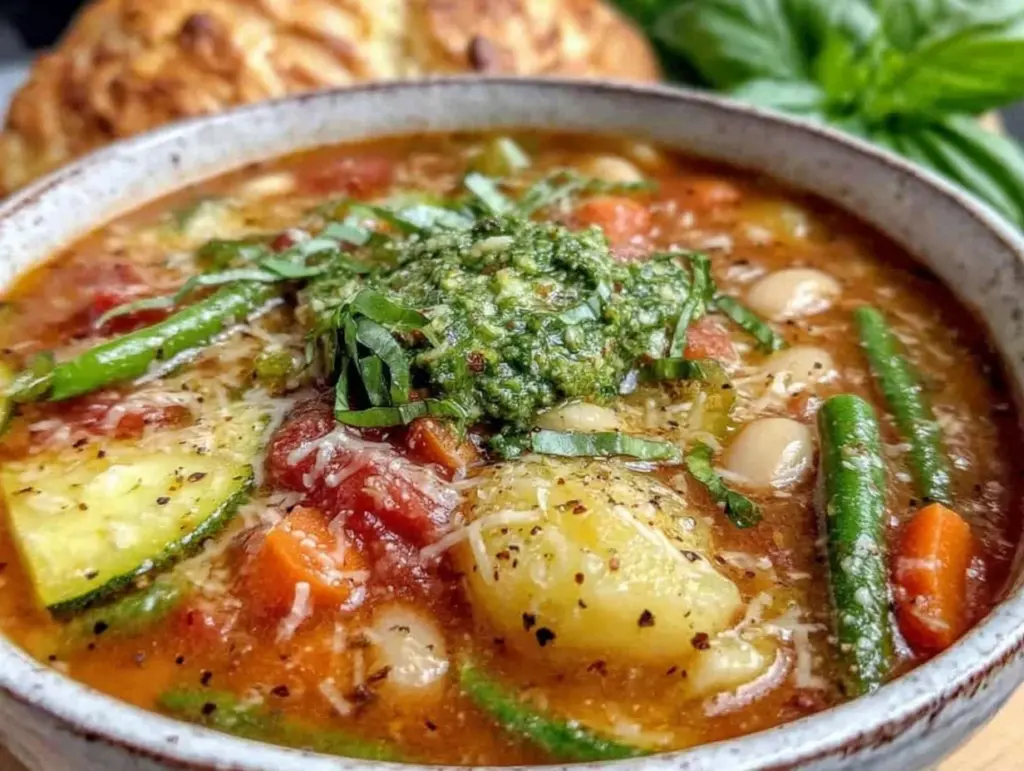
The other evening, I found myself alone in the kitchen just as the sun was dipping low, the kind of quiet moment where the day’s chaos finally settles. I had a handful of spring vegetables lingering in the fridge—snap peas, baby carrots, zucchini—and honestly, I wasn’t in the mood for a complicated dinner. The idea of making a fresh spring vegetable minestrone with basil pesto started as a bit of a casual experiment, nothing fancy. I was skeptical at first because, you know, minestrone can sometimes feel heavy or overly tomato-y, but this one surprised me.
As the pot simmered, the kitchen filled with the scent of garlic, sweet peas, and fresh basil from the pesto—so simple and homey, yet bright and alive. I remember thinking how this soup was exactly what I needed: comforting but light, tasty but not fussy. It was a recipe I ended up making three times that week, tweaking the pesto ratio here, adding a pinch more fresh herbs there. Something about the fresh spring vegetable minestrone with basil pesto felt like a quiet reset, a way to pause and enjoy small, wholesome flavors without rushing.
It stuck with me because it’s a recipe that doesn’t demand much, but rewards you with layers of flavor and a real sense of satisfaction. Plus, it’s got that little pesto touch that brings everything together in a way that’s unexpectedly cozy. If you’re looking for a recipe that feels like a fresh breath of spring in a bowl, yet still warms you up from the inside out, this might just be the one to try.
Why You’ll Love This Fresh Spring Vegetable Minestrone with Basil Pesto
Honestly, this fresh spring vegetable minestrone with basil pesto is one of those recipes that fits right into the rhythm of everyday life. Having tested and tweaked it over multiple weeks, I can confidently say it’s one of those meals you can trust to deliver every time. Here’s what makes it stand out:
- Quick & Easy: Ready in about 35 minutes, it’s perfect for weeknights when you want something homemade but don’t want to spend hours in the kitchen.
- Simple Ingredients: No fancy or hard-to-find items here—just fresh spring vegetables, pantry staples, and homemade basil pesto that’s easy to whip up.
- Perfect for Springtime: The lightness and freshness of the vegetables paired with bright basil pesto really bring out the best of the season’s bounty.
- Crowd-Pleaser: Whether it’s a family dinner or casual get-together, this minestrone gets nods from kids and adults alike (and that pesto? Total game-changer).
- Unbelievably Delicious: The combo of tender veggies and herbaceous pesto makes every spoonful comforting but lively—not your average soup.
What makes this recipe different is that the pesto isn’t just a garnish; it’s stirred in right at the end, giving the whole soup a fresh, herbal punch without overpowering the delicate flavors of the vegetables. Plus, I use a small amount of white beans for protein, which keeps it hearty but not heavy. If you like dishes that feel a little like cozy soups but want it on the lighter side, this fits the bill perfectly.
It’s also flexible—whether you want to make it vegan, add a twist with some pasta, or serve it alongside a crisp salad, this minestrone can handle it. It’s the kind of recipe that makes you pause, close your eyes with that first bite, and think, “Yeah, this is just right.”
What Ingredients You Will Need
This fresh spring vegetable minestrone with basil pesto calls for simple, wholesome ingredients that come together to create bold flavor and satisfying texture without fuss. Most of these are pantry staples, with a focus on fresh, seasonal veggies that capture spring’s vibrancy.
- Vegetables & Beans:
- 1 cup snap peas, trimmed and halved (for a fresh crunch)
- 1 cup baby carrots, sliced thin
- 1 medium zucchini, diced
- 1 cup fresh spinach or baby kale, roughly chopped
- 1 can (15 oz / 425 g) cannellini beans, drained and rinsed (adds creamy protein)
- 1 small yellow onion, finely chopped
- 2 cloves garlic, minced
- Liquids & Base:
- 4 cups vegetable broth (homemade or store-bought; I like Better Than Bouillon for flavor)
- 1 can (14 oz / 400 g) diced tomatoes, with juices
- Herbs & Seasonings:
- Salt and freshly ground black pepper, to taste
- 1 teaspoon dried oregano
- 1/2 teaspoon crushed red pepper flakes (optional, for a little kick)
- Fresh basil leaves, about 1 cup packed, for pesto
- Basil Pesto Ingredients:
- 1 cup fresh basil leaves, packed
- 1/4 cup grated Parmesan cheese (or nutritional yeast for vegan option)
- 1/4 cup pine nuts or walnuts (toasted for better flavor)
- 1/3 cup extra virgin olive oil
- 1 garlic clove
- Salt, to taste
For substitutions, you can swap snap peas with green beans or fresh asparagus tips if you like. If you want a gluten-free option, skip any pasta additions or use gluten-free shapes. For a vegan pesto, simple omit Parmesan and use nutritional yeast instead. I often recommend using fresh, firm veggies from your local market—there’s just a difference in flavor that store-bought frozen can’t quite match here.
Equipment Needed
- Large soup pot or Dutch oven: Essential for simmering the minestrone evenly without worry.
- Food processor or blender: Needed for making the basil pesto smooth and creamy; a small blender works fine if you don’t have a food processor.
- Wooden spoon or heat-resistant spatula: For stirring the soup without scratching your pot.
- Knife and cutting board: For prepping all those fresh vegetables.
- Measuring cups and spoons: To keep seasoning and ingredient amounts precise—especially important for the pesto.
If you don’t have a food processor, no worries—just finely chop the basil, nuts, and garlic and whisk in the olive oil and cheese. I’ve done that a few times when my processor was on the fritz, and it still works pretty well! For budget-friendly options, a good heavy-bottomed pot is a worthwhile investment since it heats evenly and prevents scorching, which is helpful when making soups like this.
Preparation Method
- Prep your ingredients (10 minutes): Rinse and trim the snap peas, slice the baby carrots thinly, dice the zucchini, finely chop the onion and garlic, and roughly chop the spinach or kale. Drain and rinse the cannellini beans.
- Make the basil pesto (10 minutes): In your food processor, combine the fresh basil leaves, toasted pine nuts or walnuts, grated Parmesan (or nutritional yeast), garlic clove, and a pinch of salt. Pulse a few times to blend. Then, with the processor running, slowly drizzle in the olive oil until you get a smooth, creamy consistency. Taste and adjust salt as needed. Set aside.
- Sauté aromatics (5 minutes): Heat 1 tablespoon of olive oil in a large pot over medium heat. Add the chopped onion and cook until translucent, about 3 minutes. Add the minced garlic and cook for another minute until fragrant but not browned.
- Add vegetables and cook (5 minutes): Toss in the sliced carrots, snap peas, and zucchini. Stir well and cook for 4-5 minutes until they start to soften but still have a bite.
- Add liquids and simmer (15 minutes): Pour in the vegetable broth and diced tomatoes with their juices. Add dried oregano, crushed red pepper flakes (if using), and salt and pepper to taste. Bring to a boil, then reduce heat to low and simmer uncovered for about 15 minutes, letting the flavors meld and the veggies become tender.
- Add beans and greens (3 minutes): Stir in the cannellini beans and chopped spinach or kale. Cook for another 3-5 minutes until the greens wilt and beans are heated through.
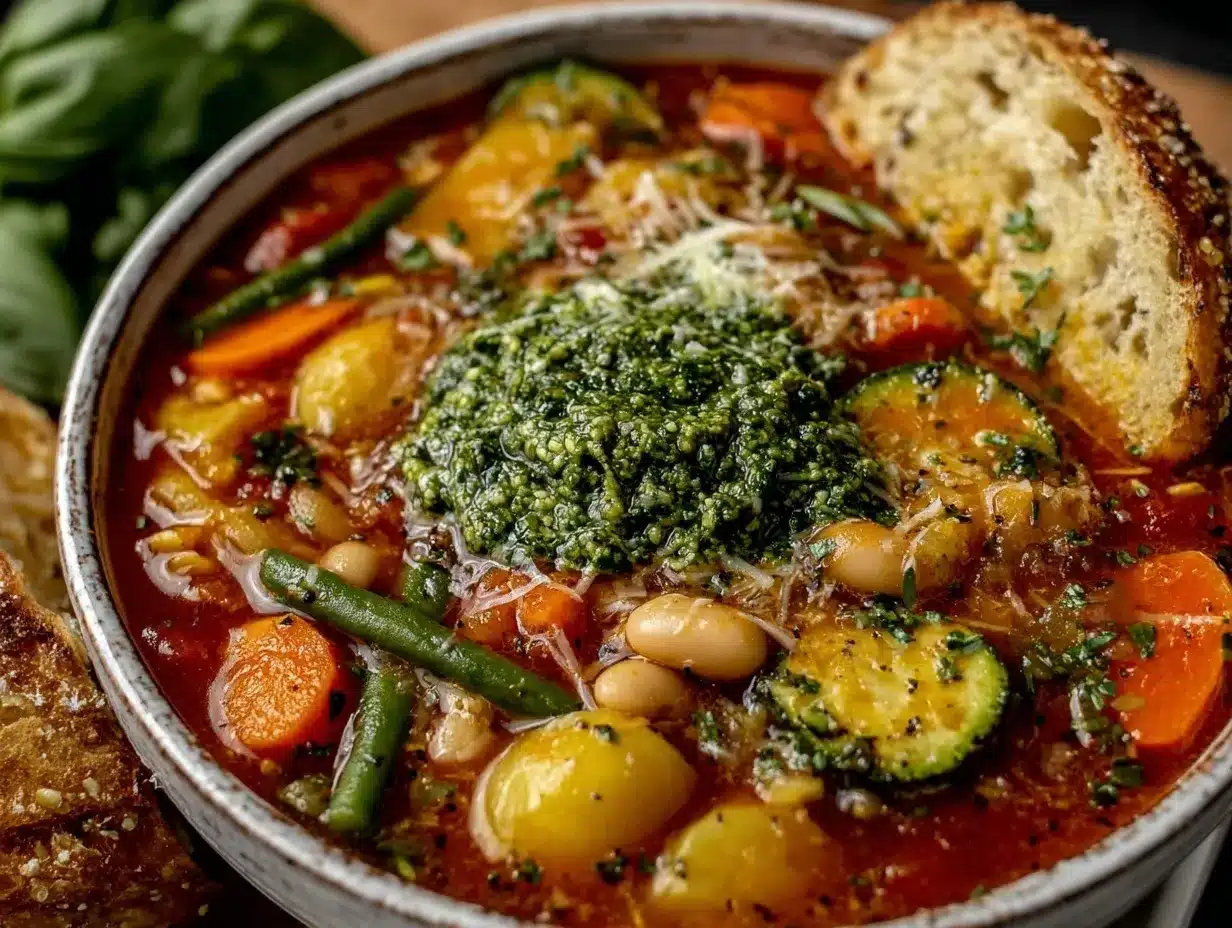
- Finish with basil pesto (2 minutes): Remove the pot from heat. Spoon in a generous 2-3 tablespoons of the basil pesto and stir gently to combine. This adds the fresh herbal brightness that makes the soup sing.
- Adjust seasoning and serve: Taste the soup and add more salt, pepper, or pesto if you want an extra punch. Ladle into bowls and enjoy warm. If you want, a sprinkle of extra Parmesan or a drizzle of olive oil on top is lovely.
One tip: Don’t overcook the vegetables; they should still have a slight snap for that fresh spring vibe. Also, if the soup tastes a bit flat after simmering, a squeeze of fresh lemon juice brightens it right up—trust me on this one.
Cooking Tips & Techniques
When making this fresh spring vegetable minestrone with basil pesto, a few small tricks can make a big difference. First, always toast your nuts for the pesto—it really brings out their flavor and adds depth. I’ve learned the hard way that skipping this step can leave the pesto tasting a bit dull.
Another thing: adding the pesto at the very end is key. If you simmer it too long, the vibrant green color dulls and the fresh basil flavor fades. Stirring it in off the heat preserves that brightness and makes the soup feel fresh, not stewed.
Keep an eye on your vegetables while simmering. The last thing you want is mushy zucchini or limp snap peas. Aim for tender-crisp, which keeps the soup lively and texturally interesting. If you want a heartier version, tossing in small pasta shapes like ditalini or orzo about 7 minutes before the end works beautifully—just don’t forget to adjust your broth quantity so it doesn’t get too thick.
Lastly, seasoning in layers is essential. Salt the soup while cooking and season again after adding the pesto. It’s a simple habit but makes the flavors pop. If you’re feeling adventurous, a pinch of smoked paprika or a splash of balsamic vinegar before serving adds a subtle twist that’s surprisingly good.
Variations & Adaptations
This recipe is a great base to play around with, depending on your dietary needs and what’s in season. Here are a few ideas:
- Vegan version: Skip the Parmesan in the pesto and replace it with nutritional yeast for that cheesy flavor. Make sure your vegetable broth is vegan-friendly.
- Protein boost: Add cooked chicken, turkey sausage, or even crispy tofu cubes for more substance. For a plant-based protein punch, adding extra beans or lentils works well too.
- Seasonal swap: In early spring, use fresh peas and asparagus tips. Come summer, swap the zucchini and peas for fresh corn and cherry tomatoes for a warm-weather twist.
- Gluten-free option: Skip any pasta or use gluten-free pasta shapes. This soup is naturally gluten-free if you leave out the pasta.
- Spice it up: Add red pepper flakes or a dash of hot sauce to the pesto or soup for a little heat.
Personally, I once tried this minestrone with a dollop of creamy cashew sauce from my creamy vegan mac and cheese recipe on the side, and the combo was unexpectedly fantastic—like a cozy spring dinner remix.
Serving & Storage Suggestions
This fresh spring vegetable minestrone with basil pesto is best served warm but not scalding hot. Let it rest a few minutes after cooking so the flavors settle. I like to ladle it into rustic bowls and garnish with a little extra fresh basil or a drizzle of olive oil for that final flourish.
It pairs wonderfully with crusty bread or a fresh green salad—something simple so the soup remains the star. If you want a heartier meal, serving it alongside a light grilled chicken or the crispy tofu stir-fry from here makes a balanced dinner.
For storage, cool the soup completely before transferring it to airtight containers. It keeps in the refrigerator for up to 4 days. When reheating, add a splash of broth or water to loosen it up, as it tends to thicken. The flavors actually deepen overnight, so leftovers can be even better the next day.
You can freeze the soup (minus the pesto) for up to 3 months. Freeze pesto separately in ice cube trays and add fresh when reheating to maintain that bright flavor.
Nutritional Information & Benefits
Per serving (about 1.5 cups), this fresh spring vegetable minestrone with basil pesto contains roughly:
| Calories | 220-250 kcal |
|---|---|
| Protein | 10-12 g |
| Carbohydrates | 30 g |
| Fiber | 7 g |
| Fat | 8-10 g (mostly healthy fats from olive oil and nuts) |
The soup is packed with vitamins A and C from the fresh vegetables, antioxidants from the basil, and plant-based protein from the beans. It’s naturally gluten-free and can easily be made vegan, making it suitable for many dietary preferences. Plus, the healthy fats in the pesto support heart health, while the fiber from veggies and beans aid digestion.
Personally, I appreciate how this minestrone balances nourishment with flavor, making it a wholesome choice on busy days when I want something quick but still good for me.
Conclusion
This fresh spring vegetable minestrone with basil pesto is a keeper—simple enough to make any day, yet rich in flavor and texture that keeps you coming back. It’s a recipe that fits right into a busy lifestyle without feeling like a shortcut, and it invites personal tweaks to make it your own. Whether you’re new to cooking soups or seasoned in the kitchen, this minestrone offers a satisfying way to enjoy seasonal veggies in a cozy bowl.
I love it because it reminds me that sometimes, the best meals come from quiet moments and a few fresh ingredients thoughtfully combined. If you try it, I’d be curious to hear how you make it yours—maybe with a bit more pesto, a splash of lemon, or a dash of spice. Sharing those stories always makes cooking feel a little more connected, don’t you think?
So, give it a go, and drop a comment below with your favorite twist!
Frequently Asked Questions About Fresh Spring Vegetable Minestrone with Basil Pesto
Can I make the pesto ahead of time?
Absolutely! Pesto can be made up to 3 days in advance and stored in an airtight container in the fridge. Just give it a good stir and maybe add a little olive oil before using.
What if I don’t have cannellini beans?
You can swap cannellini beans with great northern beans or chickpeas for a similar texture and taste.
Can I add pasta to this minestrone?
Yes! Small pasta shapes like ditalini, orzo, or elbow macaroni work well. Add them about 7-10 minutes before the soup finishes cooking to avoid overcooking.
How do I store leftovers?
Store leftovers in airtight containers in the refrigerator for up to 4 days. For longer storage, freeze the soup without pesto and add fresh pesto when reheating.
Is this recipe suitable for vegans?
Yes, simply replace Parmesan cheese in the pesto with nutritional yeast or omit it entirely to keep the recipe vegan.
Pin This Recipe!
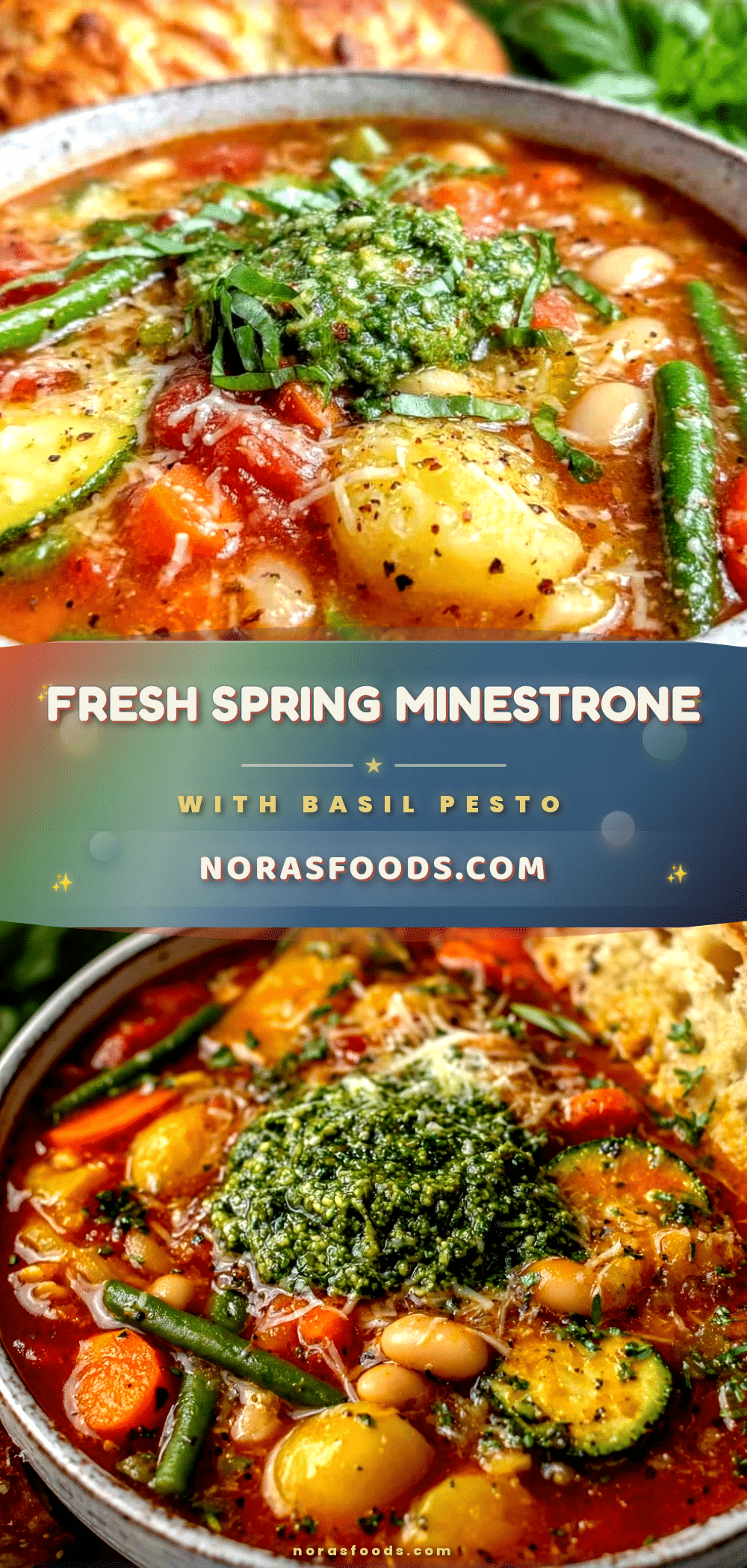
Fresh Spring Vegetable Minestrone with Basil Pesto

A light and comforting spring vegetable minestrone soup enhanced with a fresh homemade basil pesto, perfect for a quick and wholesome meal.
- Prep Time: 10 minutes
- Cook Time: 25 minutes
- Total Time: 35 minutes
- Yield: 4 servings 1x
- Category: Main Course
- Cuisine: Italian
Ingredients
- 1 cup snap peas, trimmed and halved
- 1 cup baby carrots, sliced thin
- 1 medium zucchini, diced
- 1 cup fresh spinach or baby kale, roughly chopped
- 1 can (15 oz / 425 g) cannellini beans, drained and rinsed
- 1 small yellow onion, finely chopped
- 2 cloves garlic, minced
- 4 cups vegetable broth
- 1 can (14 oz / 400 g) diced tomatoes, with juices
- Salt and freshly ground black pepper, to taste
- 1 teaspoon dried oregano
- 1/2 teaspoon crushed red pepper flakes (optional)
- Fresh basil leaves, about 1 cup packed, for pesto
- For basil pesto:
- 1 cup fresh basil leaves, packed
- 1/4 cup grated Parmesan cheese (or nutritional yeast for vegan option)
- 1/4 cup pine nuts or walnuts, toasted
- 1/3 cup extra virgin olive oil
- 1 garlic clove
- Salt, to taste
Instructions
- Rinse and trim the snap peas, slice the baby carrots thinly, dice the zucchini, finely chop the onion and garlic, and roughly chop the spinach or kale. Drain and rinse the cannellini beans.
- In a food processor, combine fresh basil leaves, toasted pine nuts or walnuts, grated Parmesan (or nutritional yeast), garlic clove, and a pinch of salt. Pulse to blend. Slowly drizzle in olive oil while processing until smooth and creamy. Set aside.
- Heat 1 tablespoon olive oil in a large pot over medium heat. Add chopped onion and cook until translucent, about 3 minutes. Add minced garlic and cook for another minute until fragrant.
- Add sliced carrots, snap peas, and zucchini. Stir and cook for 4-5 minutes until they start to soften but remain crisp.
- Pour in vegetable broth and diced tomatoes with juices. Add dried oregano, crushed red pepper flakes (if using), salt, and pepper. Bring to a boil, then reduce heat and simmer uncovered for 15 minutes.
- Stir in cannellini beans and chopped spinach or kale. Cook for another 3-5 minutes until greens wilt and beans are heated through.
- Remove pot from heat. Stir in 2-3 tablespoons of basil pesto gently to combine.
- Taste and adjust seasoning with salt, pepper, or more pesto if desired. Serve warm, optionally garnished with extra Parmesan or a drizzle of olive oil.
Notes
Do not overcook the vegetables; they should remain tender-crisp. Add pesto off the heat to preserve its fresh flavor and vibrant color. Toast nuts for pesto to enhance flavor. For a heartier soup, add small pasta shapes 7-10 minutes before finishing cooking and adjust broth accordingly. A squeeze of fresh lemon juice brightens the soup if flavors seem flat.
Nutrition
- Serving Size: About 1.5 cups per s
- Calories: 235
- Sugar: 6
- Sodium: 600
- Fat: 9
- Saturated Fat: 1.5
- Carbohydrates: 30
- Fiber: 7
- Protein: 11
Keywords: spring vegetable minestrone, basil pesto, fresh vegetable soup, easy minestrone recipe, vegan minestrone, gluten-free soup, healthy soup, homemade pesto