Introduction
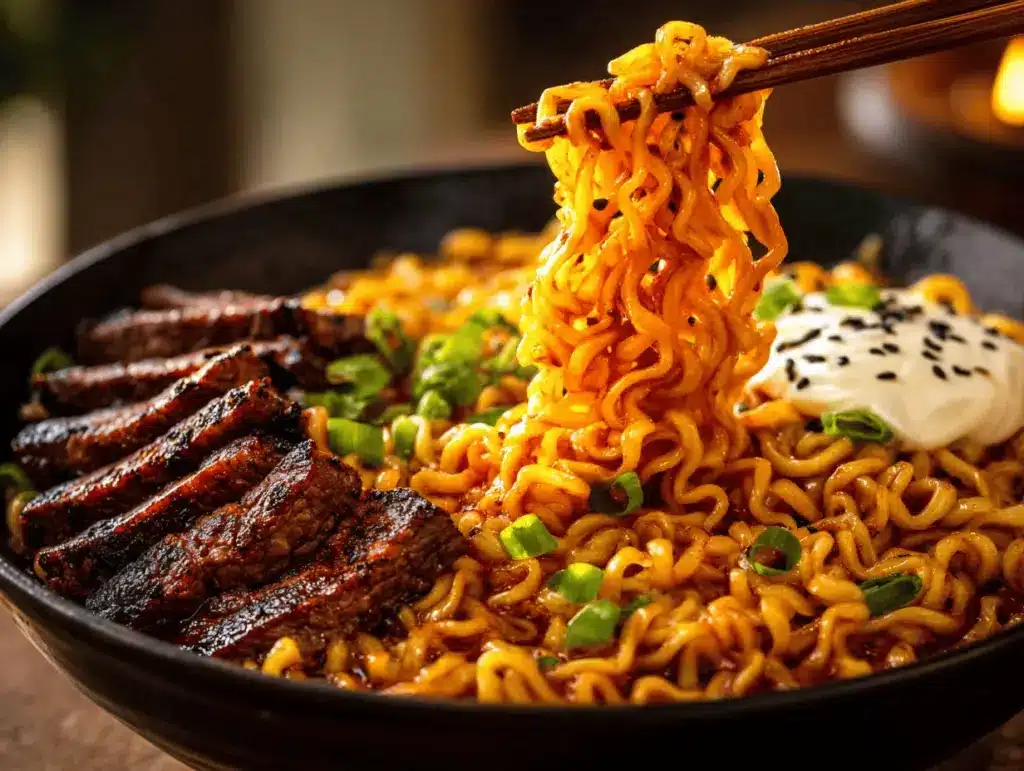
The first time I whipped up this spicy Korean BBQ beef ramen, my kitchen was instantly filled with the smoky scent of seared beef and toasted sesame oil. You know those meals that just smell like they’re going to be legendary? This is one of them. I’d always been obsessed with the addictive heat of Korean BBQ and the deep, umami-packed broth of classic ramen, so it was only a matter of time before the two collided in my kitchen.
Honestly, the real magic happened one night when I had leftover bulgogi and a craving for something slurp-worthy and comforting. I started layering flavors—spicy gochujang, a little brown sugar, rich beef stock, and, of course, a swirl of creamy garlic sriracha sauce on top. The result? An irresistible bowl that’s bold, savory, and just the right amount of creamy.
This spicy Korean BBQ beef ramen isn’t just about the heat; it’s about depth. The beef is marinated to perfection and pan-seared for those crispy edges, the noodles are springy and soak up every drop of flavor, and the garlic sriracha drizzle? It ties everything together in a way that makes you want seconds (or thirds). If you’ve got a picky eater, a spice lover, or just a busy weeknight ahead, trust me—this recipe checks every box.
After testing this spicy Korean BBQ beef ramen recipe more times than I’d admit, I can promise you it’s both approachable and restaurant-worthy. Whether you’re a ramen newbie or a noodle fanatic, you’ll love how easy and satisfying this creamy, spicy bowl is. Let’s get cooking!
Why You’ll Love This Recipe
There’s ramen, and then there’s this spicy Korean BBQ beef ramen with creamy garlic sriracha—an absolute flavor bomb that’s hard to forget. I’ve put this recipe through its paces, tweaking the marinade and testing different noodle brands until I landed on the perfect combo. Here’s why it’ll win you over every single time:
- Quick & Easy: Comes together in under 45 minutes, so you can satisfy your ramen cravings on a busy weeknight.
- Simple Ingredients: No fancy specialty shop runs—everything can be found at most grocery stores (or easily subbed in a pinch).
- Perfect for Cozy Nights: This is the bowl you want when the weather turns chilly or you need a little comfort after a long day.
- Crowd-Pleaser: Even my spice-averse friends ask for seconds. The creamy garlic sriracha balances the heat for a bowl everyone enjoys.
- Rich, Layered Flavor: Sweet, spicy, savory, and creamy all dance together in every bite. The Korean BBQ marinade is a game-changer.
- Customizable: Add veggies, swap proteins, or adjust the heat—this recipe plays by your rules.
What sets this spicy Korean BBQ beef ramen apart? For starters, the beef gets a proper marinade—not just tossed in sauce at the end. That means real flavor through and through. The creamy garlic sriracha is more than just a topping; it’s a silky, tangy, garlicky drizzle that takes every slurp up a notch. Plus, you don’t have to cook the noodles and broth separately (a trick I learned after too many dirty pans).
This isn’t just another ramen hack—it’s my best, most satisfying version yet. When you dig into this bowl, it’s the kind of comfort food that feels a little indulgent but still homemade. I always get that “wow, I made this?!” feeling. Whether you’re trying to impress someone or just treating yourself, you’re in for a real treat with this spicy Korean BBQ beef ramen.
What Ingredients You Will Need
This spicy Korean BBQ beef ramen recipe keeps things straightforward, but every ingredient has a job to do. You’ll find a balance of sweet, spicy, creamy, and savory—nothing fussy, just full-on flavor. Most of these are pantry staples or easily found at your local store (and I’ve included my favorite swaps and tips too).
- For the Korean BBQ Beef:
- Thinly sliced beef (ribeye, sirloin, or flank steak work best)—about 1 lb / 450g
- Soy sauce – 3 tbsp (I love Kikkoman for its depth)
- Brown sugar – 2 tbsp (adds caramelized sweetness)
- Gochujang (Korean chili paste) – 1 ½ tbsp (for that signature spicy kick)
- Sesame oil – 1 tbsp (toasted if possible, for nutty aroma)
- Rice vinegar – 1 tbsp (balances the richness)
- Fresh garlic – 3 cloves, minced
- Fresh ginger – 1-inch knob, grated
- Black pepper – ½ tsp
- Green onions – 2, thinly sliced (for garnish and brightness)
- For the Ramen Broth:
- Beef stock – 4 cups / 950ml (homemade if you’re feeling fancy, boxed is totally fine)
- Low-sodium soy sauce – 2 tbsp
- Gochugaru (Korean red pepper flakes) – 1 tsp (optional, for extra heat)
- Mirin – 1 tbsp (adds a gentle sweetness, sub with a splash of white wine if needed)
- Sesame oil – 1 tsp
- For the Noodles:
- Fresh or instant ramen noodles – 4 bundles (about 10 oz / 280g total)
- For the Creamy Garlic Sriracha Drizzle:
- Mayonnaise – ¼ cup / 60g (Kewpie is my go-to for creaminess)
- Sriracha – 2 tbsp (adjust to your heat preference)
- Fresh garlic – 1 clove, finely grated
- Lime juice – 1 tsp (or lemon, for a tangy lift)
- Toppings & Finishers (Optional but highly recommended):
- Soft-boiled eggs – 2, halved (jammy yolks are the dream)
- Sesame seeds – 1 tbsp
- More green onions – for color and crunch
- Thinly sliced fresh chilies or chili oil – if you love the heat
- Shredded nori or roasted seaweed – for a salty bite
- Pickled veggies – like kimchi or pickled carrots, for zing
Ingredient Tips: For the beef, ask your butcher to slice it thin or partially freeze and slice it yourself—it makes a difference! If you need a gluten-free option, tamari replaces soy sauce nicely, and you can use gluten-free ramen noodles. If you’re out of gochujang, a mix of sriracha and miso paste works in a pinch (though it’s not exactly the same, it’s close enough for a weeknight dinner).
Equipment Needed
- Large mixing bowl: For marinating the beef (a zip-top bag works too if you want easy cleanup).
- Sharp knife and cutting board: Thin slices are key for tender beef, so a sturdy knife helps.
- Large skillet or wok: For flash-searing the beef and building flavor. A nonstick pan is okay, but a cast iron pan gives the best sear.
- Saucepan or soup pot: For simmering the broth and cooking the noodles. I use a medium pot for efficiency.
- Small bowl: For mixing up the creamy garlic sriracha drizzle.
- Tongs or chopsticks: For flipping beef and handling noodles (I always reach for my trusty chopsticks for ramen—just feels right).
- Whisk or fork: To blend the creamy sauce until smooth.
- Measuring spoons and cups: Precision helps, especially when marinating.
Equipment Tips: If you don’t have a wok, a wide heavy-bottomed skillet works great. For budget-friendly options, I started with a basic nonstick skillet and a dollar-store whisk—no shame! Just keep your knives sharp, and don’t worry about fancy gadgets. If you use cast iron, make sure it’s well seasoned to avoid sticky beef.
Preparation Method
-
Marinate the Beef:
In a large mixing bowl, combine 3 tbsp soy sauce, 2 tbsp brown sugar, 1 ½ tbsp gochujang, 1 tbsp sesame oil, 1 tbsp rice vinegar, 3 minced garlic cloves, 1-inch grated ginger, and ½ tsp black pepper. Add 1 lb (450g) thinly sliced beef and toss to coat. Let it marinate for at least 20 minutes (up to 2 hours in the fridge for deeper flavor).
Tip: Don’t skip the marinating—it’s where the beef gets its BBQ magic! -
Prep the Creamy Garlic Sriracha Drizzle:
In a small bowl, whisk together ¼ cup (60g) mayonnaise, 2 tbsp sriracha, 1 finely grated garlic clove, and 1 tsp lime juice. Adjust sriracha to your spice level. Set aside in the fridge (it thickens a bit and the flavors meld). -
Soft-Boil the Eggs (Optional):
Bring a small saucepan of water to a boil. Gently lower in 2 eggs and boil for 6-7 minutes. Transfer to an ice bath, peel, and halve. The yolks should be jammy, not runny.
Personal Note: I always forget the timer—set one so you don’t end up with hard-boiled eggs! -
Prepare the Broth:
In a medium saucepan, combine 4 cups (950ml) beef stock, 2 tbsp soy sauce, 1 tbsp mirin, 1 tsp sesame oil, and 1 tsp gochugaru (if using). Bring to a gentle simmer over medium heat. Taste and adjust salt or spice as needed.
Warning: Don’t let the broth boil hard or it can taste flat. -
Cook the Ramen Noodles:
Bring a separate pot of water to a boil. Cook 4 bundles (about 10 oz/280g) ramen noodles according to package directions (usually 2-3 minutes for fresh noodles). Drain and set aside. I toss them with a splash of sesame oil to prevent sticking. -
Sear the Marinated Beef:
Heat a large skillet or wok over high heat. Add a drizzle of oil, then add the marinated beef in a single layer (work in batches if needed). Sear for 1-2 minutes per side until caramelized and just cooked through. Transfer to a plate.
Troubleshooting: If the pan is overcrowded, the beef will steam instead of sear—patience pays off here. -
Assemble Your Ramen Bowls:
Divide cooked noodles among 4 bowls. Ladle hot broth over the noodles. Top each bowl with a generous pile of Korean BBQ beef, soft-boiled egg halves, green onions, sesame seeds, and any other toppings you like (chili oil, nori, kimchi, etc.). -
Drizzle & Serve:
Spoon the creamy garlic sriracha sauce over each bowl (I like a good zigzag across the top). Serve immediately. Grab your chopsticks and dig in!
Efficiency Tip: Marinate the beef and prep the sauce the night before if you’re short on time. If your noodles are done before the broth, just rinse with hot water to reheat before serving.
Cooking Tips & Techniques
- Beef Slicing: For super-thin slices, partially freeze the beef for 30-45 minutes before slicing. It really makes a difference in tenderness!
- High Heat Sear: Don’t be shy with the pan heat when cooking the beef. A hot, almost smoking skillet is key for that caramelized, BBQ-style crust. Too low and you’ll just get sad, gray beef.
- Layering Flavor: I used to just pour sauce over the beef at the end, but marinating first lets every slice soak up sweet, spicy, and umami notes. It’s worth the wait.
- Balancing Heat: Everyone’s spice tolerance is different—start light with gochujang and sriracha, then add more to taste. The creamy garlic sriracha drizzle really helps mellow out the fire if you overdo it.
- Broth Depth: Simmer, don’t boil, the broth. Boiling can make it taste flat or even bitter. Letting it gently bubble keeps it rich and inviting.
- Multitasking: While the beef marinates, prep your toppings and sauce. I usually soft-boil the eggs while chopping green onions and prepping garnish.
- Troubleshooting: If your noodles clump, rinse quickly under hot water and toss in a little oil. If the beef is tough, it was either sliced too thick or cooked too long—next time, go thinner and quick!
I’ve messed up my fair share of ramen bowls—overcooked noodles, bland broth, beef that’s rubbery. The main lesson? Trust your senses. The beef should sizzle, the broth should smell savory and inviting, and the noodles should bounce when you poke them. Once you nail these basics, you’ll have ramen night nailed, every time.
Variations & Adaptations
- Vegetarian Version: Swap the beef for marinated tofu or seared mushrooms. Use vegetable stock in the broth, and double up on veggies like bok choy, spinach, or shredded carrots.
- Low-Carb or Gluten-Free: Use spiralized zucchini noodles or shirataki noodles in place of ramen. Tamari can replace soy sauce for a gluten-free option.
- Milder Heat: Reduce or skip the gochugaru and use just a touch of gochujang. The creamy garlic sriracha can be swapped for plain yogurt with a little garlic and lime for less kick.
- Alternative Proteins: Thinly sliced chicken or pork can be used instead of beef—just adjust the marinade time (chicken only needs 15 minutes).
- Seasonal Toppings: In summer, I love adding fresh corn kernels or snap peas; in winter, wilted kale or roasted sweet potato cubes are delicious.
- Allergen Swaps: For egg-free, skip the soft-boiled eggs and use avocado or extra veggies. For dairy-free, use vegan mayo or plain coconut yogurt in the sauce.
Personal Favorite: My go-to twist is adding a spoonful of kimchi right before serving—the tangy, spicy crunch is everything with the rich broth and noodles!
Serving & Storage Suggestions
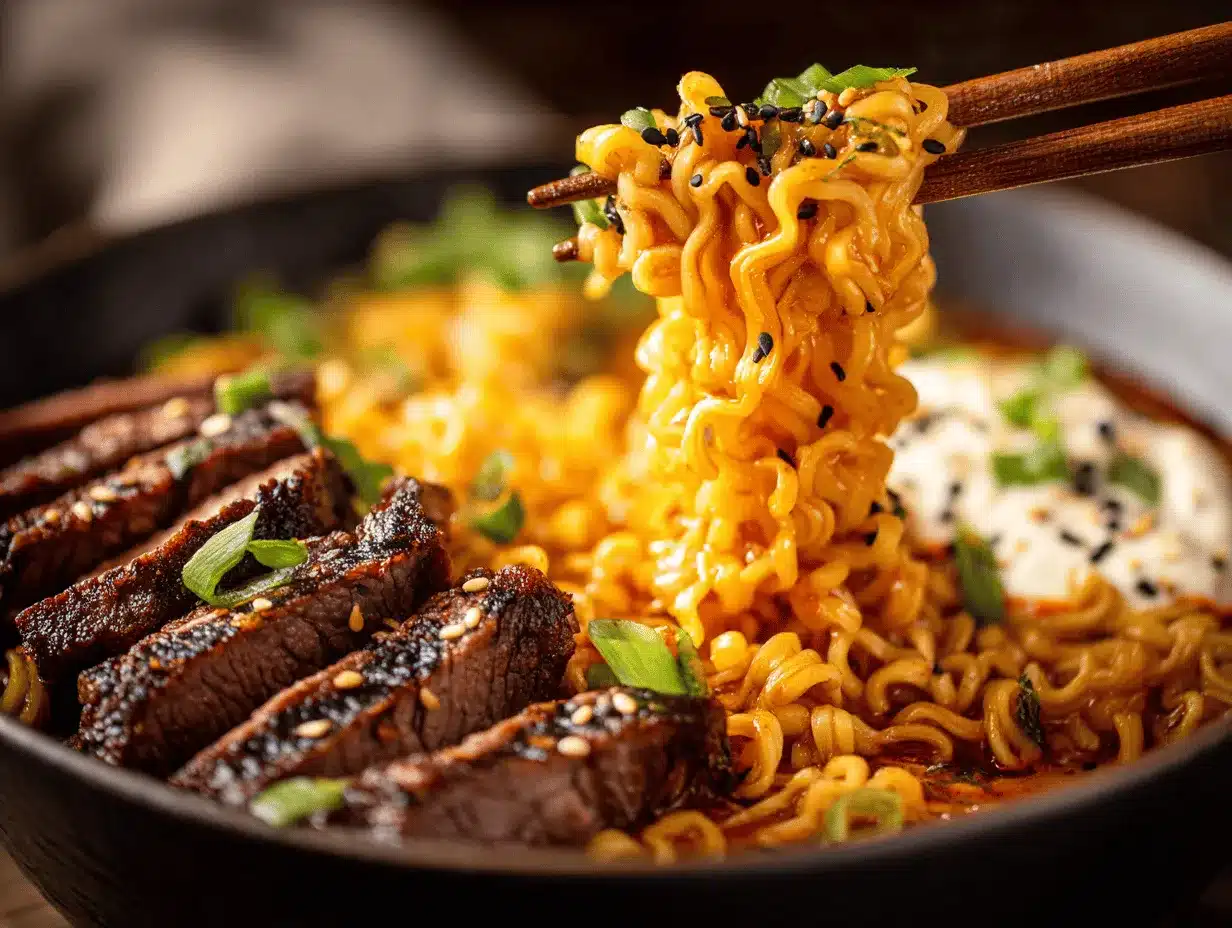
For the best experience, serve your spicy Korean BBQ beef ramen piping hot. I love using deep bowls to keep the broth and noodles cozy for longer. Garnish generously with green onions, sesame seeds, and a swirl of creamy garlic sriracha—presentation matters, especially if you’re snapping a picture for Pinterest or Instagram!
Pair with a cold cucumber salad or a side of quick pickled veggies to balance the heat. If you’re feeling festive, a light, crisp lager or sparkling water with lime makes a great drink alongside.
Storage Tips: Store leftover noodles and broth separately in airtight containers—otherwise, the noodles can soak up too much broth and go mushy. The beef and toppings can be kept together or in small containers for easy assembly. Everything keeps well in the fridge for up to 3 days.
Reheating: Bring broth to a gentle simmer before adding cold noodles and beef (this keeps everything tender). Avoid microwaving the eggs—they can get rubbery fast. The flavors deepen overnight, so leftovers are honestly just as good (if not better).
Nutritional Information & Benefits
Each serving of spicy Korean BBQ beef ramen (including beef, noodles, and creamy garlic sriracha) is estimated at around 650-700 calories. You’re getting about 32g protein, 22g fat (mostly from the beef and mayo), and 80g carbs.
The real nutritional stars? Lean beef for iron and protein, eggs for B vitamins, and garlic for immune support. Gochujang and sriracha bring antioxidants and metabolism-boosting capsaicin, while green onions and sesame seeds add a touch of fiber and minerals.
If you’re gluten-free, just swap in tamari and certified GF noodles. For lower carb, try shirataki or veggie noodles. Potential allergens include soy, wheat, and eggs—double-check labels if you have sensitivities.
From a personal wellness angle, I love this recipe as an occasional treat—it’s balanced, filling, and leaves me totally satisfied. Plus, it’s way more wholesome than instant ramen packets!
Conclusion
If you’re craving serious comfort food with a punch of heat and a creamy twist, this spicy Korean BBQ beef ramen recipe is for you. It’s bold, satisfying, and—let’s face it—way easier than it looks. I love how customizable it is, whether you stick with beef or try out tofu, and the creamy garlic sriracha really brings everything together.
Don’t be afraid to make it your own—tweak the spice, switch up the toppings, or even double the sauce if you’re a creamy ramen fan like me. After testing and tweaking this recipe countless times, I can confidently say it hits all the right notes, every time.
If you try this spicy Korean BBQ beef ramen, I’d love to hear how it went! Leave a comment, share your spins on the recipe, or tag your bowl on social media. Happy slurping—and may your ramen nights always be cozy and delicious!
FAQs
Can I make this spicy Korean BBQ beef ramen less spicy?
Absolutely! Just use less gochujang and sriracha in both the marinade and creamy sauce. You can even skip the gochugaru altogether for a milder bowl.
What if I don’t have gochujang?
If you can’t find gochujang, mix a little sriracha with miso paste—it’s not exactly the same, but it gives a similar spicy-salty kick. Even plain chili paste with a touch of sugar works in a pinch.
Can I prepare the beef ahead of time?
Yes! The beef can be marinated up to 24 hours in advance. You can also cook it, let it cool, and store it in the fridge—just warm gently before serving to keep it tender.
What’s the best way to reheat leftovers?
Store noodles and broth separately. Reheat the broth gently on the stovetop, then add noodles and beef just until warmed through. Avoid microwaving eggs if possible—they can get rubbery.
Can I freeze this ramen?
You can freeze the cooked beef and broth, but noodles and eggs don’t freeze well. For meal prep, freeze the beef and broth in portions and add fresh noodles and toppings when ready to eat.
Pin This Recipe!
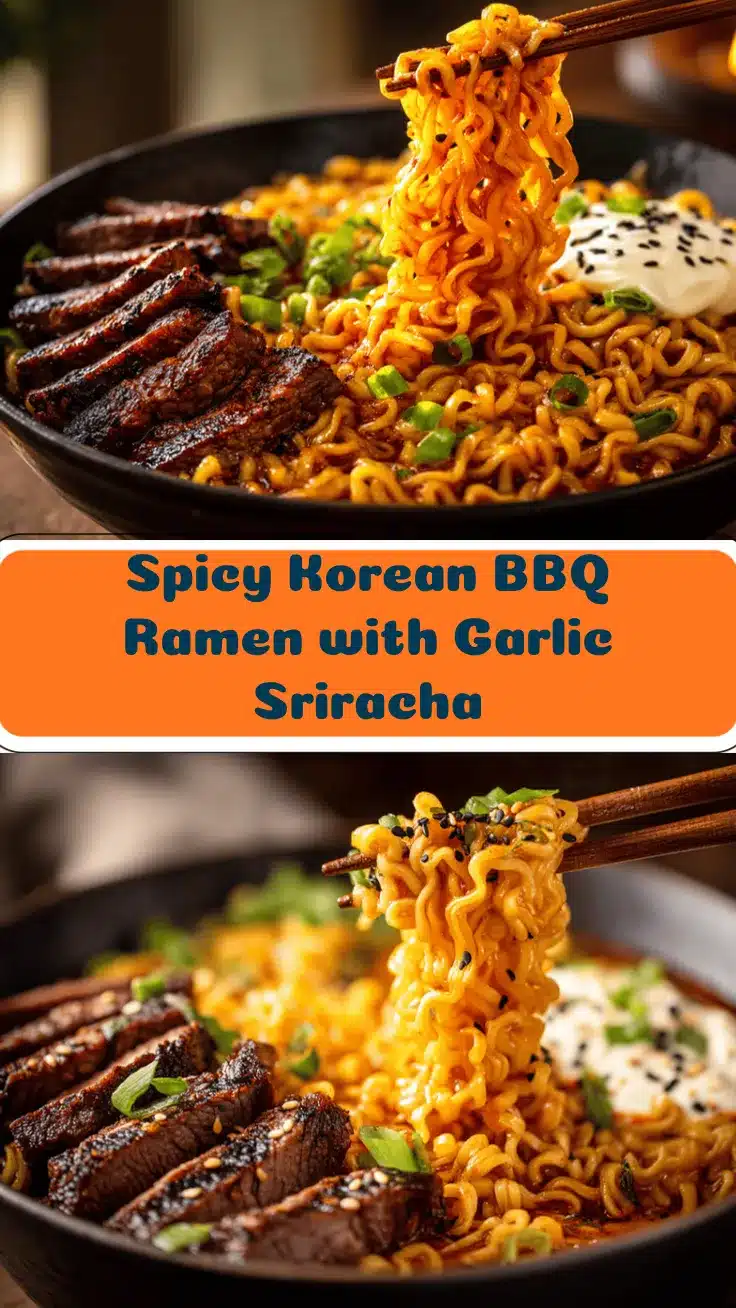
Spicy Korean BBQ Beef Ramen – Easy Creamy Garlic Sriracha Bowl
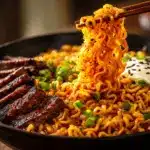
A bold, savory ramen bowl featuring marinated Korean BBQ beef, springy noodles, and a creamy garlic sriracha drizzle. This comforting, customizable recipe brings together spicy, sweet, and umami flavors for a restaurant-worthy meal at home.
- Prep Time: 20 minutes
- Cook Time: 20 minutes
- Total Time: 40 minutes
- Yield: 4 servings 1x
- Category: Main Course
- Cuisine: Korean, Asian Fusion
Ingredients
- 1 lb (450g) thinly sliced beef (ribeye, sirloin, or flank steak)
- 3 tbsp soy sauce
- 2 tbsp brown sugar
- 1 1/2 tbsp gochujang (Korean chili paste)
- 1 tbsp sesame oil (toasted, if possible)
- 1 tbsp rice vinegar
- 3 cloves fresh garlic, minced
- 1-inch knob fresh ginger, grated
- 1/2 tsp black pepper
- 2 green onions, thinly sliced (plus more for garnish)
- 4 cups (950ml) beef stock
- 2 tbsp low-sodium soy sauce
- 1 tsp gochugaru (Korean red pepper flakes, optional)
- 1 tbsp mirin
- 1 tsp sesame oil
- 4 bundles (about 10 oz / 280g) fresh or instant ramen noodles
- 1/4 cup (60g) mayonnaise (preferably Kewpie)
- 2 tbsp sriracha (adjust to taste)
- 1 clove fresh garlic, finely grated
- 1 tsp lime juice (or lemon juice)
- 2 soft-boiled eggs, halved (optional)
- 1 tbsp sesame seeds
- Thinly sliced fresh chilies or chili oil (optional)
- Shredded nori or roasted seaweed (optional)
- Pickled veggies (kimchi or pickled carrots, optional)
Instructions
- In a large mixing bowl, combine 3 tbsp soy sauce, 2 tbsp brown sugar, 1 1/2 tbsp gochujang, 1 tbsp sesame oil, 1 tbsp rice vinegar, 3 minced garlic cloves, 1-inch grated ginger, and 1/2 tsp black pepper. Add 1 lb thinly sliced beef and toss to coat. Marinate for at least 20 minutes (up to 2 hours in the fridge).
- In a small bowl, whisk together 1/4 cup mayonnaise, 2 tbsp sriracha, 1 finely grated garlic clove, and 1 tsp lime juice. Adjust sriracha to taste. Chill until ready to use.
- Bring a small saucepan of water to a boil. Gently lower in 2 eggs and boil for 6-7 minutes. Transfer to an ice bath, peel, and halve.
- In a medium saucepan, combine 4 cups beef stock, 2 tbsp soy sauce, 1 tbsp mirin, 1 tsp sesame oil, and 1 tsp gochugaru (if using). Bring to a gentle simmer over medium heat. Taste and adjust seasoning as needed.
- Bring a separate pot of water to a boil. Cook 4 bundles ramen noodles according to package directions (usually 2-3 minutes for fresh noodles). Drain and toss with a splash of sesame oil to prevent sticking.
- Heat a large skillet or wok over high heat. Add a drizzle of oil, then add the marinated beef in a single layer (work in batches if needed). Sear for 1-2 minutes per side until caramelized and just cooked through. Transfer to a plate.
- Divide cooked noodles among 4 bowls. Ladle hot broth over the noodles. Top each bowl with Korean BBQ beef, soft-boiled egg halves, green onions, sesame seeds, and any other desired toppings (chili oil, nori, kimchi, etc.).
- Drizzle the creamy garlic sriracha sauce over each bowl. Serve immediately.
Notes
For gluten-free, use tamari and gluten-free ramen noodles. Marinate beef up to 24 hours ahead for deeper flavor. Store noodles and broth separately to prevent sogginess. Adjust spice level by reducing gochujang, sriracha, or omitting gochugaru. Swap beef for tofu or mushrooms for a vegetarian version. Add kimchi for extra zing.
Nutrition
- Serving Size: 1 bowl (about 1/4 of recipe)
- Calories: 675
- Sugar: 10
- Sodium: 1800
- Fat: 22
- Saturated Fat: 6
- Carbohydrates: 80
- Fiber: 4
- Protein: 32
Keywords: Korean BBQ, beef ramen, spicy ramen, creamy garlic sriracha, easy ramen, weeknight dinner, comfort food, Asian noodles, fusion recipe, homemade ramen