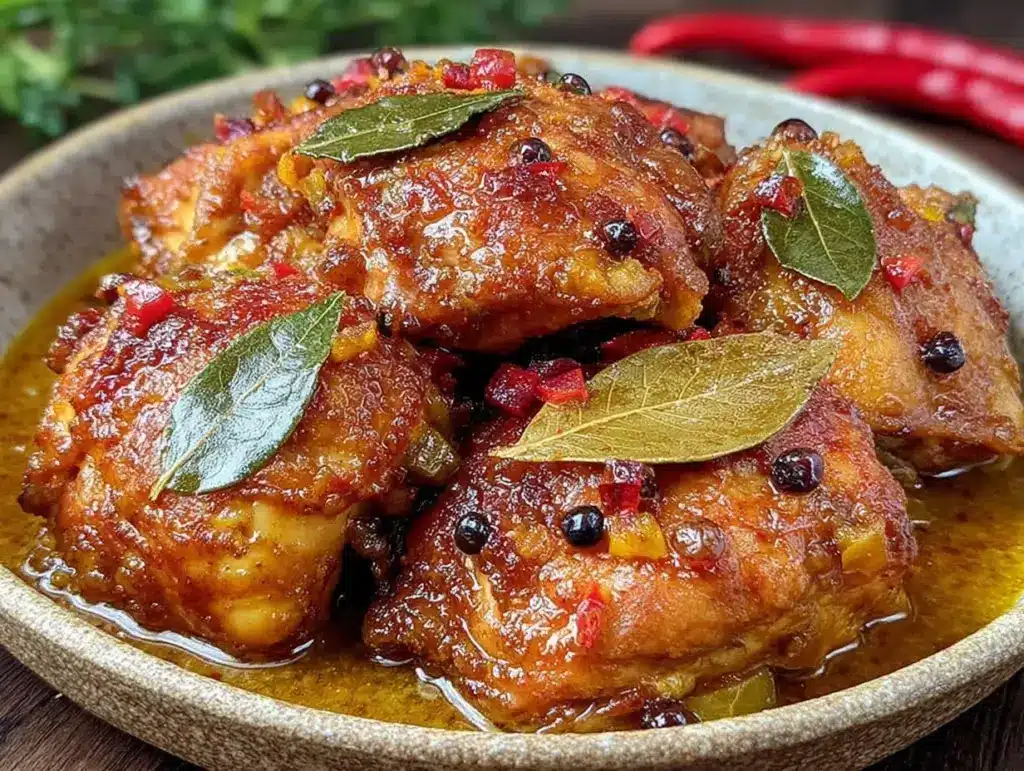
“You’re telling me we’re making adobo with coconut milk? In my kitchen?” That’s what I muttered when my friend casually suggested tweaking the classic Filipino chicken adobo recipe by adding coconut milk and bay leaves. Honestly, I was skeptical at first—chicken adobo has been a staple in my family for years, and I wasn’t sure if adding coconut milk would mess with its familiar tangy-salty magic.
But that afternoon, with rain tapping against the window and the comforting aroma of garlic sizzling in the pan, I gave it a shot. The creaminess from the coconut milk softened the vinegar’s punch while the bay leaves added a subtle herbal note that made the dish feel both familiar and new at the same time. It was like discovering a secret version of an old favorite. I ended up making creamy Filipino chicken adobo with coconut milk and bay leaves multiple times that week, sometimes swapping out a few ingredients here and there, but always coming back to that luscious, velvety sauce.
What stuck with me wasn’t just the flavor but how this recipe turned a hurried weeknight meal into a cozy, soul-satisfying experience. It’s the kind of dish that makes you pause, spoon in hand, and think, “Yeah, this is exactly what I needed.” It’s a comforting hug in a bowl, simple yet unforgettable.
Why You’ll Love This Recipe
Having spent many evenings cooking and tweaking chicken adobo versions, I can say this creamy Filipino chicken adobo with coconut milk and bay leaves stands out for all the right reasons. Here’s why you’ll appreciate it as much as I do:
- Quick & Easy: This recipe comes together in about 45 minutes, making it perfect for busy weeknights or when you’re craving something hearty but don’t want to fuss.
- Simple Ingredients: No exotic or hard-to-find items needed—most are pantry staples like soy sauce, vinegar, garlic, and coconut milk. You might already have them waiting in your kitchen.
- Perfect for Cozy Dinners: Whether it’s a quiet solo meal or feeding a family, this adobo hits the comfort food spot with just the right balance of creamy and tangy flavors.
- Crowd-Pleaser: The addition of coconut milk softens the edges, making it more approachable for kids or anyone new to Filipino food.
- Unbelievably Delicious: The bay leaves bring a subtle earthiness that pairs beautifully with the creamy coconut, creating a rich sauce that clings to tender chicken pieces.
What really differentiates this version is the technique of simmering the chicken gently in coconut milk after the initial vinegar-soy braise, which keeps the meat juicy and infuses it with that signature silky texture. It’s not just another adobo; it’s the one that made me rethink how versatile this classic dish can be.
It’s the kind of recipe that invites you in, no matter your cooking skill level, and leaves you with a warm, satisfied feeling that lingers long after the last bite.
What Ingredients You Will Need
This creamy Filipino chicken adobo recipe uses straightforward, wholesome ingredients to bring together bold, comforting flavors without any fuss. Most are pantry staples, and the coconut milk adds that signature richness you’ll notice right away.
- Chicken: 2 pounds (900g) bone-in, skin-on chicken thighs (for juiciness and flavor)
- Soy Sauce: ½ cup (120ml) – I like using Filipino brands like Silver Swan for authenticity
- Vinegar: ½ cup (120ml) cane vinegar or white vinegar (the acid backbone of adobo)
- Coconut Milk: 1 cup (240ml) full-fat canned coconut milk (adds creaminess and balances the tang)
- Bay Leaves: 3-4 dried (essential for that earthy aroma)
- Garlic: 6-8 large cloves, smashed (the fragrant punch)
- Black Peppercorns: 1 teaspoon whole (adds subtle heat and depth)
- Brown Sugar: 1 tablespoon (optional, balances acidity)
- Water: ½ cup (120ml) to adjust sauce consistency
- Cooking Oil: 2 tablespoons vegetable or canola oil (for searing)
- Optional: Sliced onions or fresh chili peppers for a bit of extra flavor or heat
If you prefer a gluten-free version, substitute soy sauce with tamari. For a dairy-free and vegan twist, swap chicken with firm tofu or mushrooms, and use coconut aminos instead of soy sauce. The bay leaves are non-negotiable here; they’re the quiet hero of the recipe.
Equipment Needed
- Large Deep Skillet or Dutch Oven: For searing and simmering the chicken evenly
- Wooden Spoon or Tongs: To turn the chicken without breaking the skin
- Measuring Cups and Spoons: To get those vinegar and soy sauce ratios just right
- Knife and Cutting Board: For prepping garlic and optional ingredients
- Serving Dish: Something wide to show off that glossy sauce and tender chicken
If you don’t have a Dutch oven, a heavy-bottomed pan with a lid will work fine. I’ve used both cast iron and stainless steel pans for this recipe—cast iron tends to give a nicer sear, but stainless steel is easier to clean. For budget-friendly options, a nonstick deep skillet also does the trick, just watch the heat to avoid burning.
Preparation Method
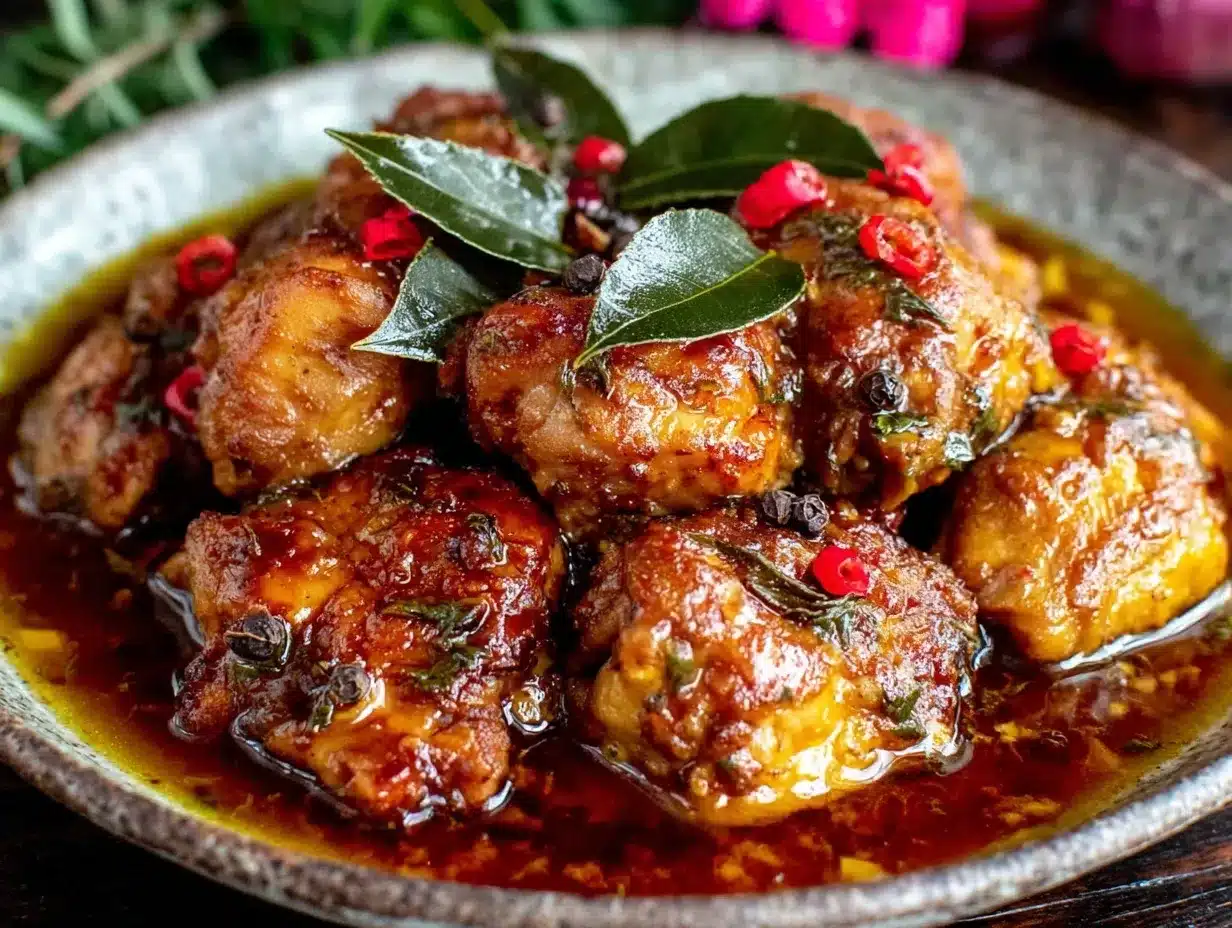
- Prepare the Chicken: Pat the 2 pounds (900g) of chicken thighs dry with paper towels to help the skin crisp up. Season lightly with salt (remember, soy sauce adds saltiness later). Set aside. (5 minutes)
- Sear the Chicken: Heat 2 tablespoons of oil in your skillet over medium-high heat. When hot, add chicken skin-side down, cooking for about 5-6 minutes until golden brown and crispy. Flip and sear the other side for 3-4 minutes. Work in batches if needed to avoid crowding. Remove chicken and set aside. (10 minutes)
- Sauté Garlic: Lower the heat to medium, add smashed garlic cloves to the oil left in the pan, stirring until fragrant and lightly browned (about 1-2 minutes). Be careful not to burn the garlic—it should smell nutty and sweet. (2 minutes)
- Deglaze and Add Liquids: Pour in ½ cup (120ml) soy sauce and ½ cup (120ml) vinegar. Add 1 teaspoon whole black peppercorns and 3-4 bay leaves. Let it bubble and reduce slightly for 2-3 minutes to mellow the sharp vinegar edge. (5 minutes)
- Simmer the Chicken: Return the chicken to the pan, skin-side up. Add ½ cup (120ml) water and cover with a lid. Lower heat to medium-low and simmer gently for 25 minutes, turning the chicken halfway to coat with sauce. The chicken should be tender and infused with the tangy-salty flavors. (25 minutes)
- Add Coconut Milk: Remove lid, pour in 1 cup (240ml) full-fat coconut milk, and stir gently to combine. Simmer uncovered for another 10 minutes, allowing the sauce to thicken and turn creamy. Taste and adjust seasoning; add 1 tablespoon brown sugar if you want a touch of balance to the acidity. (10 minutes)
- Final Touches: Once the sauce is silky and coats the chicken, remove from heat. Discard bay leaves and peppercorns before serving. The skin should still have a slight crispness underneath the creamy sauce. (2 minutes)
Pro tip: If the sauce looks too thin after simmering coconut milk, remove the chicken and boil the sauce a bit longer to thicken, then return the chicken to coat. Also, keep an eye on the vinegar—it should never overpower but rather complement the creaminess.
Cooking Tips & Techniques
One thing I learned the hard way is that the timing of adding coconut milk is key. Adding it too early will cause the milk to curdle or separate, so always introduce it after the chicken has simmered in vinegar and soy sauce. Also, searing the chicken skin helps lock in juices and adds a nice texture contrast under the creamy sauce.
Don’t rush the simmering step. Low and slow lets the flavors marry perfectly, and the chicken becomes tender yet firm enough to hold up in the sauce. I sometimes toss in a little extra garlic or even a few fresh chili slices for a gentle kick—just enough to tickle the palate without stealing the spotlight.
When stirring after adding coconut milk, be gentle to avoid breaking the chicken apart. And always taste before adding salt since soy sauce provides plenty of seasoning. If you want a little extra depth, a splash of fish sauce at the end can add umami without altering the creaminess.
For multitasking, start prepping a simple side like garlic fried rice or steamed greens while the chicken simmers. I often pair this creamy chicken adobo with the one-pan Greek chicken with vegetables to mix up international flavors on the same week.
Variations & Adaptations
This creamy Filipino chicken adobo lends itself well to tweaks based on your preferences or dietary needs:
- Low-Carb Version: Serve over cauliflower rice or spiralized zucchini noodles instead of traditional steamed rice.
- Vegetarian or Vegan: Replace chicken with firm tofu or hearty mushrooms. Use tamari instead of soy sauce for gluten-free and coconut aminos for a soy-free option.
- Spicy Kick: Add sliced fresh bird’s eye chilies or a teaspoon of chili flakes during simmering for heat that balances the creamy sauce.
- Extra Herbaceous: Toss in fresh cilantro or scallions just before serving to brighten flavors.
- Personal Variation: I sometimes add a splash of pineapple juice to the simmering liquid for a subtle fruity note that contrasts nicely with the richness, especially during summer months.
For a quicker version, you can use boneless chicken thighs, but keep a close eye on cooking time as they cook faster and can dry out. Slow cooker adaptations are possible but require careful timing with the coconut milk to prevent separation.
Serving & Storage Suggestions
This creamy Filipino chicken adobo is best served hot with steamed white rice or garlic fried rice to soak up that luscious sauce. For a lighter meal, pair it with sautéed greens or a fresh cucumber salad to cut through the richness.
If you want to make it a full spread, consider serving alongside dishes like crispy Asian sesame chicken lettuce wraps or a simple fresh side salad for texture contrast.
Store leftovers in an airtight container in the refrigerator for up to 3 days. The flavors deepen overnight, making the adobo taste even better the next day. To reheat, warm gently on the stove or microwave until heated through, stirring occasionally—avoid boiling again, as it may split the coconut milk.
You can also freeze this dish for up to 2 months. Thaw overnight in the fridge and reheat slowly on the stovetop, adding a splash of water if the sauce thickens too much.
Nutritional Information & Benefits
This creamy Filipino chicken adobo with coconut milk and bay leaves is a hearty, balanced meal. One serving (about 1/4 of the recipe) roughly contains:
- Calories: 350-400 kcal
- Protein: 30g
- Fat: 25g (mostly from coconut milk, which contains healthy medium-chain triglycerides)
- Carbohydrates: 5-8g
Chicken thighs provide a great source of protein and essential B vitamins. Coconut milk adds richness and is a source of lauric acid, which may support the immune system. Bay leaves contribute antioxidants and a subtle herbal aroma without adding calories.
This recipe is naturally gluten-free if you use tamari or gluten-free soy sauce alternatives. It’s also low-carb and dairy-free, making it accessible for many dietary preferences.
Conclusion
All in all, this creamy Filipino chicken adobo with coconut milk and bay leaves has become one of my go-to comfort meals. It’s simple enough for an everyday dinner but interesting enough to impress anyone curious about Filipino flavors. The balance of tangy vinegar, savory soy, creamy coconut, and fragrant bay leaves delivers a dish that feels both timeless and fresh.
Feel free to play around with the spice level, protein choice, or even sides to make it truly your own. I love how it brings warmth to the table, especially after a hectic day, and I hope it becomes a favorite in your kitchen too.
If you’ve tried this recipe or have your own twists, I’d love to hear about it—drop a comment below or share your adaptations! Cooking is always better when shared.
Frequently Asked Questions
- Can I use boneless chicken instead of bone-in? Yes, boneless chicken thighs or breasts work well but reduce the simmering time to avoid drying out.
- Why add coconut milk to adobo? Coconut milk adds a creamy texture that mellows the vinegar’s sharpness, creating a richer, more velvety sauce.
- Can I make this recipe in a slow cooker? Yes, but add coconut milk in the last 30 minutes of cooking to prevent curdling.
- Is this recipe gluten-free? It can be if you use gluten-free soy sauce or tamari instead of regular soy sauce.
- What can I serve with this creamy chicken adobo? Steamed rice, garlic fried rice, or sautéed greens are classic pairings. It also goes nicely with light salads or even sticky teriyaki chicken stir fry for a varied meal.
Pin This Recipe!
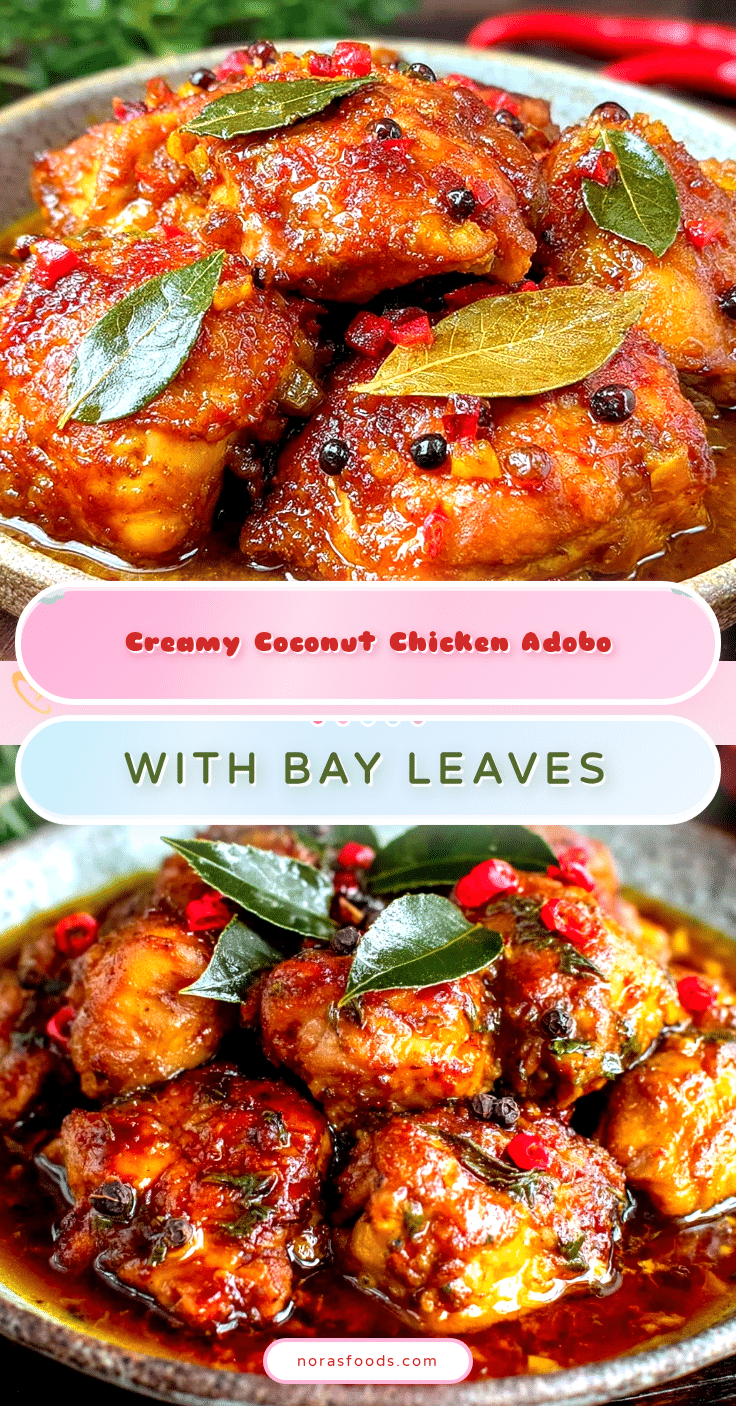
Creamy Filipino Chicken Adobo Recipe with Coconut Milk and Bay Leaves

A comforting and authentic Filipino chicken adobo recipe enhanced with creamy coconut milk and aromatic bay leaves, perfect for cozy dinners and quick weeknight meals.
- Prep Time: 10 minutes
- Cook Time: 35 minutes
- Total Time: 45 minutes
- Yield: 4 servings 1x
- Category: Main Course
- Cuisine: Filipino
Ingredients
- 2 pounds bone-in, skin-on chicken thighs
- ½ cup soy sauce
- ½ cup vinegar (cane or white)
- 1 cup full-fat canned coconut milk
- 3–4 dried bay leaves
- 6–8 large garlic cloves, smashed
- 1 teaspoon whole black peppercorns
- 1 tablespoon brown sugar (optional)
- ½ cup water
- 2 tablespoons vegetable or canola oil
- Optional: sliced onions or fresh chili peppers
Instructions
- Pat the chicken thighs dry and season lightly with salt. Set aside.
- Heat oil in a large skillet over medium-high heat. Sear chicken skin-side down for 5-6 minutes until golden and crispy. Flip and sear the other side for 3-4 minutes. Remove chicken and set aside.
- Lower heat to medium and sauté smashed garlic in the remaining oil until fragrant and lightly browned, about 1-2 minutes.
- Pour in soy sauce and vinegar. Add black peppercorns and bay leaves. Let bubble and reduce slightly for 2-3 minutes.
- Return chicken to the pan, skin-side up. Add water and cover with a lid. Simmer on medium-low for 25 minutes, turning chicken halfway through.
- Remove lid, stir in coconut milk gently. Simmer uncovered for 10 minutes until sauce thickens and becomes creamy. Add brown sugar if desired and adjust seasoning.
- Remove from heat, discard bay leaves and peppercorns. Serve hot.
Notes
Add coconut milk only after simmering chicken in vinegar and soy sauce to prevent curdling. Sear chicken skin to lock in juices and add texture. Adjust seasoning carefully as soy sauce is salty. For thicker sauce, remove chicken and boil sauce longer before returning chicken. Optional additions include fresh chili for heat or pineapple juice for a fruity note.
Nutrition
- Serving Size: About 1/4 of the rec
- Calories: 375
- Sugar: 3
- Sodium: 900
- Fat: 25
- Saturated Fat: 18
- Carbohydrates: 7
- Fiber: 1
- Protein: 30
Keywords: Filipino chicken adobo, creamy chicken adobo, coconut milk adobo, bay leaves, easy Filipino recipe, chicken thighs, comfort food