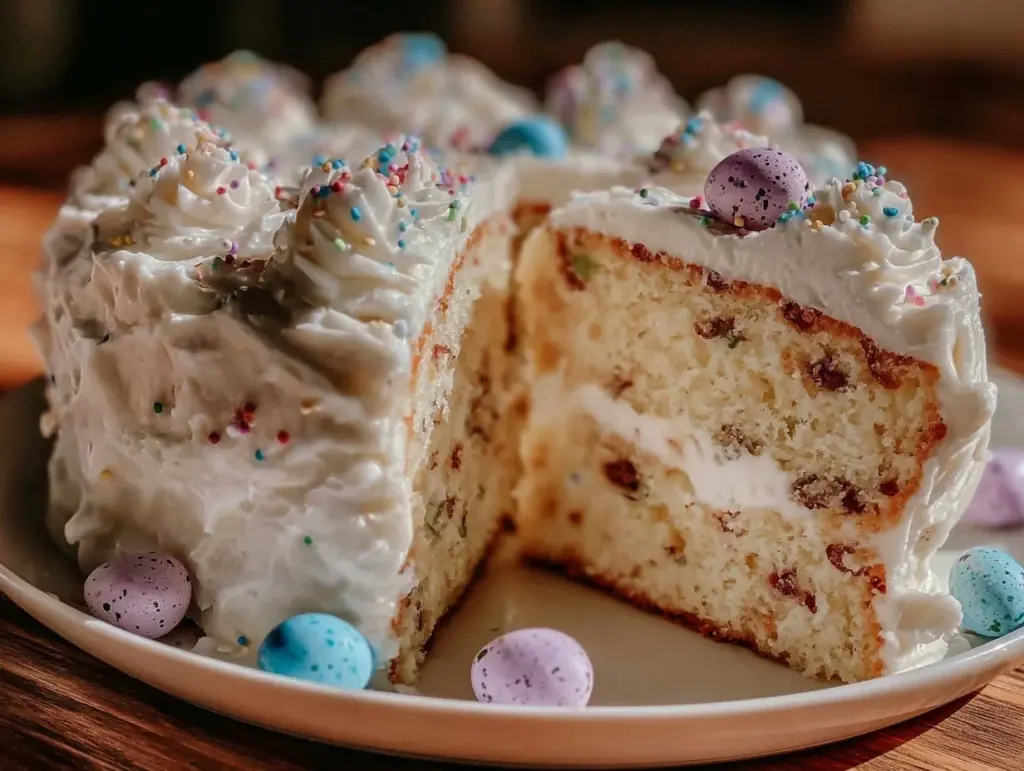
“You really think those speckles will show up?” my sister asked with a teasing grin as I held up my cake pans filled with batter. Honestly, I wasn’t sure either. I’d been fiddling with this Perfect Speckled Easter Egg Cake recipe for weeks, trying to get the look just right — that whimsical dotted effect that makes it feel like a real Easter egg, but in cake form. The whole idea came from a late-night craving one spring when I wanted something festive but not over-the-top. I figured a vanilla bean buttercream frosting would bring a subtle sweetness that wouldn’t steal the spotlight.
That night, with the kitchen timer ticking down and a few colorful splashes of batter tossed in like paint on a canvas, I realized I’d stumbled on something special. The speckles weren’t just a cute visual trick — they brought this unexpected texture and fun that felt just right for Easter brunch or a spring gathering. Since then, I’ve made this cake more times than I can count, tweaking the vanilla bean buttercream each time to keep it silky smooth and perfectly balanced.
It’s funny how a simple idea — a speckled cake that looks like a festive Easter egg — turned into a go-to dessert that gets people asking for seconds. The soft crumb, the subtle vanilla bean notes, and that easy-to-make frosting all come together in a way that’s playful but not fussy. This cake stuck with me because it’s approachable, charming, and honestly, a little bit joyful in every bite.
Why You’ll Love This Recipe
After testing and tweaking this Perfect Speckled Easter Egg Cake recipe in my own kitchen more times than I can admit (and sharing slices with friends who expect it yearly), here’s why it stands out:
- Quick & Easy: The batter comes together in under 20 minutes, so you’re not stuck in the kitchen all day. Perfect for last-minute Easter plans or springtime celebrations.
- Simple Ingredients: You probably already have these in your pantry and fridge — no special trips required. Plus, the vanilla bean buttercream uses real vanilla beans for a natural, fragrant flavor.
- Perfect for Easter and Spring: Its festive speckled look makes it a centerpiece for brunch, dessert tables, or even a sweet gift for neighbors.
- Crowd-Pleaser: Kids love the fun speckles, and adults appreciate the moist texture and subtle sweetness. It’s the kind of cake that disappears fast.
- Unbelievably Delicious: The crumb is tender but sturdy enough to hold up the creamy buttercream, which balances light vanilla and just enough sweetness.
- Unique Twist: Not your average vanilla cake — the speckled effect adds a playful texture and visual appeal that’s both nostalgic and fresh.
This isn’t just another vanilla cake recipe; it’s one that’s been tested in busy kitchens and trusted for celebrations. Whether you’re pairing it with a fresh fruit salad or serving it alongside a pot of tea, it’s the kind of cake that makes you smile before the first bite.
What Ingredients You Will Need
This recipe uses simple, wholesome ingredients to deliver bold flavor and that classic moist texture without fuss. Most are pantry staples, and you can easily swap a few to suit your needs.
- For the Cake Batter:
- All-purpose flour – 2 ½ cups (315 g), sifted (I trust King Arthur for consistent results)
- Baking powder – 2 ½ teaspoons (for perfect rise)
- Salt – ½ teaspoon
- Unsalted butter – 1 cup (227 g), softened (room temp is key!)
- Granulated sugar – 1 ¾ cups (350 g)
- Large eggs – 4, room temperature
- Pure vanilla extract – 2 teaspoons (or 1 vanilla bean scraped for extra flavor)
- Whole milk – 1 cup (240 ml), room temperature (can swap with almond or oat milk)
- Food coloring – assorted pastel shades (gel colors work best for vibrant speckles)
- For the Vanilla Bean Buttercream:
- Unsalted butter – 1 cup (227 g), softened
- Powdered sugar – 4 cups (500 g), sifted to avoid lumps
- Heavy cream – 2 to 3 tablespoons (30-45 ml) to adjust consistency
- Vanilla bean – 1, seeds scraped (or 2 teaspoons pure vanilla extract if beans aren’t available)
- Pinch of salt (to balance sweetness)
If you want a gluten-free option, swapping the flour for a 1:1 gluten-free baking blend works well. For a dairy-free version, use non-dairy butter and coconut cream in the frosting. I’ve found that fresh vanilla bean really takes the frosting to the next level with those little black flecks and an authentic aroma.
Equipment Needed
- Two 8-inch (20 cm) round cake pans – non-stick or greased and parchment-lined
- Mixing bowls – medium and large
- Electric mixer or stand mixer with paddle attachment – makes creaming butter and sugar much easier
- Spatulas – for folding and scraping bowls
- Measuring cups and spoons – for accuracy
- Sifter or fine mesh sieve – to sift dry ingredients and powdered sugar
- Cooling rack – to cool cakes evenly
- Small paintbrush or clean toothbrush – to create the speckled effect with food coloring
If you don’t have a stand mixer, a hand mixer works just fine – it might just take a bit more elbow grease. I often use silicone spatulas for scraping down the sides; they’re a game-changer. For the speckles, a small brush helps you flick the food coloring gently over the cake surface or batter for that authentic Easter egg look.
Preparation Method
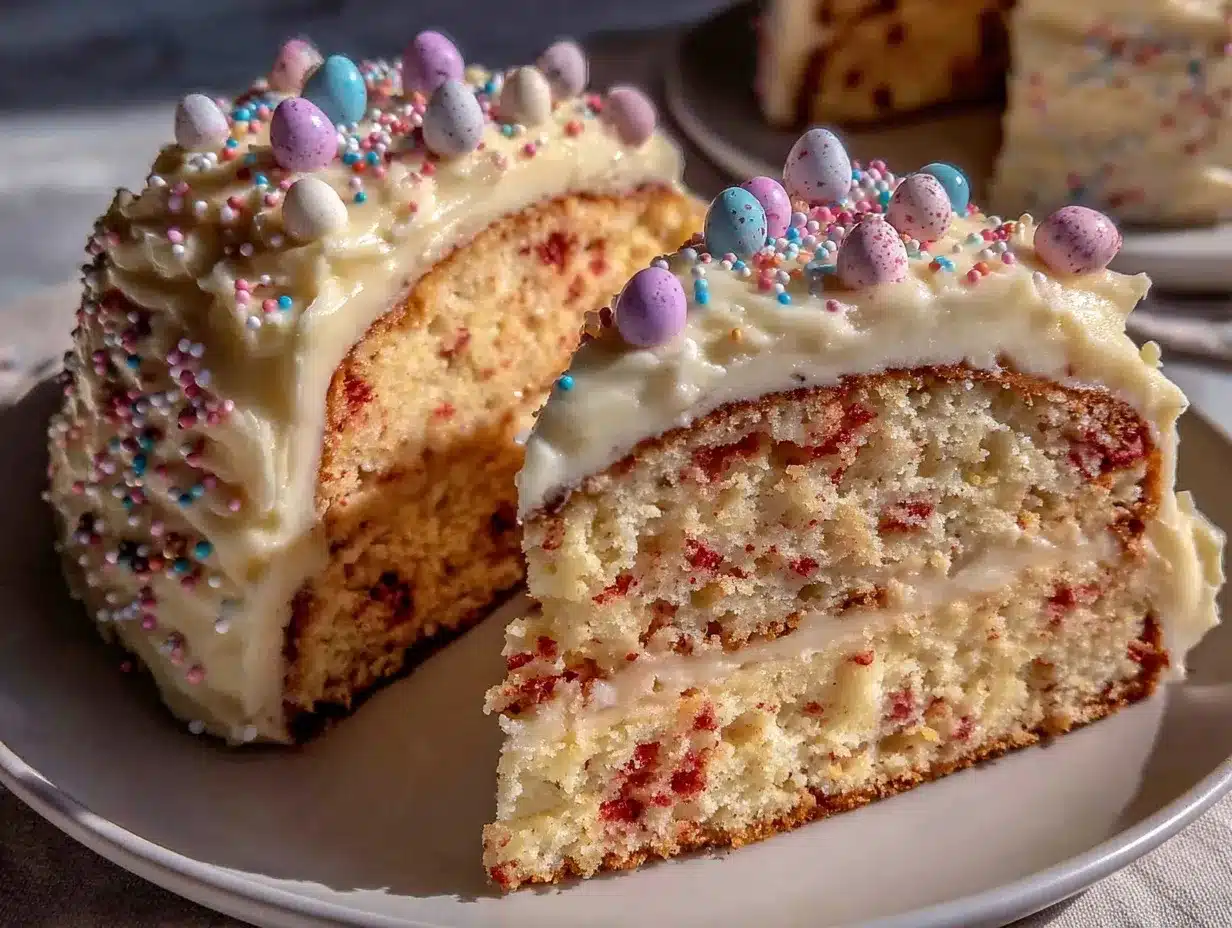
- Prep the Pans and Ingredients (10 minutes): Preheat your oven to 350°F (175°C). Grease your two 8-inch cake pans, line the bottoms with parchment paper, and grease again. Sift together the flour, baking powder, and salt in a bowl; set aside.
- Cream Butter and Sugar (5-7 minutes): In a large mixing bowl, beat the softened butter with the granulated sugar on medium speed until pale and fluffy. This step traps air, giving you a light crumb.
- Add Eggs and Vanilla (2-3 minutes): Add eggs one at a time, beating well after each addition. Stir in the vanilla extract or the scraped seeds from a vanilla bean for that natural flavor boost.
- Alternate Adding Dry Ingredients and Milk (3-5 minutes): On low speed, add the dry ingredients in three parts, alternating with the milk (starting and ending with the dry mix). Mix just until combined; overmixing can make the cake tough.
- Create the Speckles (5 minutes): Divide a small amount of batter into separate bowls and tint each with a few drops of gel food coloring (pastels work best). Using a small paintbrush or clean toothbrush, flick tiny droplets onto the batter in the pans to form speckles. Don’t worry if it feels a bit messy—that’s the charm!
- Bake the Cakes (25-30 minutes): Bake in the preheated oven for about 25-30 minutes or until a toothpick inserted in the center comes out clean. You should notice golden edges and a springy top when gently pressed.
- Cool Completely (at least 1 hour): Let the cakes cool in the pans for 10 minutes, then transfer them to a cooling rack. The cakes must be completely cool before frosting to prevent melting or sliding.
- Prepare the Vanilla Bean Buttercream (10 minutes): Beat the softened butter until smooth and creamy. Gradually add sifted powdered sugar, mixing on low first, then increasing speed. Add vanilla bean seeds and a pinch of salt. Adjust the consistency with heavy cream, a tablespoon at a time, until fluffy and spreadable.
- Assemble the Cake (15 minutes): Place one cake layer on your serving plate. Spread a generous layer of buttercream on top. Add the second cake layer and frost the top and sides evenly. For a smooth finish, use a bench scraper or offset spatula.
If your speckles fade during baking, don’t fret — the effect is subtle but still charming. For a sharper speckled look, you can also flick food coloring on the frosted cake after it sets slightly.
Cooking Tips & Techniques
There’s a fine line between a moist cake and one that’s too dense, and I’ve learned that the key is in the mixing. Cream your butter and sugar long enough to trap air — that’s what makes the crumb tender. When adding flour, don’t overmix or you risk losing that light texture.
For the speckles, gel food coloring is your best friend. Liquid colors can make the batter too wet and lose the speckled effect. I once tried droplet sizes that were too big, and instead of charming speckles, I got blobs that looked like a toddler’s paint project.
When making buttercream, scraping the bowl often prevents clumps. If your frosting feels too stiff, a splash of heavy cream smooths it out without watering down the flavor. And patience — cool your cakes completely before frosting; warm cake plus buttercream equals meltdown.
Multitasking tip: While the cakes bake, prep your buttercream. This way, you’re ready to frost as soon as your cakes cool. It keeps the momentum going and prevents frosting from sitting out too long.
Variations & Adaptations
This Perfect Speckled Easter Egg Cake is versatile and welcomes tweaks:
- Flavor Variations: Try swapping vanilla bean for almond extract in the batter and frosting for a nutty twist. Or add a tablespoon of lemon zest for a fresh spring note.
- Dietary Adaptations: Use a gluten-free 1:1 baking flour to make it gluten-free. For dairy-free, swap butter for vegan butter and use coconut cream in the frosting.
- Speckle Colors: Customize your speckles with different pastel colors to match your Easter theme or party palette.
- Cooking Method: If you don’t have cake pans, this batter works well in a 9×13-inch pan for a sheet cake version; just adjust baking time to about 35-40 minutes.
- Personal Twist: I once added tiny edible gold flakes on top of the speckled frosting for a luxurious touch at a family brunch — it was a hit and made the cake feel extra special.
Serving & Storage Suggestions
This cake shines best served at room temperature, allowing the buttercream to be soft and the crumb tender. I like to present it with a scattering of fresh spring flowers nearby or alongside a fresh fruit salad to balance the sweetness.
Leftovers keep well covered in the fridge for up to 4 days. When storing, place the cake in an airtight container or cover loosely with plastic wrap to avoid drying out. Before serving, let it sit at room temperature for about 30 minutes to soften the frosting.
For longer storage, the cake can be frozen (whole or sliced) wrapped tightly in plastic wrap and foil for up to 3 months. Thaw overnight in the fridge and bring to room temperature before serving.
Flavors deepen with time, so if you make this a day ahead, you’ll notice the vanilla bean aroma intensify and the cake become even more comforting.
Nutritional Information & Benefits
Each slice of this Perfect Speckled Easter Egg Cake with Vanilla Bean Buttercream contains approximately 350-400 calories, depending on portion size. It’s a treat that balances indulgence with simplicity.
Key ingredients like real vanilla bean offer antioxidant properties, and using whole milk and butter provides richness without artificial additives. You can lighten this recipe by swapping half the butter with Greek yogurt or using a sugar substitute, though I find the original balances flavor and texture best.
This recipe is naturally gluten-free adaptable and can be made dairy-free with substitutions, making it friendly for various dietary needs. Just be mindful of egg allergies if serving to children.
Conclusion
This Perfect Speckled Easter Egg Cake with Vanilla Bean Buttercream isn’t just a dessert; it’s a little celebration of springtime joy and simple pleasures. Its playful look and classic flavors make it a reliable crowd-pleaser that’s easy to make and even easier to love.
Feel free to customize the speckles, tweak the flavors, or pair it with your favorite spring sides. I keep coming back to this recipe because it’s both fun and comforting — perfect for sharing with friends and family.
If you try it, I’d love to hear how your speckles turned out or any tweaks you made. Baking is better when shared, after all. Here’s to many joyful slices ahead!
Frequently Asked Questions
- How do I get the speckles to show up well in the cake? Use gel food coloring and flick small droplets onto the batter before baking. Avoid liquid colors, which can spread and lose the speckled effect.
- Can I make this cake ahead of time? Yes! Bake the cake layers a day ahead and store them wrapped at room temperature. Make the buttercream the next day for fresher frosting.
- What if I don’t have a vanilla bean? Pure vanilla extract works fine. Using the seeds from a vanilla bean just adds a more natural and intense flavor with those pretty black flecks.
- Can I freeze the cake? Absolutely. Wrap the cooled, frosted cake tightly and freeze for up to 3 months. Thaw in the fridge overnight before serving.
- Is this recipe suitable for dietary restrictions? It can be adapted for gluten-free and dairy-free diets with simple ingredient swaps like gluten-free flour and vegan butter.
When you’re in the mood for a savory dinner to pair with your festive cake, I often turn to the easy one-pan Greek chicken with vegetables—it’s effortless and full of flavor. Or for a lighter appetizer before dessert, the fresh herb cream cheese cucumber sandwiches are a hit at any gathering.
Pin This Recipe!
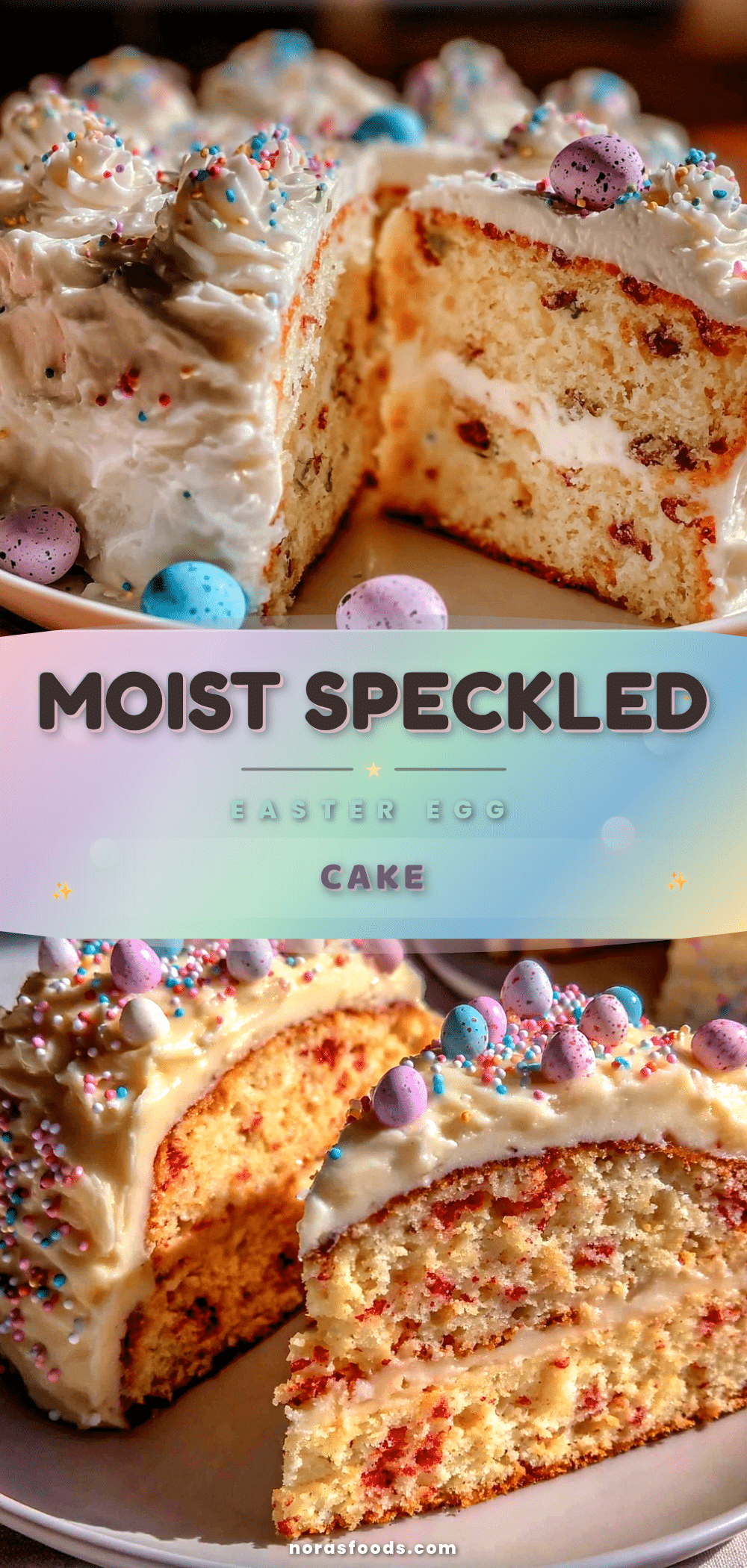
Perfect Speckled Easter Egg Cake Recipe with Easy Vanilla Bean Buttercream Frosting
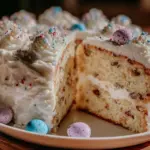
A whimsical speckled vanilla cake that looks like a festive Easter egg, paired with a silky smooth vanilla bean buttercream frosting. Perfect for Easter brunch or spring gatherings.
- Prep Time: 20 minutes
- Cook Time: 30 minutes
- Total Time: 1 hour 50 minutes
- Yield: 12 servings 1x
- Category: Dessert
- Cuisine: American
Ingredients
- 2 ½ cups (315 g) all-purpose flour, sifted
- 2 ½ teaspoons baking powder
- ½ teaspoon salt
- 1 cup (227 g) unsalted butter, softened
- 1 ¾ cups (350 g) granulated sugar
- 4 large eggs, room temperature
- 2 teaspoons pure vanilla extract or 1 vanilla bean scraped
- 1 cup (240 ml) whole milk, room temperature (can swap with almond or oat milk)
- Assorted pastel gel food coloring
- 1 cup (227 g) unsalted butter, softened (for buttercream)
- 4 cups (500 g) powdered sugar, sifted
- 2 to 3 tablespoons (30–45 ml) heavy cream
- 1 vanilla bean, seeds scraped (or 2 teaspoons pure vanilla extract)
- Pinch of salt
Instructions
- Preheat oven to 350°F (175°C). Grease two 8-inch cake pans, line bottoms with parchment paper, and grease again. Sift together flour, baking powder, and salt; set aside.
- In a large bowl, beat softened butter and granulated sugar on medium speed until pale and fluffy.
- Add eggs one at a time, beating well after each addition. Stir in vanilla extract or scraped vanilla bean seeds.
- On low speed, add dry ingredients in three parts, alternating with milk, starting and ending with dry ingredients. Mix just until combined.
- Divide a small amount of batter into separate bowls and tint each with gel food coloring. Using a small paintbrush or clean toothbrush, flick tiny droplets onto batter in pans to form speckles.
- Bake for 25-30 minutes or until a toothpick inserted in the center comes out clean. Let cakes cool in pans for 10 minutes, then transfer to a cooling rack to cool completely (at least 1 hour).
- For buttercream, beat softened butter until smooth. Gradually add sifted powdered sugar, mixing on low then increasing speed. Add vanilla bean seeds and pinch of salt. Adjust consistency with heavy cream until fluffy and spreadable.
- Assemble cake by placing one layer on serving plate, spreading buttercream on top, adding second layer, and frosting top and sides evenly.
Notes
Use gel food coloring for best speckled effect; avoid liquid colors. Cool cakes completely before frosting to prevent melting. For gluten-free, swap flour with 1:1 gluten-free baking blend. For dairy-free, use vegan butter and coconut cream. Speckles can be flicked on frosting after it sets for sharper look.
Nutrition
- Serving Size: 1 slice (1/12th of c
- Calories: 375
- Sugar: 38
- Sodium: 180
- Fat: 18
- Saturated Fat: 11
- Carbohydrates: 52
- Fiber: 1
- Protein: 4
Keywords: Easter cake, speckled cake, vanilla bean buttercream, spring dessert, festive cake, easy cake recipe